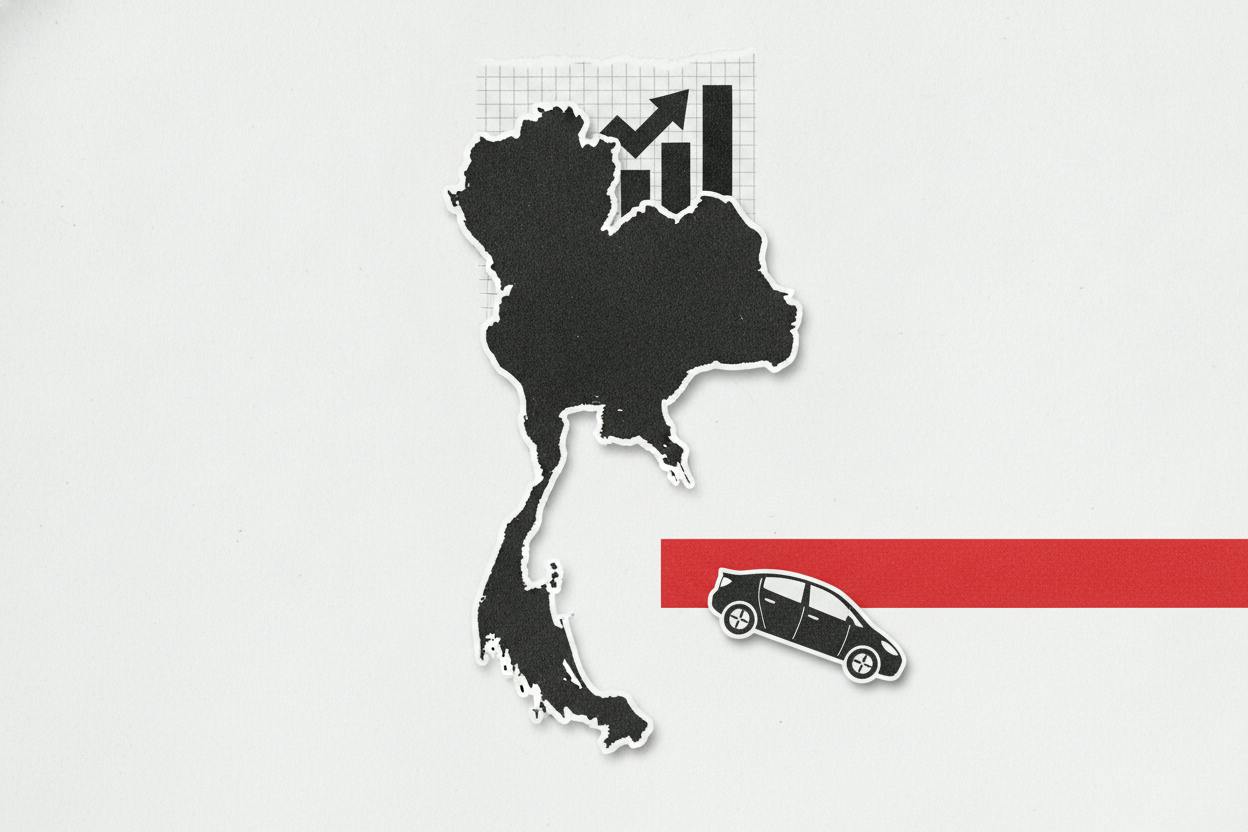
Thailand's most influential business group has raised its forecast for the country's economic growth this year, citing a pickup in exports. The group now sees gross domestic product expanding between 2.4% and 2.6% in 2025, an upgrade from its previous projection. The brighter outlook reflects improving demand for Thai goods abroad, a key engine for the Southeast Asian economy.
Alongside the growth revision, the group is pressing the government to impose a 35% excise tax on imported electric vehicles (EVs). The proposal is aimed at leveling the playing field for locally assembled cars, which currently face competition from cheaper imports, particularly from China.
Why exports matter for Thailand
Thailand is one of the region's largest export-driven economies, with shipments of cars, electronics, and agricultural products making up a significant share of its output. When global demand strengthens, Thai factories ramp up production, which supports jobs and domestic spending. The recent improvement in exports suggests that external headwinds, such as high interest rates in major markets, may be easing.
The upgraded growth forecast aligns with a broader trend across Asia, where several economies have shown resilience despite global uncertainties. For instance, India's services sector also saw growth pick up in October, though hiring and exports there cooled. Thailand's situation is similar in that exports are helping, but the recovery remains uneven.
The EV tax proposal
The business group's call for a 35% excise tax on imported EVs is part of a wider effort to protect and promote Thailand's domestic automotive industry. The country has long been a regional hub for car manufacturing, and it is now trying to position itself as a center for electric vehicle production. However, local manufacturers face stiff competition from imported models, many of which are priced lower due to economies of scale and government subsidies in their home countries.
A 35% tax would make imported EVs more expensive, potentially steering consumers toward locally built vehicles. This could help Thai factories retain market share and encourage more investment in domestic EV assembly. But it also risks raising prices for consumers and could slow the adoption of cleaner vehicles, a trade-off that policymakers will need to weigh.
The proposal is not unique to Thailand. Several countries have used tariffs or taxes to shield domestic industries from foreign competition. In a similar vein, South Korea's consumer groups have raised concerns about foreign EV marketing, though that issue is more about advertising claims than trade policy.
What it means for investors
For investors, the upgraded growth forecast is a positive signal for Thai equities and the baht. A stronger economy typically supports corporate earnings and may attract foreign capital. Sectors that could benefit include banks, retailers, and exporters, as well as companies tied to domestic consumption.
The EV tax proposal, if enacted, would have a direct impact on the automotive sector. Local EV manufacturers and their suppliers could see improved competitiveness, while importers might face margin pressure. Investors with exposure to Thai auto stocks should monitor policy developments closely.
It's also worth noting that Thailand's growth outlook is part of a broader regional picture. Other emerging markets, like the UAE, are seeing growth cool as firms raise prices, highlighting that not all economies are on the same trajectory. Thailand's export-led recovery is encouraging, but it remains vulnerable to global demand shifts and trade tensions.
Risks and watch points
While the growth upgrade is welcome, the Thai economy still faces challenges. Domestic consumption has been uneven, and household debt remains high. Political uncertainty and the pace of global monetary easing could also affect the outlook. The business group's forecast assumes that exports continue to improve and that the government implements supportive policies, including the proposed EV tax.
Investors should keep an eye on monthly export data and any announcements from Thailand's finance ministry regarding tax changes. The EV tax, in particular, could be a catalyst for the automotive sector. As with any policy proposal, there is no guarantee it will be adopted in its current form, and the final rate could differ.
For everyday investors, the key takeaway is that Thailand's economy is showing signs of resilience, but the path forward is not without hurdles. Diversification across sectors and regions remains a prudent strategy, especially in a world where growth is uneven. As always, it's important to base investment decisions on thorough research and a clear understanding of your own risk tolerance.