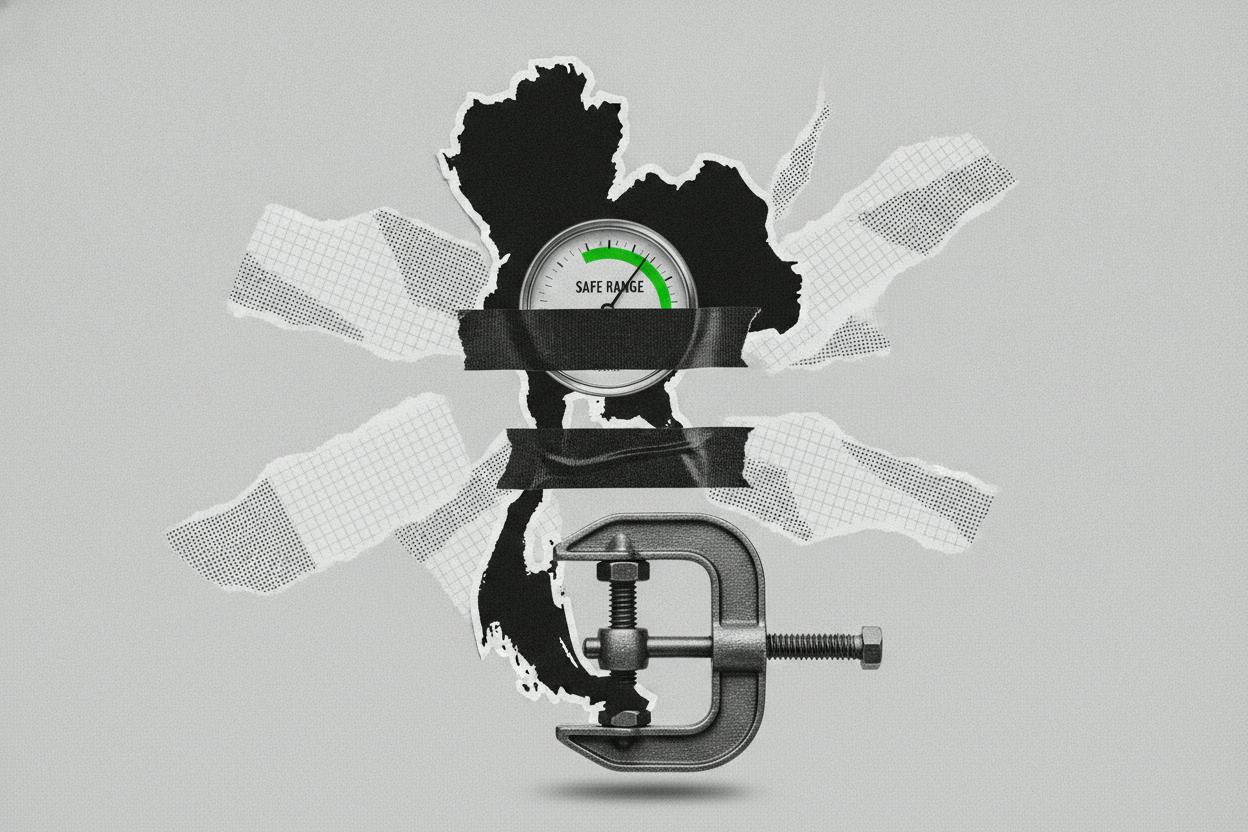
Thailand's central bank is signaling patience on interest rates, with Governor Vitai Ratanakorn backing the current 1%-3% inflation target for 2027 and indicating there's no rush to move the policy rate from its current 1.00% level. The next rate review is scheduled for December 23rd.
In comments reported by Reuters, Ratanakorn said there is “no need” to change rates for now, citing that economic growth is landing close to the Bank of Thailand's (BoT) forecasts. The central bank still sees 2026 growth at 2.4%, while third-quarter growth came in at 2.9% versus its 3.1% estimate.
What is an inflation target and why does it matter?
An inflation target is the range a central bank aims to keep price growth within over time. It's a key tool for shaping expectations: if consumers and businesses expect prices to stay within a certain band, they're less likely to demand big wage increases or hike prices preemptively, which can feed inflation.
The target also guides interest rate decisions. When inflation runs above the target, central banks typically raise rates to cool spending and borrowing. When it's below, they may cut rates to stimulate the economy. So the target isn't just an academic number—it directly influences borrowing costs for mortgages, business loans, and savings rates.
Thailand's 1%-3% range is relatively wide compared to many developed economies, which often target a single point like 2%. The wider band gives the BoT more flexibility to absorb supply shocks, such as energy price spikes, without having to react with aggressive rate moves.
Why is the BoT holding steady?
The governor's comments suggest the central bank sees the current policy stance as appropriate. Growth is close to forecasts, and while the third-quarter figure was slightly below the BoT's estimate, it's not far off. The 2026 projection of 2.4% indicates a moderate expansion, not one that would demand urgent stimulus or tightening.
Inflation in Thailand has been relatively subdued in recent years, partly due to soft domestic demand and government subsidies on energy and food. That has kept price pressures within the target band, giving the BoT room to keep rates at 1.00%—a historically low level that supports borrowing and investment.
The decision to keep the target unchanged for 2027 signals continuity. Changing the target could unsettle markets, as it might be read as a shift in the central bank's commitment to price stability. By reaffirming the range, the BoT is telling investors it expects inflation to stay manageable and that policy will remain predictable.
What it means for investors
For everyday investors, the BoT's stance has a few implications. First, a steady policy rate means borrowing costs in Thailand are likely to remain low for the near term. That's supportive for Thai stocks, particularly domestic sectors like property, retail, and banking, which benefit from cheap credit and stable consumer spending.
Second, the reaffirmed inflation target suggests the BoT is not worried about runaway price growth. That reduces the risk of surprise rate hikes, which can hurt bond prices and make equities less attractive relative to fixed income.
However, investors should watch for any divergence between the BoT's outlook and reality. If growth slows more than expected, the central bank might eventually cut rates to support the economy. Conversely, if inflation picks up—perhaps due to global energy costs or a weaker baht—the BoT could be forced to tighten sooner than signaled.
Thailand's situation is part of a broader regional picture. Other central banks in Asia are also navigating similar trade-offs. For instance, the Bank of Japan's governor has hinted at possible rate hikes as a weak yen fuels inflation, while the Reserve Bank of New Zealand held rates but warned about sticky inflation. These contrasting approaches highlight how each economy is balancing growth and price stability differently.
For those with exposure to Thai assets, the key date is December 23rd. The BoT's decision will confirm whether the governor's comments translate into action. If the rate stays at 1.00%, as expected, markets are likely to take it in stride. A surprise move—either a cut or a hike—would be more notable and could trigger volatility in the baht and Thai equities.
In the meantime, the BoT's steady hand provides a degree of certainty. For investors, that's often more valuable than a dramatic shift. As always, it's wise to keep an eye on inflation data and growth figures, as they will shape the central bank's next moves.