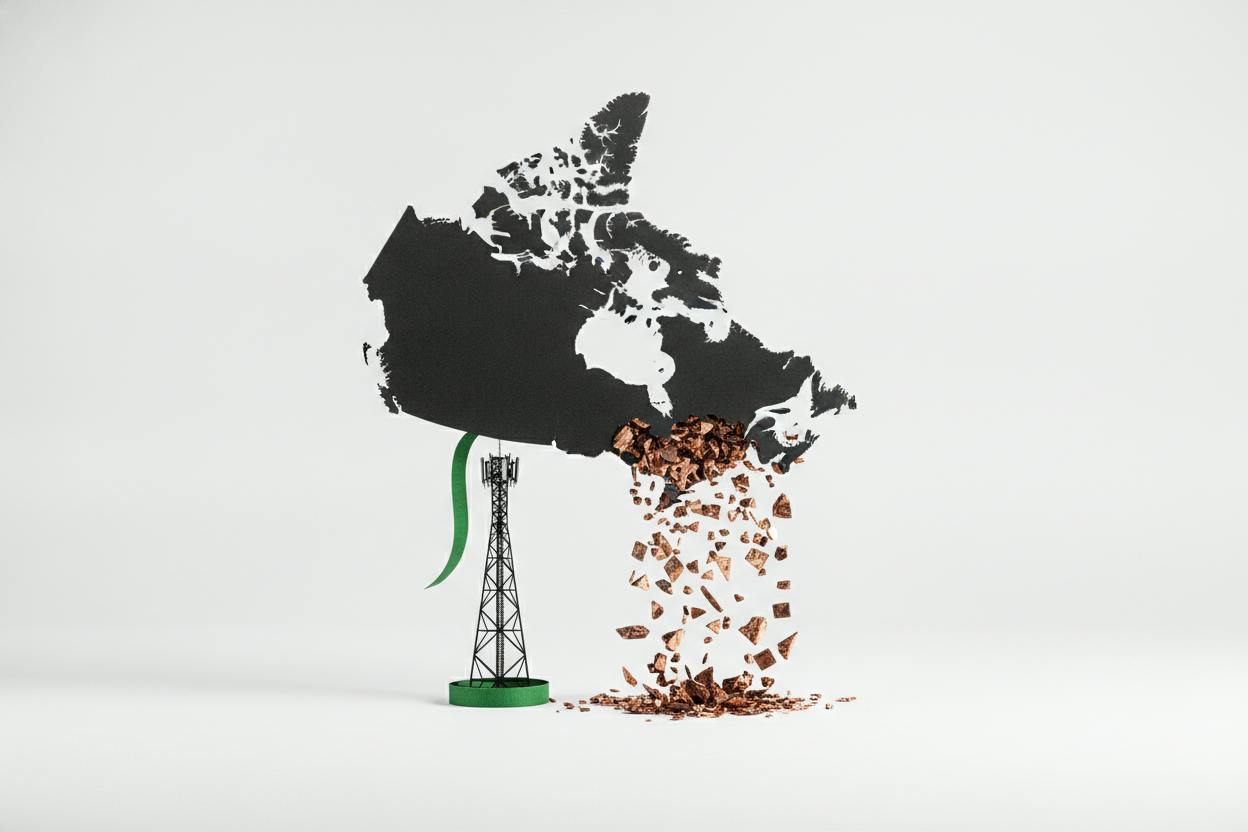
Toronto's main stock index fell to its lowest level since late May on Friday, as a broad decline led by base metals and technology shares outweighed strength in telecoms and better-than-expected retail sales data.
The S&P/TSX Composite dropped 268.42 points, or about 0.8%, to close at 33,760.31. The decline was not limited to one corner of the market: most sectors finished lower, but the heaviest selling came from commodities and tech.
Commodities lead the slide
The base-metals group fell 2.7% as December copper futures slid 1.8%. Gold dropped 3.5% to its lowest level in more than a year, and silver sank 5.8%. That pattern is notable because investors often treat gold and silver as "safe haven" assets during turbulent times. When those metals fall sharply alongside riskier assets like stocks, it usually signals that investors are cutting risk across the board rather than rotating into defensive plays.
Copper's move deserves extra attention for Canadian investors. The metal is a key input for many of the mining companies that make up a large chunk of the TSX. Because mining costs—such as equipment, energy, and labor—tend to stay relatively fixed even when the price of the metal falls, a small drop in copper can translate into a much larger hit to miners' profits. That earnings sensitivity helps explain why the base-metals group fell 2.7% on a day when copper was down just 1.8%.
The TSX is more heavily weighted toward commodities than many major global benchmarks, so a decline in metals can pull the entire index down even when other sectors are holding up. That dynamic was on full display Friday, as the index's 268-point drop came despite a strong showing from telecoms.
Tech cools, telecoms shine
Technology shares fell 2.2%, with enthusiasm around Anthropic's Nasdaq debut cooling. The AI-related stock had generated buzz earlier in the week, but the rally faded as investors took profits and refocused on broader concerns about interest rates and valuations. For context, Anthropic's IPO failed to revive the AI rally in the U.S. as well, with tech stocks slipping on both sides of the border.
Telecoms were the rare bright spot, with the sector rising 2.5%. Telus led the way, climbing 2.3% to CA$15.86. Telecom companies are often seen as defensive stocks because they provide essential services that people pay for regardless of the economic cycle, making them attractive when investors are nervous about growth.
Retail sales: a mixed picture
On the economic front, Statistics Canada reported that retail sales rose 0.8% in September. That headline number looks solid, but the details were less encouraging. Sales volumes—which strip out the effect of price changes—rose only 0.1%, suggesting that much of the increase was due to higher prices rather than people buying more goods.
More concerning, the agency's early estimate points to a 1.5% drop in retail sales for October. If that holds, it would signal that consumer demand is softening as the holiday shopping season approaches. That could weigh on retailers and the broader economy in the coming months. Canada's September retail sales rise, but October spending cools—a trend investors will be watching closely.
What it means for investors
For everyday investors, the key takeaway is that the TSX's heavy reliance on commodities makes it more sensitive to swings in metal prices than many other indexes. When copper, gold, and silver all fall at once, it can drag the entire market down, even if other sectors are performing well.
The drop in gold and silver is particularly noteworthy because it suggests investors are not seeking safety in traditional havens. Instead, they appear to be reducing risk altogether, which often happens when markets are worried about interest rates, inflation, or economic growth.
The retail sales data adds another layer of uncertainty. While September's headline number was positive, the weak volume growth and the expected October decline suggest that consumers may be tightening their belts. That could have ripple effects across the economy, from retailers to manufacturers to the banks that lend to them.
For now, investors will likely keep a close eye on commodity prices and any further signals about consumer spending. Black Friday spending could steady jittery US stocks, and the same logic applies in Canada, where holiday shopping could provide a clearer picture of consumer health.
As always, it's important to remember that market moves like Friday's are normal. The TSX has been volatile recently, and a single day's decline doesn't necessarily signal a long-term trend. But for those with exposure to mining or tech stocks, the sensitivity to commodity prices and AI sentiment is worth keeping in mind.