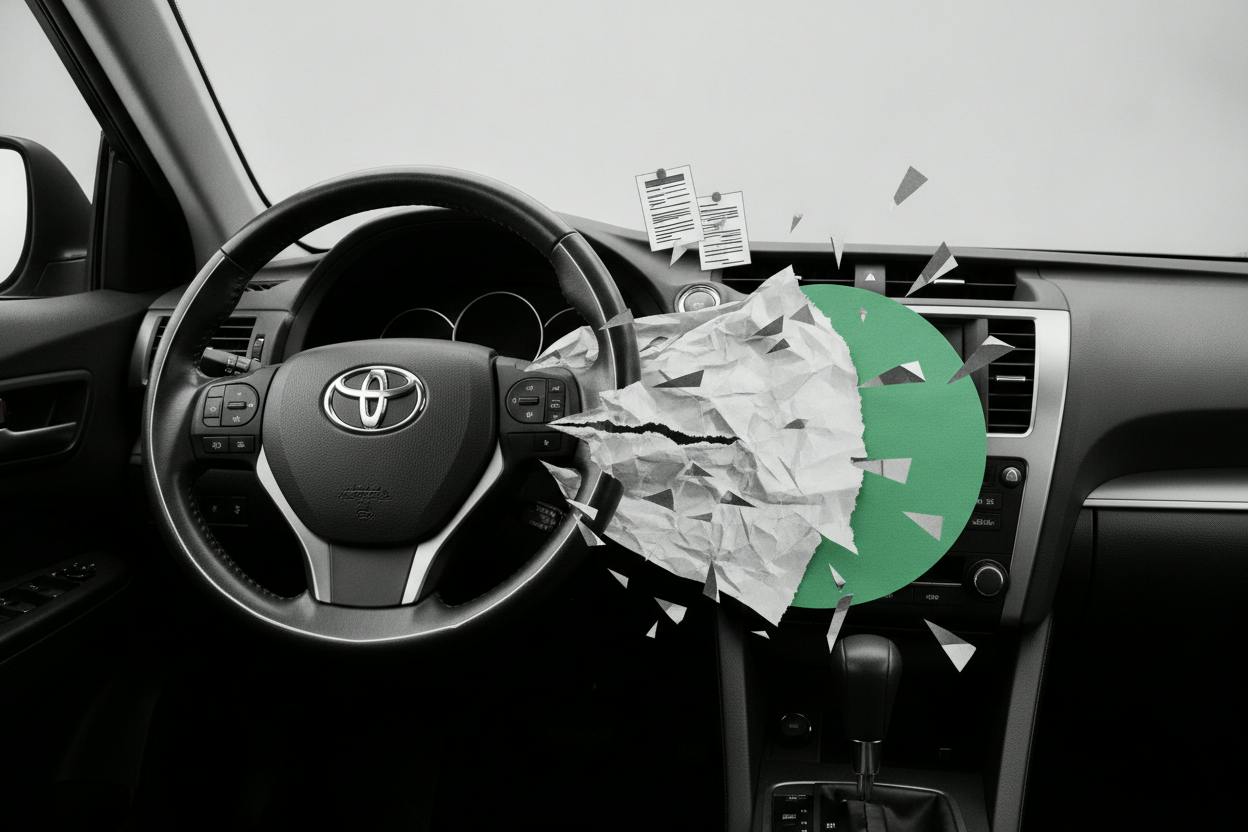
Toyota is recalling 314,029 vehicles in the United States after federal regulators warned that certain Takata-made front passenger air bag inflators could rupture and send metal fragments flying into the cabin. The recall, announced in a notice from the National Highway Traffic Safety Administration (NHTSA), affects a wide range of older Toyota and Lexus models built between 2002 and 2017.
The problem stems from the inflator's propellant, which can break down after years of exposure to heat, humidity, and repeated temperature swings. In a crash, a degraded inflator could deploy with too much force, causing the metal housing to burst. That is the same fundamental defect behind the largest automotive recall in US history, which has involved tens of millions of vehicles from multiple automakers over the past decade.
Which vehicles are affected?
According to the NHTSA notice, the recall covers a broad spread of model years and nameplates. On the Toyota side, affected models include the Corolla, Tundra, Sequoia, and 4Runner. On the Lexus side, the list includes the SC430, IS250, and GX460. Owners of these vehicles can check whether their specific car is included by visiting the NHTSA's recall lookup tool or Toyota's owner website using their vehicle identification number (VIN).
Dealers will replace the front passenger air bag inflator free of charge. Toyota has not yet provided a timeline for when parts will be available, but automakers typically send notification letters to owners once the remedy is ready. In the meantime, regulators advise owners to keep an eye on any recall notices and to respond promptly when parts become available.
This is not the first time Takata inflators have forced recalls. The defect has been linked to multiple deaths and injuries worldwide, and it led to the bankruptcy of Takata, the Japanese supplier, in 2017. Automakers have spent years replacing inflators, and this latest action shows that the fallout is still not fully resolved, especially for older vehicles that may have been missed in earlier rounds.
What this means for Toyota owners
For everyday drivers, the key takeaway is simple: if your vehicle is included, get the repair done as soon as parts are available. The risk is highest in hot, humid climates, where the propellant degrades faster. Even if you have not received a notice yet, checking your VIN is a quick way to see if your car is affected. The repair is free, and Toyota has said it will cover the cost.
It is also worth noting that this recall is separate from other recent safety actions in the auto industry. For example, BMW recently recalled more than 720,000 vehicles in the US over a fire risk, and US regulators are also looking into stop-start failures in about a million Honda vehicles. These events highlight how automakers continue to deal with legacy safety issues even as they push forward with new technology.
What it means for investors
For investors, a recall of this size is unlikely to move Toyota's stock dramatically on its own. The company has a strong balance sheet and has been posting robust profits, helped by surging demand for hybrids and a weak yen. In fact, Toyota has repeatedly raised its annual profit forecast as hybrid sales boom, and analysts have taken notice, with Moody's recently lifting its outlook on the company to positive.
Still, recalls carry costs. Replacing inflators across more than 300,000 vehicles involves parts, labor, and logistics, and the final bill could run into the tens of millions of dollars. That is a manageable hit for a company of Toyota's size, but it is a reminder that safety issues can create unexpected expenses and reputational risk. Investors will be watching to see whether this recall expands to more vehicles or leads to further regulatory scrutiny.
Longer term, the bigger question for Toyota is how it balances its reputation for reliability with the challenges of managing an aging fleet of vehicles on the road. The company has been investing heavily in electrification and new models, including plans to revive the Scion badge for a small US utility truck. But as this recall shows, the legacy of older models can linger for years.
For now, the practical advice for owners is to act quickly when the repair becomes available. For investors, the recall is a modest headwind, not a game-changer. The company's underlying business remains strong, and its ability to handle this kind of issue is part of what makes it a blue-chip holding. As always, it pays to stay informed about safety notices and to understand how corporate actions like this fit into the bigger picture of a company's financial health.