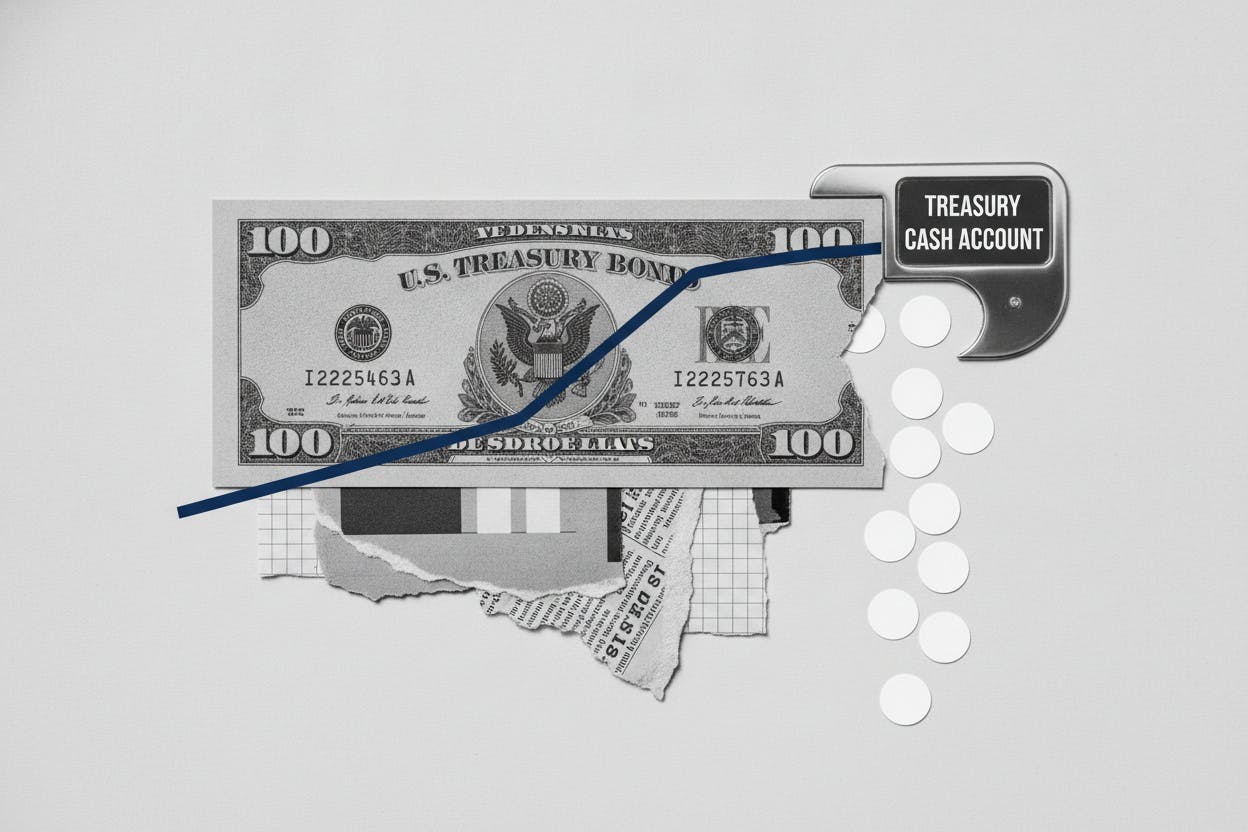
US Treasury yields moved lower on Tuesday after a CNBC report suggested the Treasury Department could use its cash account to fund larger debt buybacks. The report, which cited unnamed sources, had traders quickly reassessing their expectations for how the government manages its borrowing.
The idea is simple: instead of issuing new debt to buy back older, more expensive bonds, the Treasury might draw down its cash buffer—the Treasury General Account (TGA)—to finance those repurchases. That would reduce the need for new issuance, which in turn could ease upward pressure on yields.
Yields on shorter-dated Treasuries fell the most, reflecting the market's immediate reaction to the possibility of less supply. The move also rippled into other assets, with the dollar slipping to a three-month low as traders adjusted their positions. The broader backdrop remains one of heightened sensitivity to any shift in the Treasury's funding plans, especially after a period of volatile swings in long-term yields.
What are debt buybacks?
Debt buybacks are exactly what they sound like: the Treasury repurchases its own outstanding bonds from investors before they mature. This is not a new tool—the Treasury has used buybacks in the past to manage the maturity profile of its debt and to improve liquidity in older, less-traded securities.
But the scale and funding method matter. If the Treasury funds buybacks by dipping into its cash account, it effectively reduces the net supply of Treasuries in the market. That can be supportive for bond prices, pushing yields lower. Conversely, if buybacks are funded by issuing new debt, the effect is largely neutral.
The report suggests the Treasury may be considering a more aggressive use of buybacks, which would be a departure from the recent playbook. For years, the Treasury has emphasized a "regular and predictable" approach to debt management, giving investors clarity on auction sizes and schedules. Any hint of flexibility could unsettle that narrative.
Why traders are paying attention
The reaction in the bond market underscores how sensitive investors have become to any change in Treasury supply. In recent months, yields have climbed sharply, with the 30-year Treasury yield touching levels not seen in over a decade. That rise has been driven by a combination of strong economic data, sticky inflation, and concerns about the government's growing debt load.
Against that backdrop, the possibility of fewer new bond auctions—or at least smaller ones—offers some relief. But it also raises questions about the Treasury's commitment to its stated principles. If the Treasury is willing to tap its cash account to fund buybacks, what else might it do? That uncertainty can itself move markets.
The dollar's decline is another sign of the market's reaction. A lower dollar often accompanies falling Treasury yields, as foreign investors see reduced returns on US assets. The move also comes as investors look ahead to the Federal Reserve's Jackson Hole symposium, where policymakers may offer clues on the path of interest rates. The combination of these factors has kept currency and bond markets on edge.
What it means for investors
For everyday investors, the immediate takeaway is that Treasury yields—and by extension, borrowing costs—remain sensitive to policy signals. If the Treasury does shift toward larger buybacks funded by its cash account, it could help keep a lid on yields, which would be positive for bond prices and could ease pressure on stocks.
But it's important not to overreact to a single report. The Treasury has not confirmed any change in strategy, and "regular and predictable" has been a cornerstone of its approach for good reason. Markets often react to headlines, but the actual implementation could take time and may be modest in scale.
Investors should also keep an eye on the broader picture. Yields have been volatile, and this news is just one factor in a complex equation that includes inflation data, Fed policy, and global demand for US debt. As always, diversification and a long-term perspective remain key.
The coming weeks will likely bring more clarity, especially as the Treasury announces its quarterly refunding plans and the Fed signals its next moves. Until then, expect more swings in yields and the dollar as traders digest every hint of change.