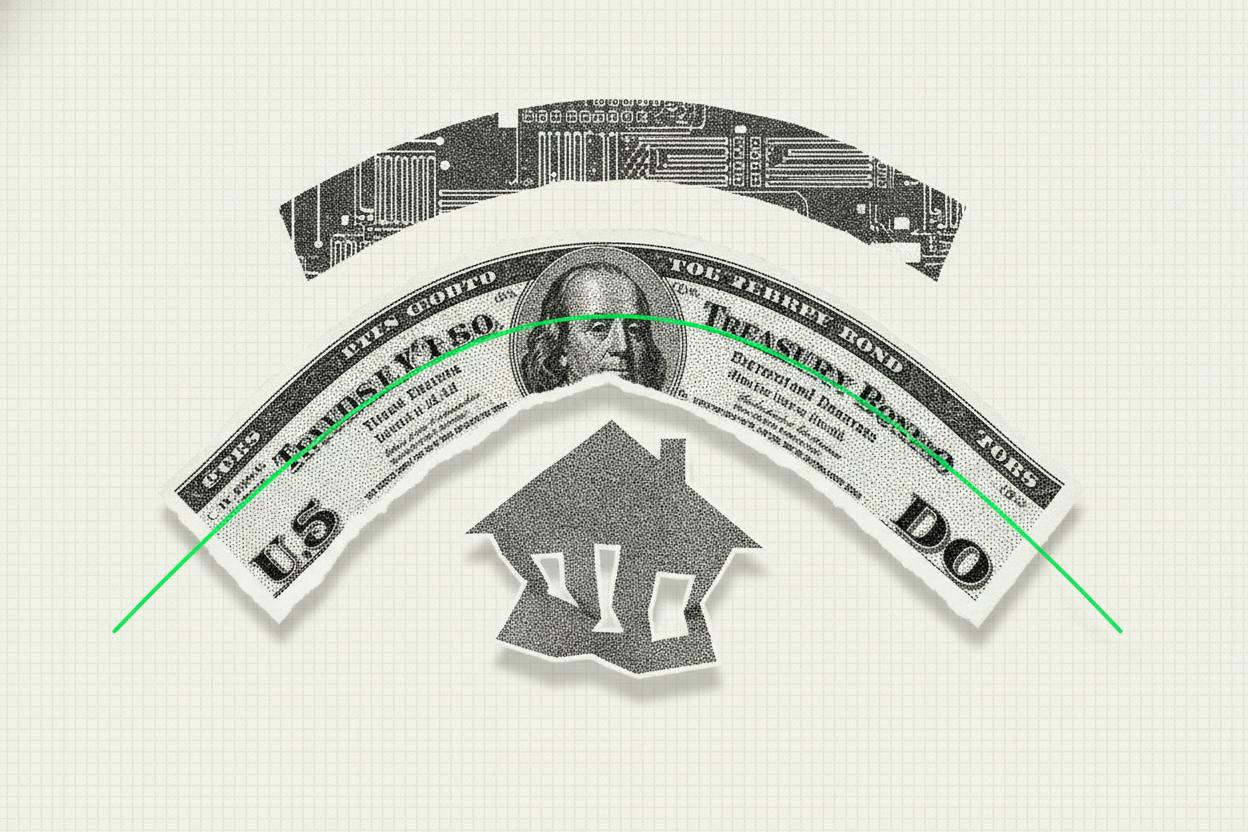
US Treasury yields slipped Tuesday, as a fresh batch of weak housing data reinforced the view that high borrowing costs are finally cooling the economy, while a wobble in AI-linked stocks added to the day's rate jitters. The 10-year yield briefly slid before settling around 5.096%, a level that still marks a multi-year high but reflects the tug-of-war between growth worries and inflation concerns.
The move shows how tightly bond markets and big tech sentiment are now intertwined. When AI-related shares stumble, traders often rush into the safety of longer-term Treasuries, pushing yields down. Conversely, when tech stocks rally, yields tend to climb as investors shift out of bonds. This feedback loop has become a defining feature of today's markets.
Housing data points to a cooling economy
The fundamental reason for the bond rally came from housing. The Commerce Department reported that single-family homebuilding starts and building permits both fell in September, a sign that the housing market is buckling under the weight of mortgage rates that remain near multi-decade highs. Meanwhile, the National Association of Realtors said its pending home sales index dropped 7.3% to 66.0, the lowest level since the series began in 2001.
Pending home sales are a leading indicator because they track signed contracts, not just closings. A drop of this magnitude suggests that even buyers who had been holding on are now stepping back. For economists, it's another piece of evidence that the Federal Reserve's aggressive rate-hiking campaign is working its way through the economy, potentially slowing growth enough to keep inflation in check without tipping into a recession.
That's why traders have pared back bets on another Fed rate hike. When the market sees less chance of future tightening, shorter-term yields tend to fall, and that can pull longer-term yields down with them. The 10-year yield, which influences everything from mortgages to corporate borrowing costs, is particularly sensitive to shifts in growth expectations.
Real yields doing the heavy lifting
One key detail for investors: the move in the 10-year yield is being driven more by real yields than by inflation expectations. Breakeven rates—the gap between regular Treasuries and inflation-protected securities—are sitting near 2.3% (2.346% for the 10-year and 2.379% for the five-year). That suggests investors' inflation outlook isn't swinging much day to day.
So when the nominal 10-year yield moves, a big share of that shift is often in "real yields," meaning the return after inflation. Real yields act like a discount rate for future profits. When they rise, the present value of far-off earnings falls, which is why long-duration stocks—especially those in AI infrastructure, such as CoreWeave—can react sharply to small changes in real yields. A bout of tech nervousness can quickly spill into a fast drop in yields as traders pile into longer-term bonds.
This dynamic has been on display in recent weeks, as AI stock jitters have faded and then resurfaced, keeping yields on a rollercoaster. The next test for AI stocks will likely come from earnings reports, which could either soothe or reignite concerns about valuations.
What it means for investors
For everyday investors, the key takeaway is that the bond market is sending a mixed message. On one hand, weak housing data suggests the economy is slowing, which could eventually prompt the Fed to cut rates. On the other hand, inflation remains above the Fed's 2% target, and growth in other areas is still firm.
The push and pull isn't over. Upcoming Treasury auctions will add fresh bond supply, which can push yields higher if demand is weak. At the same time, investors are weighing "soft spots" like housing against still-firm growth and inflation. This means volatility in both bond and stock markets is likely to continue.
For those with long-term portfolios, the message is to stay diversified. The relationship between yields and tech stocks means that a sudden rise in real yields can hit growth-heavy portfolios hard, while a drop can provide a boost. Keeping a mix of asset classes can help smooth out these swings.
As always, it's important to remember that no one can predict the next move in rates. But understanding what's driving them—whether it's housing data, AI sentiment, or inflation expectations—can help you make sense of the daily noise.