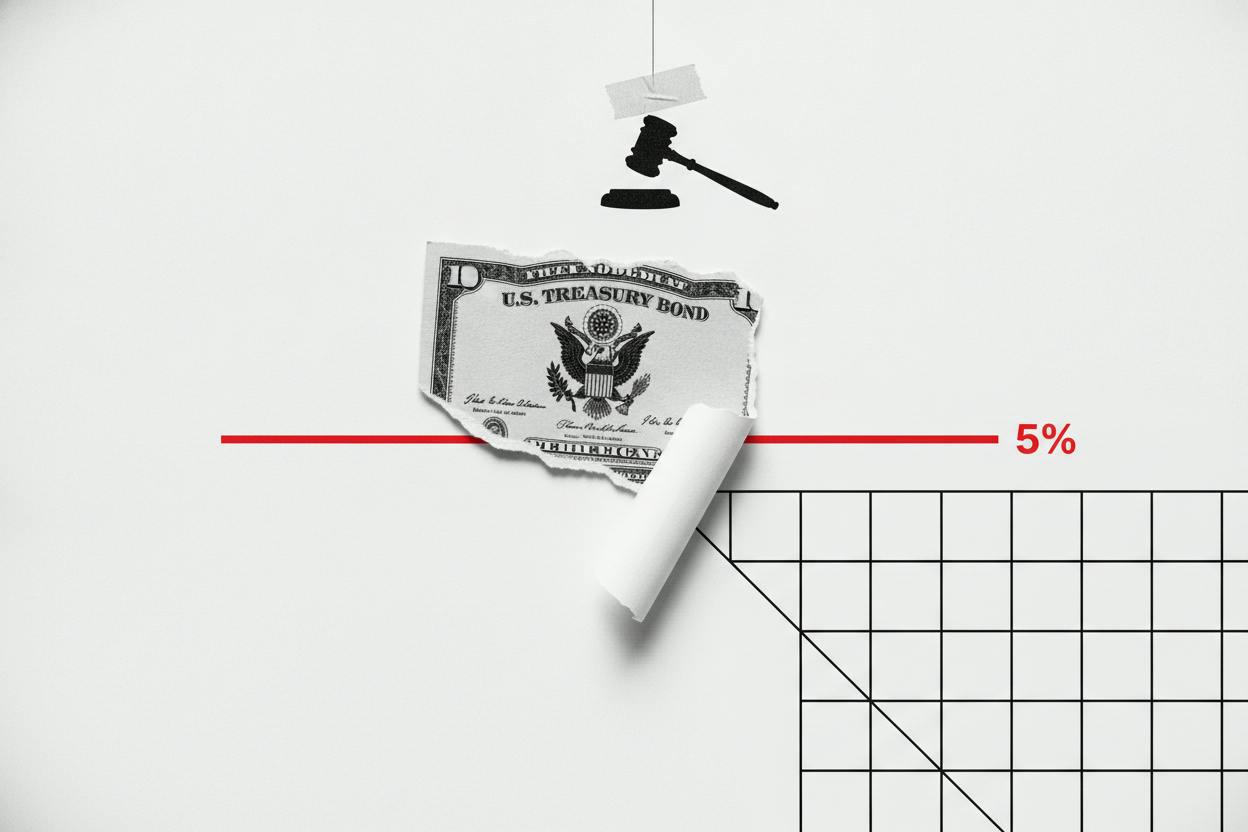
US Treasury yields eased again on Wednesday, with the benchmark 10-year note falling back below the psychologically important 5% level. The move came after the Federal Reserve left interest rates unchanged and the latest reading of its preferred inflation gauge, the Personal Consumption Expenditures (PCE) Price Index, came in roughly as economists had expected.
The 10-year yield had briefly climbed above 5% earlier this month, a level not seen in over a decade, as investors worried that the Fed might need to keep rates higher for longer to cool the economy. But this week's data has helped calm those fears, at least for now.
What the data showed
The PCE Price Index rose 0.5% last month, matching the consensus forecast. On an annual basis, inflation remains above the Fed's 2% target, but the fact that the monthly figure didn't surprise to the upside was enough to reassure bond investors.
At the same time, a separate report showed the US economy grew at a strong 3.4% annualized pace in the third quarter. That kind of growth would normally put upward pressure on yields, because a hot economy can force the Fed to keep policy tight. But markets treated the combination of solid growth and in-line inflation as a 'mixed' signal, and the bond market's reaction was muted.
Investors also kept their expectations for the Fed's next move largely unchanged. Futures markets continued to price in roughly an 83% probability that the central bank will raise rates again at its December meeting. That suggests traders still see another hike as likely, but not a certainty.
Why the 5% level matters
The 10-year Treasury yield is a key benchmark for borrowing costs across the economy. It influences mortgage rates, corporate bonds, and even the discount rate used to value stocks. When the yield rises above 5%, it can make borrowing more expensive for businesses and consumers, and it can also make bonds more attractive relative to stocks, potentially pulling money out of equities.
So the fact that the yield has slipped back below that threshold is a small relief for risk assets. It suggests that the bond market is not pricing in an out-of-control inflation scenario, even with the economy growing at a solid clip.
That said, the yield is still well above where it was a year ago, and the path forward remains uncertain. The Fed has repeatedly said it will depend on incoming data, and the next inflation and jobs reports will be closely watched.
What it means for investors
For everyday investors, the key takeaway is that the bond market is still adjusting to a 'higher for longer' interest rate environment. Even with this week's pullback, yields are at levels that were unthinkable just a couple of years ago. That has real implications for portfolios.
Higher Treasury yields mean that cash and short-term bonds are finally paying meaningful interest again, which can be attractive for conservative investors. But they also raise the bar for stocks, because future earnings are worth less when discounted at a higher rate. Growth stocks, in particular, tend to be more sensitive to yield moves.
It's also worth remembering that the Fed's decisions are not made in a vacuum. The central bank is trying to balance the need to bring inflation down with the risk of slowing the economy too much. The fact that growth is still strong gives the Fed room to keep rates elevated, but it also means that any future inflation surprise could push yields back up.
For now, the bond market seems to be taking a breather. But with the December meeting still ahead, and more economic data due in the coming weeks, the 5% level could be tested again.
As always, the best approach for most investors is to stay diversified and not make sudden moves based on short-term yield fluctuations. The bond market's moves are a signal, but they are just one of many factors that should inform a long-term strategy.