According to a Bloomberg report, the incoming Trump administration is exploring a $5 billion fund to help rebuild and upgrade infrastructure across the Middle East. The proposal, which Bloomberg says is detailed in a document it reviewed, would focus on projects ranging from a bypass around the Strait of Hormuz to major port expansions.
The fund, tentatively named the Partnership for Allied Construction & Trust, would be led by the US Development Finance Corporation (DFC), a US government agency that provides financing for projects in higher-risk markets. The DFC is not a typical aid agency; it operates more like a development bank, offering loans, guarantees, and political-risk insurance to encourage private investment in places where commercial lenders might be hesitant.
How the fund would work
The pitch, according to Bloomberg, is less about the US government writing big checks and more about using its balance sheet to de-risk projects so that private money feels comfortable showing up. The DFC can provide long-dated loans, guarantees, and insurance against political upheaval—tools that can make a multi-billion-dollar port or pipeline project more attractive to institutional investors like pension funds or sovereign wealth funds.
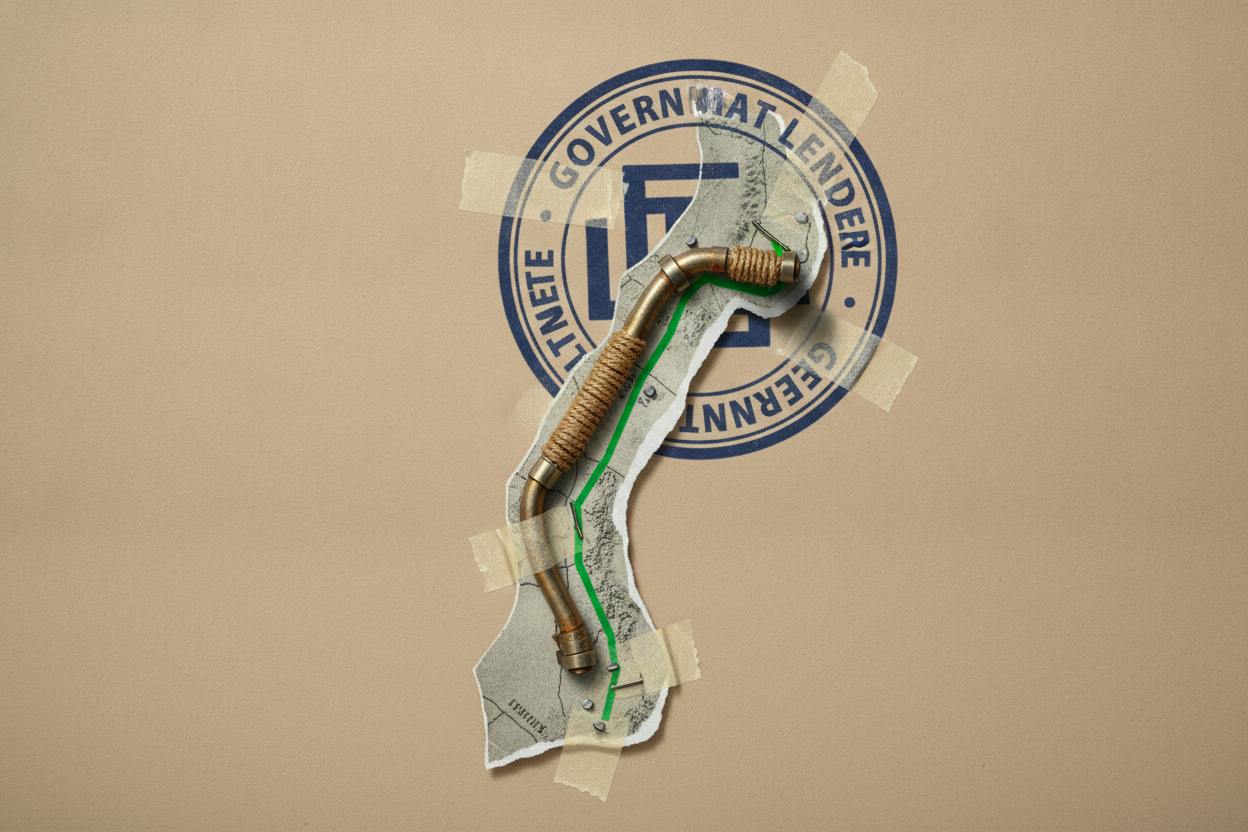
The document's priorities, as reported, read like a checklist of trade and energy chokepoints. A bypass around the Strait of Hormuz would be a major strategic play. The strait, a narrow waterway between the Persian Gulf and the Gulf of Oman, is one of the world's most critical oil shipping lanes. A bypass—likely a pipeline or overland route—could reduce the risk of disruption in a region that has seen repeated tensions. Port expansions, meanwhile, would aim to boost trade capacity and integrate regional economies more tightly with global supply chains.
The idea is not entirely new. The US has long used development finance to advance strategic interests, and the DFC was created in 2019 by merging the Overseas Private Investment Corporation (OPIC) with other development finance tools. The agency has backed projects in Africa, Asia, and Latin America, often in sectors like energy, infrastructure, and healthcare.
What it means for investors
For everyday investors, the immediate takeaway is that this is a proposal, not a done deal. The fund would require congressional approval and significant administrative setup, and the details—including how much of the $5 billion would be new money versus repurposed existing funds—are still unclear. Still, the signal is worth noting.
If the fund moves forward, it could create opportunities for US and international construction firms, engineering companies, and equipment suppliers that win contracts on these projects. Companies with experience in the Middle East, such as those that have built ports, pipelines, or power plants in the region, could be well-positioned. But investors should be cautious: infrastructure projects in the region have a history of delays, cost overruns, and political risk.
The plan also comes at a time when Middle East tensions are already affecting regional markets, with UAE stocks showing divergent moves as investors weigh geopolitical risks. A fund aimed at rebuilding and upgrading infrastructure could, over time, help stabilize the region by creating jobs and economic activity, but it is not a quick fix.
For those looking at the broader picture, the fund is part of a larger trend of governments using development finance to catalyze private investment in emerging markets. JPMorgan and Qatar's sovereign fund recently announced a $20 billion investing partnership, highlighting how sovereign wealth and private capital are flowing into infrastructure and other long-term assets. Similarly, QIA and JPMorgan unveiled a $20 billion global investment partnership, underscoring the appetite for large-scale, government-backed deals.
For the average investor, the key is to watch how the proposal evolves. If it gains traction, it could be a tailwind for infrastructure and construction stocks, as well as for companies with exposure to the Middle East. But it's also a reminder that geopolitical events can move markets in unexpected ways. As always, diversification and a long-term perspective are your best defenses.
In the meantime, the news is a useful reminder that the US government has tools beyond sanctions and military action to shape global events. Development finance is one of them, and it's likely to play a bigger role in the coming years, regardless of who sits in the White House.