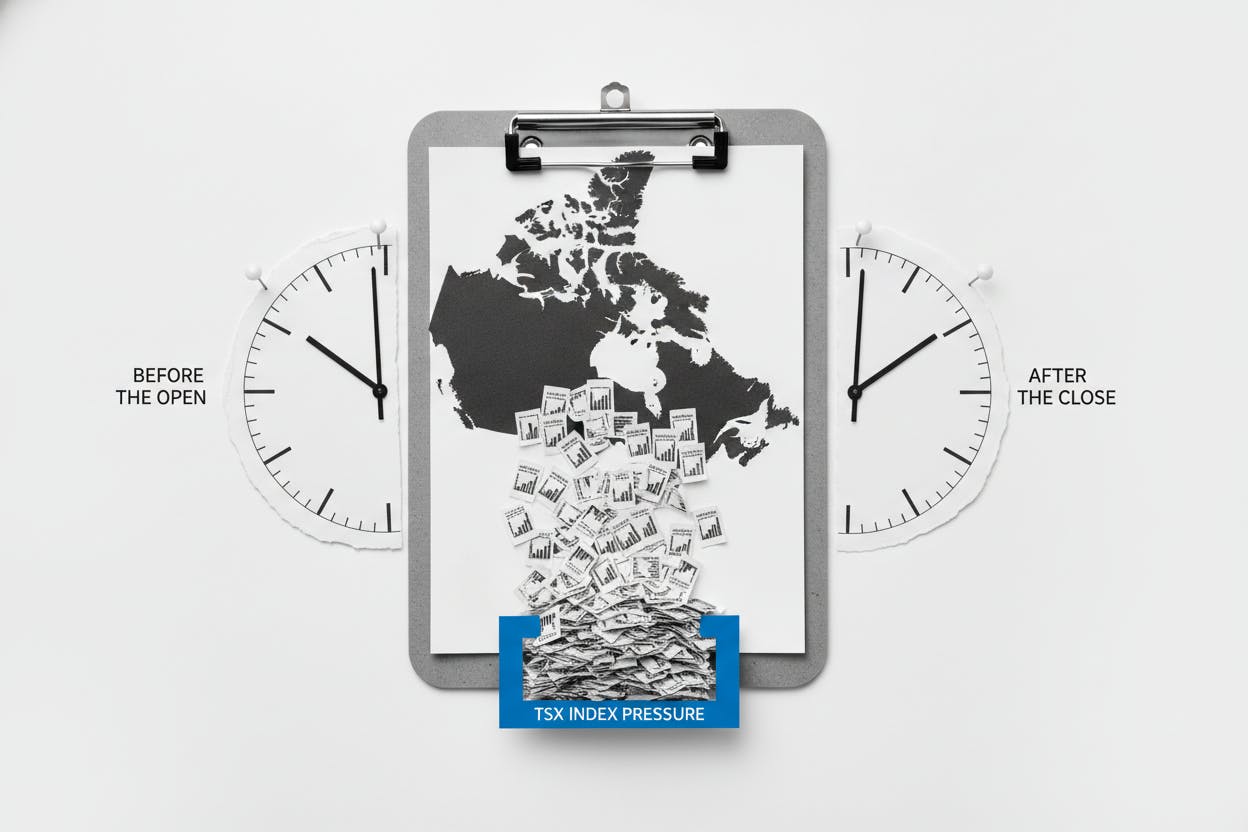
Canada's main stock exchange, the TSX, is heading into a crowded week of second-quarter earnings reports. Between July 27th and July 31st, a wave of major companies will release their latest financial results, giving investors a broad look at how corporate Canada performed during the spring months.
According to Reuters' July 24th earnings diary, the reporting schedule is packed with names spanning multiple sectors—from technology and logistics to pipelines, utilities, mining, and railways. Most results are scheduled either before the market opens (BMO) or after it closes (AMC), a common pattern that lets traders digest the numbers before making moves.
Who's reporting and when
The week kicks off on July 27th with after-close reports from logistics firm TFI International and electronics manufacturer Celestica. Both companies operate in industries sensitive to global supply chains and demand trends, so their numbers could offer clues about broader economic conditions.
Midweek brings a pileup of reports. On July 29th, Canadian Pacific Kansas City (CPKC) reports after the close, while IT services company CGI reports before the open. Energy infrastructure giant Enbridge also reports that day, along with several other pipeline and utility companies. The week continues with reports from miners, banks, and other industrials through July 31st.
This concentrated reporting period is typical for Canadian earnings season, where many companies align their quarterly releases around the same dates. For investors, it means a lot of information arriving at once—and potentially more volatility in individual stocks as the market reacts to surprises.
What investors should watch
Earnings reports are more than just profit numbers. They include revenue, margins, guidance for future quarters, and commentary from management about demand, costs, and the economic outlook. For everyday investors, the key is to compare results against analyst expectations—a company can report higher profits than last year but still see its stock fall if it missed what the market was expecting.
This earnings season comes at a time when Canada's economy faces several crosscurrents. The Bank of Canada recently cut interest rates, which could boost borrowing and spending, but inflation remains above target. Meanwhile, trade tensions with the US and global commodity price swings add uncertainty for export-heavy sectors like energy and mining. A recent analysis from BMO warned that a 50% US tariff threat could shave 0.5% off Canada's economy and complicate the Bank of Canada's rate decisions, a reminder of the geopolitical risks hanging over Canadian markets.
For investors holding TSX stocks, this week offers a chance to reassess their portfolios. Strong earnings from a company like Enbridge could signal resilient demand for energy infrastructure, while weak results from Celestica might hint at softening demand for electronics components. But it's important to look beyond headline numbers—one quarter doesn't make a trend, and stock prices often overreact in the short term.
Broader market context
The TSX's earnings week comes as global markets are also digesting corporate results. In the US, the S&P 500 recently dropped 0.6% for a second straight week as tech earnings disappointed and energy stocks rose on Middle East tensions. That divergence—tech weakness versus energy strength—mirrors the sector mix on the TSX, which has a heavier weighting in energy, materials, and financials than the US market.
Oil prices have been volatile, with a surge past $100 per barrel earlier this year overshadowing big tech earnings and raising rate-hike fears. For Canadian energy companies like Enbridge, higher oil prices can boost revenue, but they also increase costs for consumers and may prompt central banks to keep rates higher for longer.
On the tech side, the Nasdaq has dipped as AI spending doubts weigh on chip stocks ahead of big tech earnings. That caution could spill over to Canadian tech names like CGI and Celestica, which are smaller players but still tied to global tech trends.
What it means for everyday investors
For the average Canadian investor with a diversified portfolio, this earnings week is a reminder to stay informed but not reactive. Stock prices can swing sharply on earnings day—a company that beats expectations might jump 5% or more, while one that misses can drop just as fast. But long-term returns depend more on the underlying business health than any single quarter's results.
If you own shares in any of the companies reporting this week, pay attention to the earnings call or read the press release. Look for trends in revenue growth, profit margins, and management's outlook for the rest of the year. If a company's stock drops after earnings, ask whether the sell-off is justified or just a short-term overreaction.
For those not invested in individual stocks, exchange-traded funds (ETFs) that track the TSX will be influenced by the aggregate of these earnings reports. A strong earnings season across multiple sectors could lift the entire index, while widespread misses could drag it down.
Ultimately, earnings season is one of the best windows into how companies are really performing—beyond the daily noise of headlines and market moves. This week's reports from Celestica, CGI, Enbridge, CPKC, and others will help paint a clearer picture of where the Canadian economy stands heading into the second half of the year.