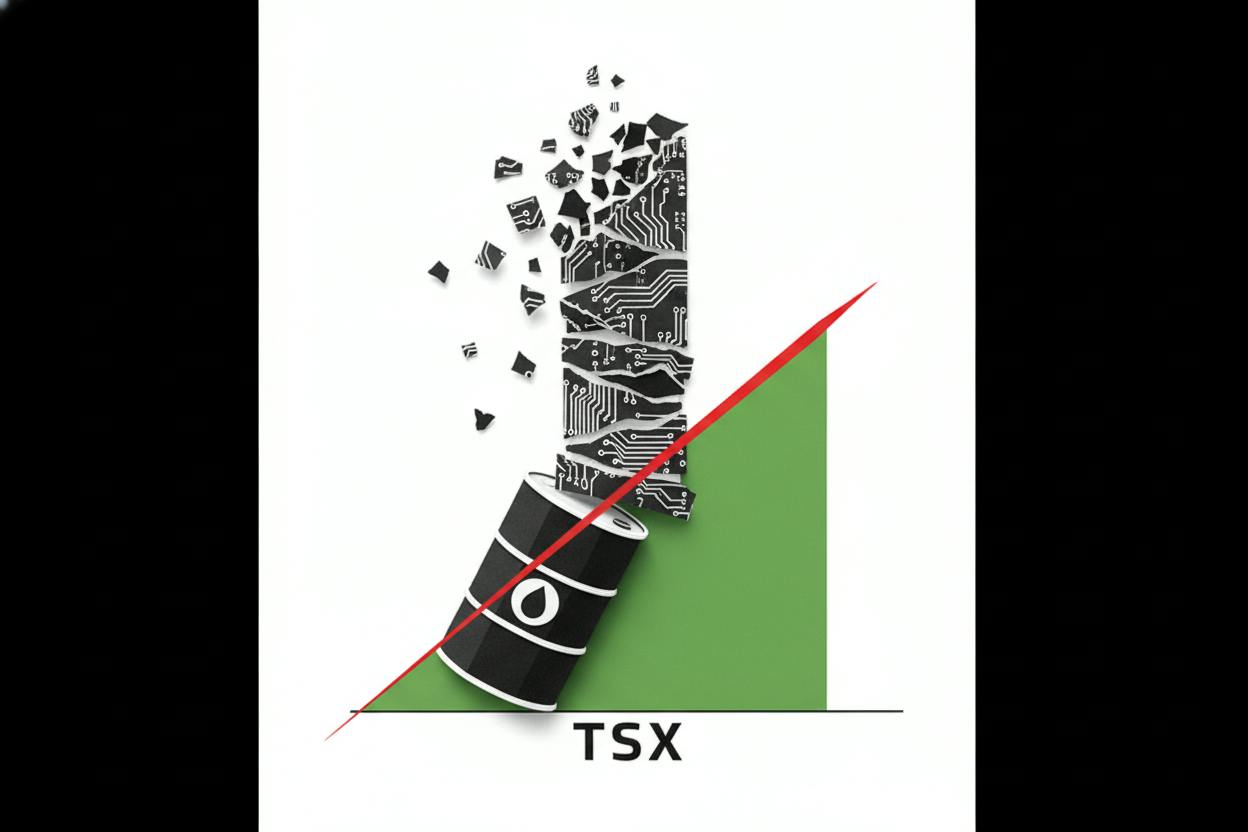
Canada's main stock index, the S&P/TSX Composite, fell 1.3% on Thursday, as a sharp selloff in US technology stocks spilled over into Canadian markets, erasing the previous session's post-midterm bounce. The decline was led by a drop in chip and AI-related shares, with electronics manufacturer Celestica plunging 14.6% and software firm BlackBerry losing 7.2%, according to Reuters.
The move mirrored a broader risk-off day on Wall Street, where the tech-heavy Nasdaq Composite slid 4.8%. Canadian tech stocks as a group fell 5.4%, making them the biggest drag on the TSX.
Why US tech moves ripple into Canada
Canadian tech companies often trade in step with their US counterparts because investors view them through the same lens: high-growth, higher-volatility names that get sold first when sentiment turns cautious. When US mega-cap tech stocks stumble, money tends to rotate out of riskier assets, and Canadian tech names—many of which are smaller and less liquid—can see outsized moves.
Celestica, which makes electronics for data centers and other industries, is particularly sensitive to swings in the AI and semiconductor trade. BlackBerry, once known for its smartphones but now focused on software and cybersecurity, also moves with the broader tech sentiment.
Thursday's slide came after a brief rally on Wednesday, when US midterm election results eased some political uncertainty. But that optimism faded quickly as investors refocused on concerns about high valuations and the pace of AI infrastructure spending. For more on the global chip selloff, see why chip stocks are sliding after Qualcomm's outlook.
Energy provides a cushion
The TSX is not a pure tech index. It is a broad mix of sectors, and the relative weight of each matters. On Thursday, energy stocks provided a buffer, rising 0.4% as Brent crude climbed nearly 2.8%. Higher oil prices helped offset some of the tech losses, keeping the overall index decline to 1.3%—far less severe than the Nasdaq's 4.8% drop.
This split-screen dynamic is a reminder that the TSX can look relatively calm even when individual stocks are swinging wildly. The index's performance depends on which sectors are heavy on any given day. When energy is strong and tech is weak, the two can partially cancel each other out.
For context on how oil prices are moving, see how Brent crude is reacting to geopolitical headlines.
What it means for your portfolio
For everyday investors, Thursday's action is a useful illustration of diversification. If you own a broad Canada equity fund, a workplace pension plan, or any diversified TSX exposure, your returns are shaped by the index's sector mix—not just by what happens in US tech. Even when the Nasdaq falls sharply, the TSX can hold up better if other sectors, like energy, are gaining.
However, if you hold individual Canadian tech stocks or a sector-specific fund, you may feel the full force of a Nasdaq-style selloff. Celestica's 14.6% drop is a stark example of how a single stock can move like a high-beta US tech name, even though it trades on the TSX.
The practical takeaway: diversified TSX holdings can mute tech volatility, while concentrated positions in a few Canadian tech stocks may still feel like a ride on the Nasdaq. For more on how midterm results are affecting markets, see how midterm gridlock is mixing with AI chip selloffs.
Investors will likely keep an eye on two things in the coming days: whether the tech selloff deepens or stabilizes, and whether oil prices continue to climb. If energy strength persists, it could continue to cushion the TSX against further tech weakness.