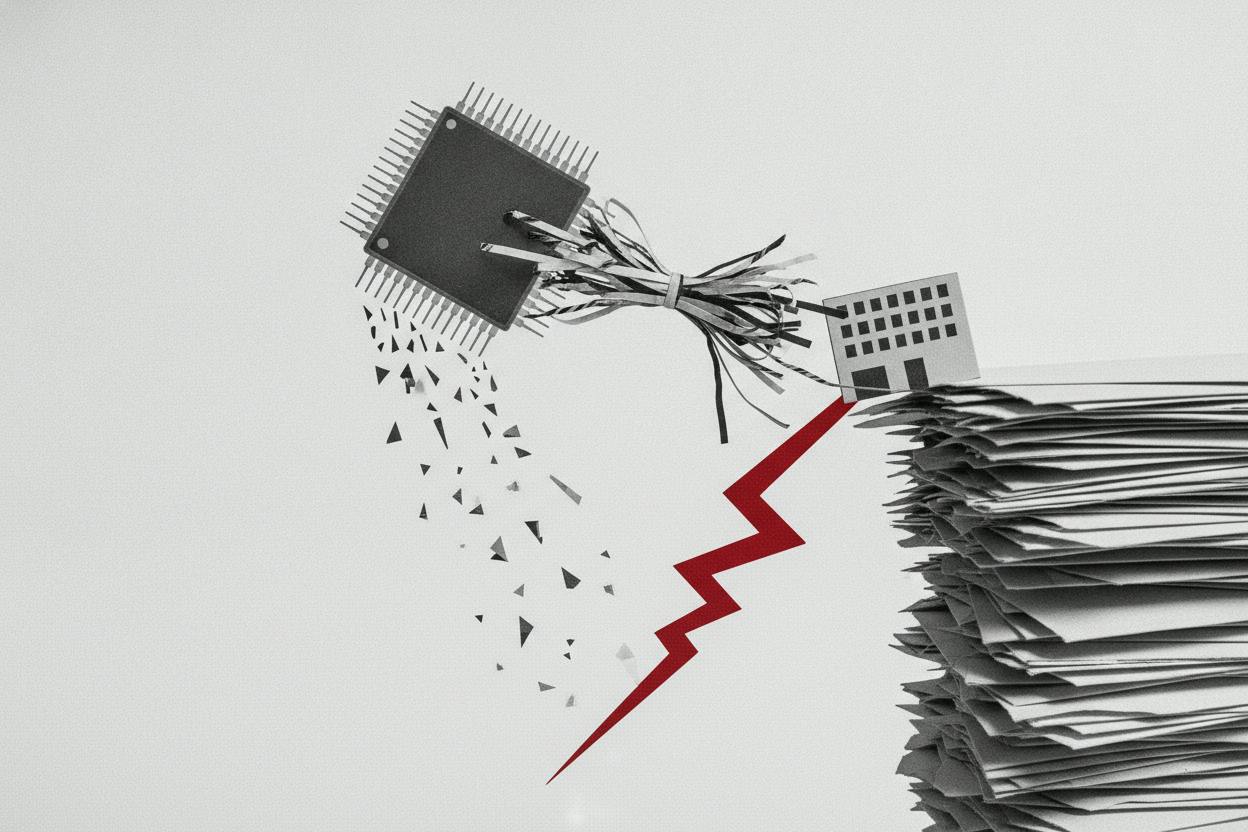
Semiconductor stocks took a sharp hit on Thursday, and the pain quickly spread to data-center and AI infrastructure names, dragging the Nasdaq composite lower. The trigger was a weak outlook from Qualcomm, one of the world's biggest chip designers, which spooked investors who had piled into AI-related trades.
According to Reuters, the selloff pulled down AI-linked companies like Dell and several data center operators, as traders rushed to unwind positions that had become crowded. The move highlights how quickly sentiment can shift in a market that has been heavily driven by enthusiasm over artificial intelligence.
Why Qualcomm's outlook matters
Qualcomm is a major supplier of chips for smartphones, but it also has growing exposure to other areas, including automotive and the Internet of Things. When a company of its size issues a cautious forecast, investors often read it as a sign that demand for chips broadly may be softening.
That matters because chipmakers have been at the center of the AI boom. Companies like Nvidia have seen explosive growth as data centers snap up their processors to train and run AI models. But Qualcomm's warning suggests that not every corner of the semiconductor market is firing on all cylinders, and that has investors questioning whether the AI trade has gotten ahead of itself.
Data center stocks caught in the downdraft
The selloff wasn't limited to chip designers. Data center operators, which build and run the massive facilities that house AI servers, also fell. These companies have been big beneficiaries of the AI spending wave, but they are also sensitive to any sign that demand might cool.
Dell, which sells servers and storage systems used in data centers, was also dragged lower. The company has been a popular way for investors to play the AI infrastructure buildout, but it is also exposed to the broader PC and enterprise hardware market, which has been sluggish.
The move is a reminder that AI-related stocks often move together, for better or worse. When one piece of the puzzle cracks, investors tend to sell first and ask questions later.
What it means for investors
For everyday investors, Thursday's action is a useful lesson in how quickly momentum can reverse in hot sectors. The AI trade has been one of the most profitable themes of the past year, but it has also become crowded. When a key player like Qualcomm disappoints, it can trigger a wave of profit-taking that hits even companies with solid fundamentals.
It's also worth noting that a single company's outlook doesn't necessarily spell doom for the entire AI story. Qualcomm's business is heavily tied to smartphones, which have been in a slump. Its warning may say more about the phone market than about AI demand. Still, investors are likely to pay close attention to upcoming earnings from other chipmakers and data center companies for clues about whether the weakness is isolated or spreading.
For those with diversified portfolios, days like this are a reminder of why it's risky to concentrate too heavily in one sector. The Nasdaq's decline on Thursday was driven by a handful of big tech names, but other parts of the market may have held up better.
Investors should also keep an eye on how the Federal Reserve's interest rate policy plays into the picture. Higher rates tend to weigh on growth stocks, and any sign that rates will stay higher for longer could add pressure to the tech sector.
In the meantime, the selloff could create opportunities for long-term investors who believe in the AI story but want to buy at lower prices. But it's always wise to do your own research and consider your own risk tolerance before making any moves.
For more on how political shifts can affect AI and data center stocks, see our earlier piece on Democrats' midterm win hitting AI and data center stocks. And for a look at how other companies are navigating their outlooks, check out Ralph Lauren's raised outlook and Tapestry's earnings update.