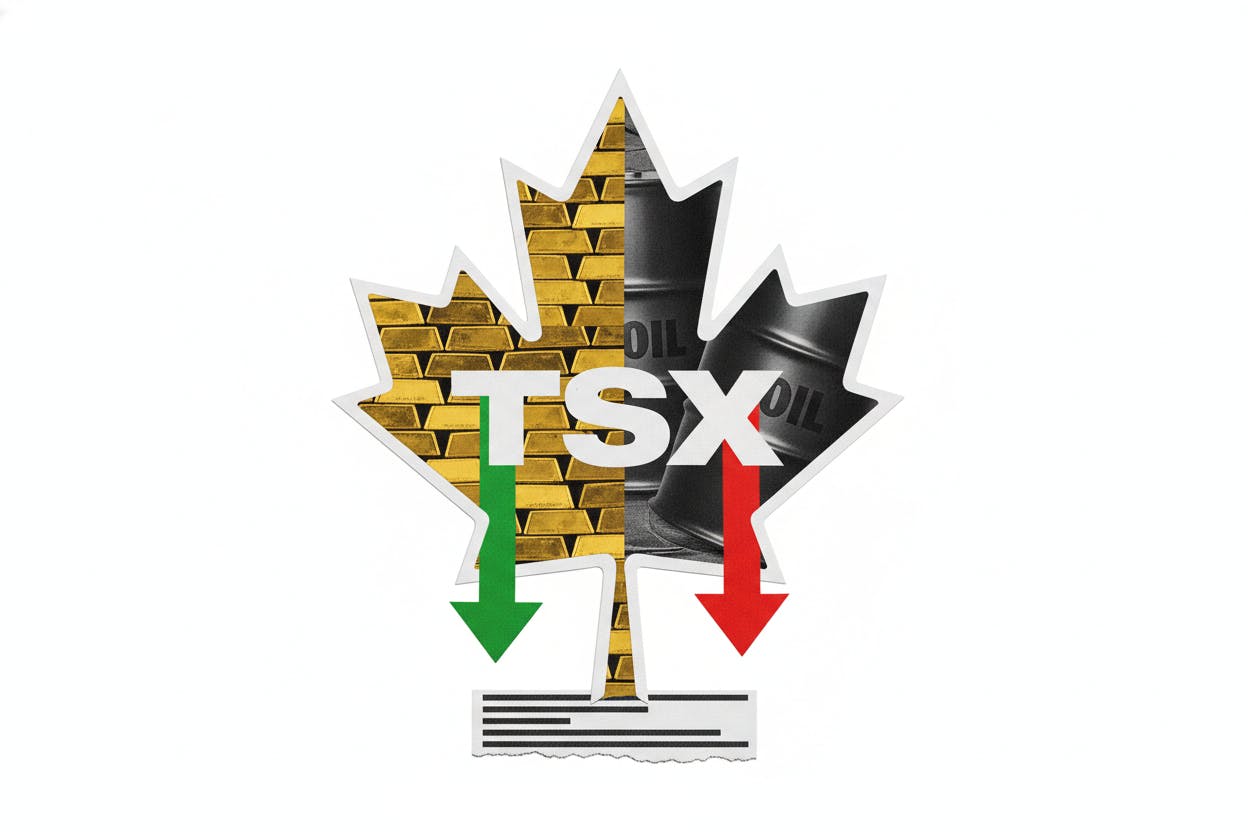
Canada's main stock index, the TSX, slipped on Tuesday as a decline in gold and oil prices weighed heavily on resource stocks, overshadowing a shift in interest-rate expectations that might otherwise have supported the market.
What happened
The materials sector, which includes mining and metals companies, fell 2.5% as gold prices dropped. Oil also slid, adding pressure on energy stocks. The moves came as traders digested softer-than-expected Canadian services sector data and adjusted their expectations for U.S. Federal Reserve policy.
According to LSEG data, markets are now pricing in just one more quarter-point rate hike from the Fed by the end of this year, down from earlier expectations of two. Meanwhile, the Bank of Canada is widely expected to hold rates steady at its July 15 decision, after a report showed Canada's services sector shrank in June as high prices and uncertainty weighed on demand. For more on that, see Canada's Services Sector Shrinks in June.
Why commodities matter so much for the TSX
The TSX is heavily shaped by commodities, so a down day in metals or crude can outweigh otherwise supportive interest-rate chatter. Gold prices fell 2.3%, and that quickly hit mining shares. When the metal drops, miners' revenue tends to fall right away, but many costs—labor, energy, equipment, site overhead—don't fall nearly as fast, which squeezes expected profits.
Gold miners often move more than gold itself because their profits are a leveraged bet on the metal: small price changes can translate into much bigger shifts in expected cash flow when costs are sticky and production can't be adjusted quickly. That's why a pullback in bullion can hit miners like I-80 Gold, Eldorado Gold, and Endeavour Silver harder than the underlying metal. On Tuesday, those stocks fell between 2.9% and 6.9%.
Oil's dip added pressure on energy stocks, reinforcing how much the benchmark can hinge on a handful of resource sectors. For TSX investors, it means day-to-day index moves can be driven by amplified swings in materials and energy, even when the rates backdrop looks calmer than it did a few months ago.
What it means for investors
For everyday investors, the day's action is a reminder that Canada's market is not just a mirror of U.S. stocks. While the S&P 500 is dominated by technology and healthcare, the TSX remains heavily tied to commodities. That means its performance can diverge sharply from U.S. indices, especially when resource prices move.
The softer services data from Canada adds another layer. The Bank of Canada has been watching for signs that its rate hikes are cooling the economy, and the services sector's weakness may give the central bank reason to pause. That could be positive for bonds and rate-sensitive stocks, but it also signals that the economy is slowing. For more on the economic outlook, see BMO Sees Canada's Economy Rebounding After Soft Patch.
Investors will be watching the upcoming Canadian jobs report, expected to show a modest gain of 10,000 jobs after May's surge, for further clues on the economy's direction. See Canada's June Jobs Report Expected to Show Modest 10,000 Gain.
The bottom line
Tuesday's TSX slip shows that commodity swings can still dominate the index, even as interest-rate expectations become more favorable. For investors, it's a reminder to understand the sector composition of their holdings and to watch both resource prices and central bank signals when assessing Canadian markets.