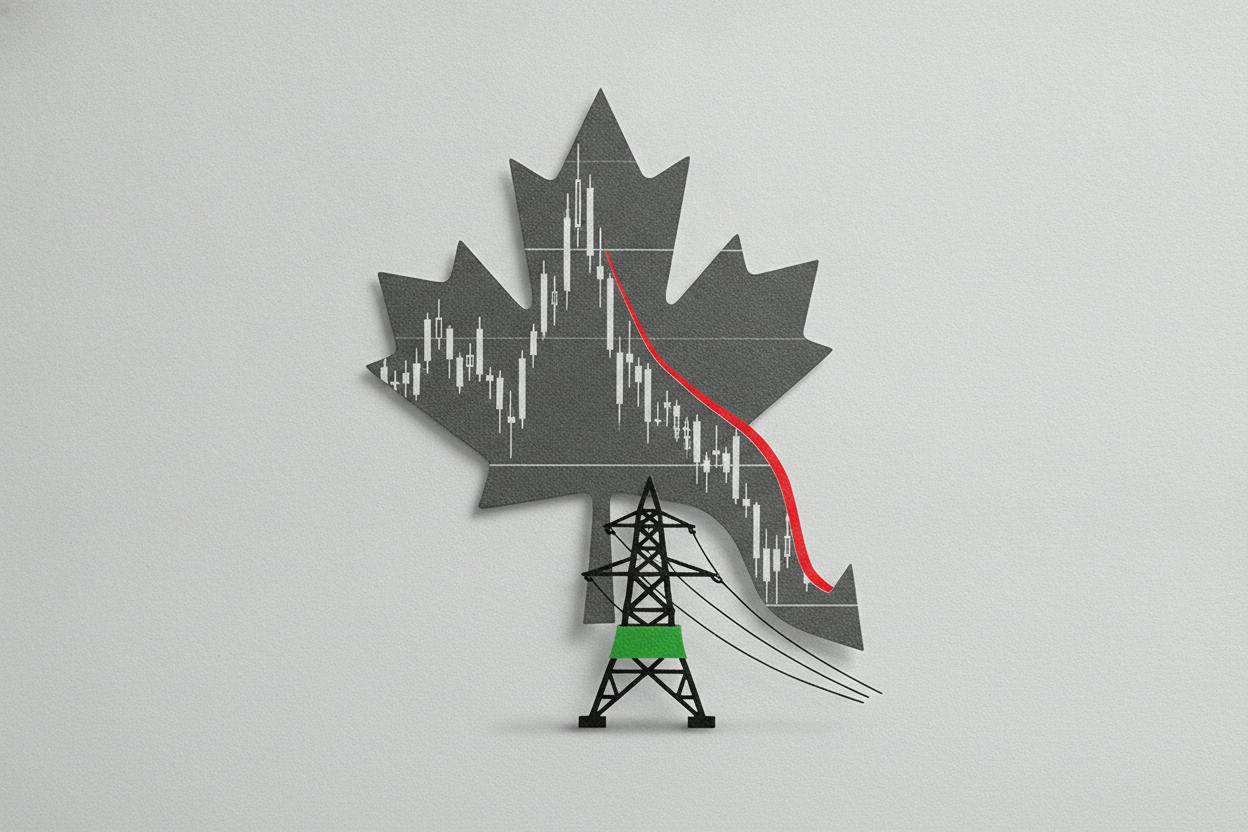
Canada's main stock index, the S&P/TSX Composite, ended Friday essentially unchanged, but the flat headline masked a clear tug-of-war beneath the surface. Technology shares fell 1.9% as fresh worries about Nvidia's outlook rippled through the AI trade, while defensive sectors like utilities and real estate quietly edged higher.
The split move points to a rotation rather than a broad market call. For months, investors have piled into the so-called AI trade, betting that surging demand for artificial intelligence would fuel massive spending on data centers and the chips that power them. Nvidia, as the dominant supplier of AI processors, has become the bellwether for that entire theme. So when questions arise about its business—whether it's the sustainability of its growth, its financing arrangements, or the broader competitive landscape—the effects can be felt far beyond the company itself.
Friday's tech slide echoed similar moves in other markets. In Asia, Nvidia jitters hit regional tech stocks, and Hong Kong tech shares fell on US AI chip export fears. The pattern suggests that investor sentiment toward AI is increasingly sensitive to any hint of trouble, whether it's regulatory, financial, or competitive.
Why utilities and real estate rose
While tech struggled, utilities and real estate—two sectors often seen as defensive havens—moved higher. These groups tend to perform well when investors are looking for stability and income, especially in an environment where interest rates may be heading lower. Utilities, in particular, are sensitive to bond yields because they carry high debt loads and offer steady dividends. When yields fall, their relative appeal rises.
The rotation into these sectors suggests that some investors are trimming exposure to high-flying tech names and parking money in more predictable areas. It's a classic risk-off shift, but one that's happening within an otherwise calm index.
Inflation data on deck
Adding to the cautious tone, traders are looking ahead to Canada's inflation report due next week. The data will give the Bank of Canada a clearer picture of price pressures and could influence the path of interest rates. If inflation comes in cooler than expected, it would reinforce expectations for further rate cuts, which would be a tailwind for rate-sensitive sectors like real estate and utilities. Conversely, a hot reading could delay easing and put pressure on those same groups.
Canada's economy has shown mixed signals lately. Factory sales were flat in September, even as new orders hit a record, suggesting that while demand is there, production is struggling to keep pace. That kind of backdrop makes the inflation data all the more important for gauging the central bank's next move.
What it means for investors
For everyday investors, Friday's action is a reminder that a flat index can hide significant shifts underneath. The TSX's overall stability masked a meaningful decline in one of its most closely watched sectors. If you hold a broad index fund, you might not have noticed the tech drag, but if you own individual tech stocks or a sector ETF, the pain was real.
The AI trade has been a powerful driver of returns over the past year, but it also carries concentration risk. When a single company like Nvidia becomes the linchpin for an entire theme, any wobble can create outsized moves. Diversification across sectors and asset classes remains a key way to manage that kind of volatility.
Looking ahead, the inflation report will be the next major catalyst for Canadian markets. A softer number could boost rate-sensitive sectors and support the broader index, while a surprise upside could reignite concerns about sticky prices and tighter policy. Either way, investors should expect continued rotation and sector-level divergence until the macro picture becomes clearer.
For now, the TSX's flat close is less a sign of complacency and more a reflection of investors weighing competing forces: the enduring appeal of AI growth versus the safety of defensive sectors, and the uncertainty around what the Bank of Canada will do next.