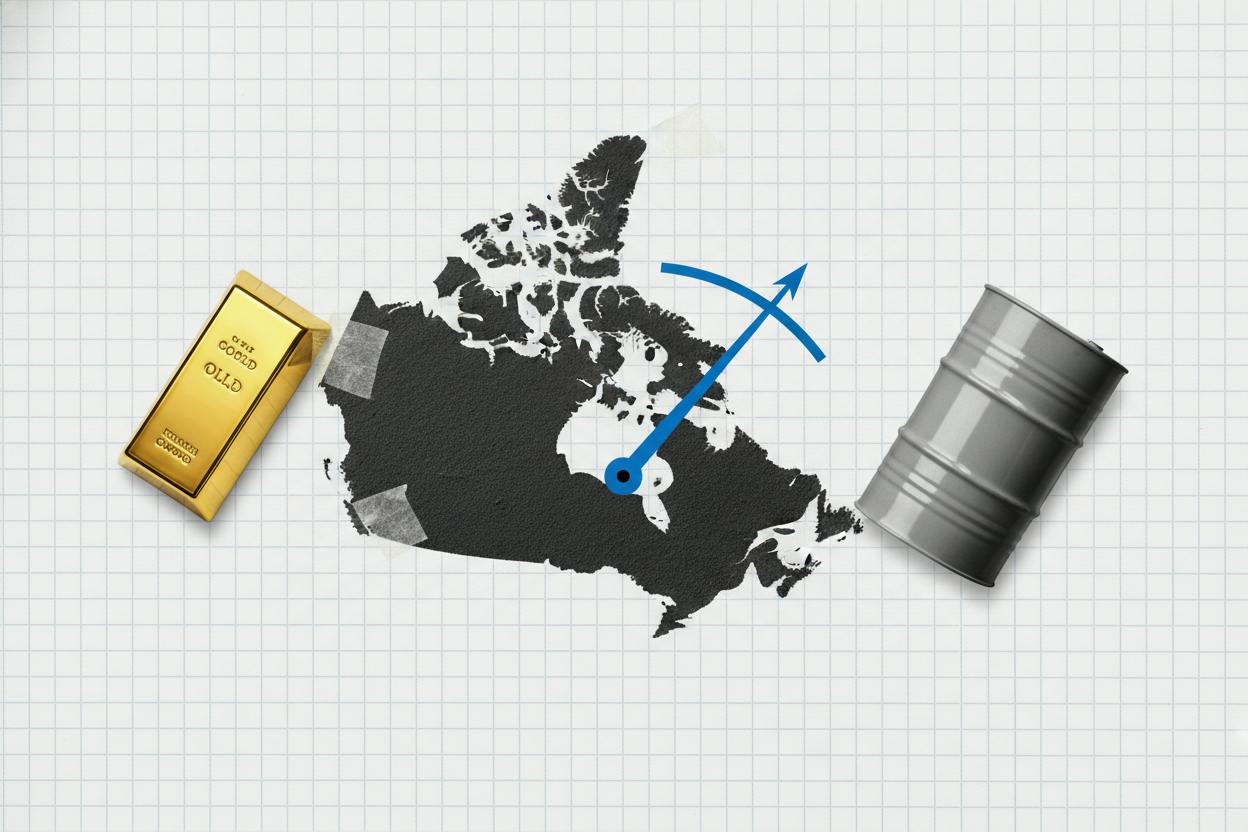
Canadian stock futures edged higher on Friday, as gains in gold and silver outweighed a slight pullback in oil prices. The move came as investors weighed the latest signals from the Bank of Canada, where Governor Tiff Macklem warned that persistent energy-price pressures could complicate the central bank's path on interest rates.
Commodity tilt drives the TSX
Canada's main stock index, the TSX, has a heavy weighting in commodity-related sectors. That means when metals rise and oil slips, leadership within the index can shift quickly. This time, stronger precious metals helped the materials side of the market offset a small decline in crude, even though oil remains at elevated levels.
Gold and silver futures were up about 0.4% on the day, extending a recent rebound in precious metals. The move comes as investors keep an eye on global inflation and central bank policy, both of which tend to influence demand for metals as a store of value. For a market like Canada's, where mining and energy companies make up a large slice of the index, such swings can have an outsized impact on overall performance.
Oil, meanwhile, slipped slightly but stayed near recent highs. Energy prices have been a key driver of inflation around the world, and Canada is no exception. The country is a major oil producer, but it also imports refined products, so higher crude costs can feed into consumer prices at the pump and beyond.
Macklem's warning on rates
The bigger story for investors, however, sits behind the price quotes. Energy costs feed directly into inflation, and Bank of Canada Governor Tiff Macklem said the country hasn't raised rates "yet," adding that the longer high energy prices persist, "the harder that gets."
His comments suggest that even if the central bank holds rates steady at its next meeting, the path ahead could be more challenging. Persistent energy-price pressure could force the Bank of Canada to act sooner or more aggressively than markets currently expect.
Traders are already pricing in the possibility of a quarter-point rate hike in December, according to LSEG data. That expectation matters even before the central bank makes a move, because it influences borrowing costs across the economy.
What it means for your mortgage
Mortgage rates don't wait for a Bank of Canada decision. They respond to what lenders think is coming. When traders price in a possible December quarter-point increase, it often lifts short-term Government of Canada bond yields, which banks use as a benchmark for funding and for setting new fixed-rate mortgages. Variable-rate borrowing can feel it too, because lenders adjust pricing as their own costs and risk assumptions change.
That's why housing can slow even without an immediate hike. Higher expected rates raise monthly payments for new borrowers and make renewals tougher to swallow. With home sales already down in both August and September, stubborn energy prices could keep the pressure on affordability, regardless of whether the TSX has a good day.
For everyday investors, the takeaway is that central bank policy and commodity prices are closely linked. When energy costs stay high, inflation tends to stay sticky, which can keep interest rates elevated for longer. That affects not just mortgage holders but also the broader economy, as higher borrowing costs can cool spending and business investment.
Broader market context
The TSX's move on Friday comes amid a mixed backdrop for global markets. In the U.S., futures were also trading with a cautious tone as investors digested the latest inflation data and its implications for the Federal Reserve's rate path. Hot producer prices and strong retail sales have clouded the outlook for Fed cuts, which could spill over into Canadian markets as well.
Gold's recent strength has been a notable theme. The dollar posted its first weekly drop in five weeks, which often supports gold prices by making the metal cheaper for foreign buyers. That dynamic has helped lift mining stocks on the TSX, even as other sectors struggle.
At the same time, copper pulled back as inflation data and a slide in AI-related stocks rattled metals markets, showing that the commodity complex remains sensitive to macro signals.
What investors should watch next
For Canadian investors, the key dates to watch are the Bank of Canada's upcoming policy meetings and any fresh inflation data. If energy prices stay high, the central bank may have little choice but to keep rates elevated or even raise them again. That would likely keep pressure on housing and consumer spending, while potentially supporting energy and materials stocks.
On the other hand, if oil prices ease and inflation cools, the Bank of Canada could find room to hold steady or eventually cut rates, which would be a relief for borrowers and rate-sensitive sectors.
As always, it's important to remember that markets are forward-looking. The TSX's modest gain on Friday reflects a balancing act between bullish metals and bearish oil, but the bigger question for investors is how long energy prices can stay high and what that means for the central bank's next move.