Canada's S&P/TSX Composite snapped a recent losing streak on Tuesday, climbing 0.6% as a jump in oil and metal prices gave energy and mining stocks a boost. The rebound came as investors weighed fresh geopolitical tensions in the Middle East against signs of cooling economic growth at home.
Oil surges on supply fears
West Texas Intermediate (WTI) crude settled 2.0% higher at $83.68 a barrel, while Brent crude rose 3.3% to $94.45. The move followed claims by Yemen's Houthi rebels that they had attacked Saudi Arabia's Ras Tanura refinery, one of the world's largest oil processing facilities. The news was a stark reminder that even a brief flare-up in the region can quickly revive fears of supply disruptions.
This isn't the first time Houthi strikes have rattled markets. Earlier this year, similar attacks on Saudi oil infrastructure briefly pushed prices higher before they faded. As we've seen, oil prices can spike on headlines but often give back gains if actual supply isn't hit. Still, the psychological impact is real, especially with the market already on edge.
But the oil market's backdrop remains two-sided. Traders are also grappling with the possibility of a global supply surplus, as major producers pump more while demand growth slows. All eyes are on OPEC+ meetings scheduled for November 29, where the group may signal its output plans for the coming months. Any hint of increased production could cap further price gains.
Metals and the TSX's commodity tilt
The TSX's energy group led the advance, helped by the crude rally. Base metals also moved higher, adding to the index's gains. Canada's benchmark is heavily weighted toward commodities, so a day like this—where both oil and metals rise—can have an outsized impact.
For investors, the connection between commodity prices and the TSX is straightforward: higher prices mean more revenue for producers, which can boost their stock prices. But it's not always a one-for-one relationship, as we'll see below.
Mixed signals from the Canadian economy
Away from commodities, the data was less encouraging. Canadian wholesale sales, excluding some volatile categories, fell 1.8% in October, pointing to softening demand. That's a sign that higher interest rates may be starting to weigh on the economy.
At the same time, demand at the Government of Canada's two-year bond auction was strong, suggesting investors are still keen on short-dated, relatively safer assets even as growth cools. That mix—weaker sales but solid bond demand—paints a picture of an economy slowing but not collapsing.
The Bank of Canada has been shifting its focus to headline inflation and has signaled that more rate hikes could be on the table if price pressures persist. For now, the bond market seems to be pricing in a more cautious path.
What it means for investors
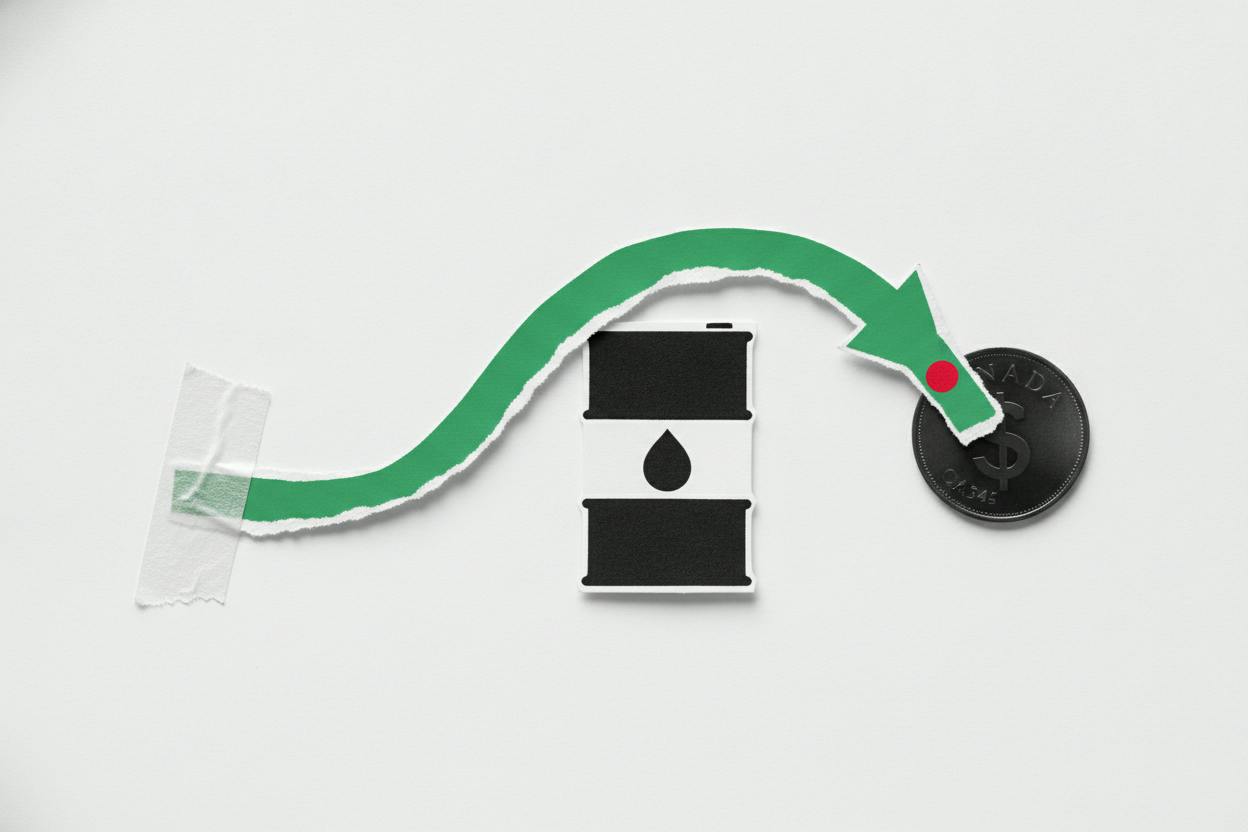
For Canadian investors, the day's move is a reminder of how intertwined the TSX is with commodity prices. When oil and metals rally, the index tends to follow. But there's a catch: higher crude prices can also push the Canadian dollar higher. Since oil is priced in US dollars, a stronger loonie means each US dollar of revenue converts into fewer Canadian dollars for producers that report in CAD. That currency translation can mute the bump to CAD-reported cash flow even when the oil headline looks great.
That's why TSX energy stocks don't always move in lockstep with WTI. A 2% jump in oil might translate into a smaller gain for the index if the loonie strengthens at the same time. The Canadian dollar was trading around CA$1.4213 per US dollar, and any further appreciation could trim the benefit of higher crude prices.
For everyday investors, the key takeaway is to look beyond the headline number. A rising TSX on oil strength is good news, but it's worth paying attention to the currency effect and the broader economic picture. If wholesale sales continue to fall and growth slows, that could eventually weigh on corporate earnings, even if commodity prices stay elevated.
Investors will also be watching the OPEC+ meeting closely. Any decision to boost output could send oil prices lower, which would likely drag on the TSX's energy sector. Conversely, if the group signals restraint, prices could stay supported.
In the meantime, the geopolitical risk remains a wildcard. As we've seen with Saudi stocks slipping after Houthi strikes, the impact can be felt beyond just oil prices. For Canadian investors, staying diversified across sectors can help cushion against the volatility that comes with commodity-driven markets.
Overall, Tuesday's rebound is a positive sign, but it's not a clear signal of a sustained rally. The market is still navigating a complex mix of geopolitical tensions, supply concerns, and economic slowdown fears. As always, a long-term perspective and a diversified portfolio remain the best tools for weathering these ups and downs.