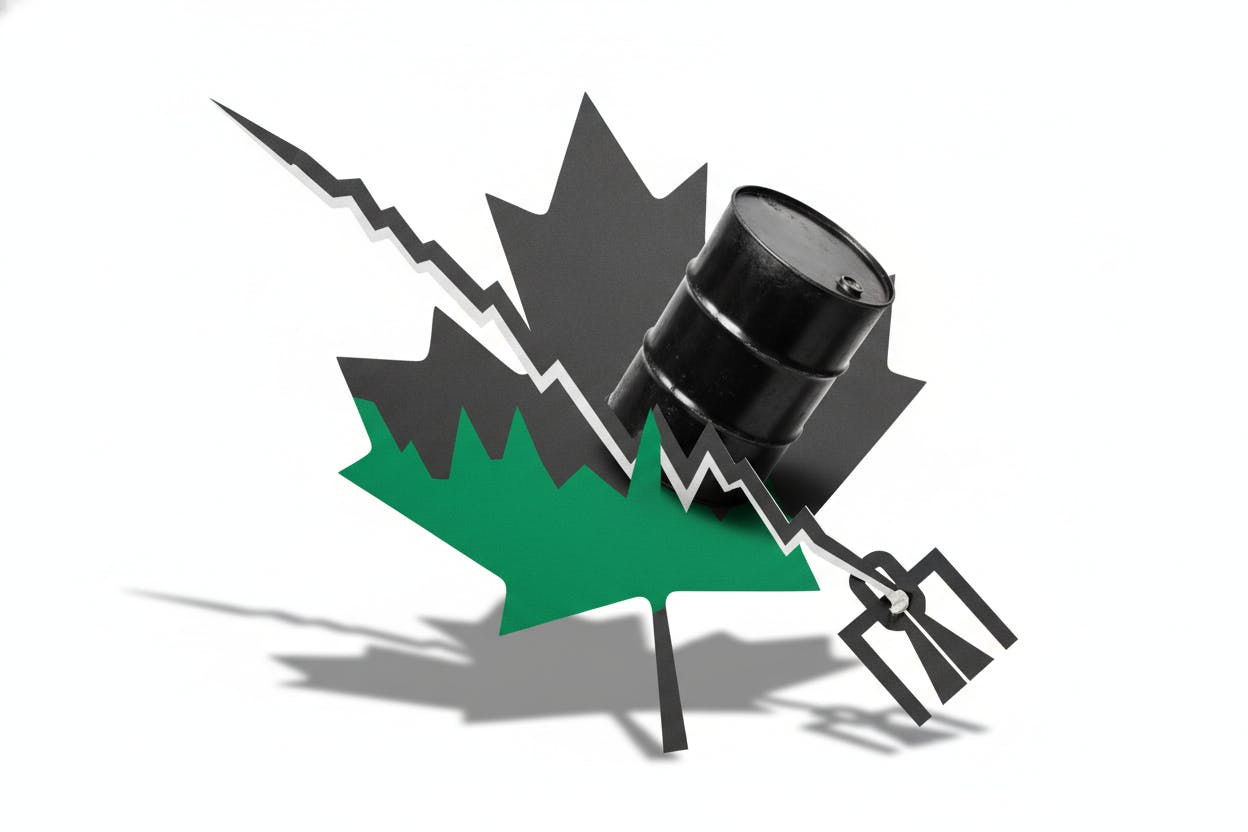
Canada's main stock index slipped on Monday, even as oil prices climbed, as weakness in base-metal shares and fresh worries about US tariffs weighed on the market. The S&P/TSX Composite fell 0.8%, with base metals leading the declines while energy stocks advanced alongside crude.
West Texas Intermediate (WTI) crude settled up 2.8% at $85.76 a barrel, while Brent crude rose 2.6% to $90.38. The jump came after renewed US-Iran tensions revived fears of supply disruptions and shipping risks through the Strait of Hormuz, a critical chokepoint for global oil shipments.
Oil's rise: a double-edged sword
Higher oil prices are generally a positive for Canada's energy-heavy index, and energy shares did climb on the day. But the same geopolitical tensions that lift crude can also unsettle investors, and the broader market felt the drag from other sectors.
Base-metal stocks, which are sensitive to global growth expectations, fell sharply. The decline likely reflects concerns that higher energy costs and trade uncertainty could slow economic activity, reducing demand for industrial metals like copper and zinc.
The Strait of Hormuz is one of the world's most important oil shipping lanes. Any threat to its security can quickly push prices higher, as traders price in the risk of supply interruptions. This is not the first time this year that US-Iran tensions have rattled oil markets; similar episodes have caused sharp but often short-lived price spikes.
Tariff worries add to the gloom
Beyond oil, investors are grappling with a slower-moving but potentially more significant risk: the possibility of higher US tariffs on Canadian goods. Economists are trying to quantify the impact, and KPMG Canada, an accounting and consulting firm, estimates that if the US raises tariffs, it could shave up to 0.5 percentage points off Canada's economic growth.
That may not sound like much, but for an economy growing at around 1-2% annually, a half-point hit is meaningful. It could translate into slower job creation, weaker consumer spending, and lower corporate profits.
Tariffs are taxes on imported goods, and when the US imposes them on Canadian products, those goods become more expensive for American buyers. That can reduce demand for Canadian exports, hurting businesses and workers. The uncertainty itself can also deter investment, as companies hold off on spending until they know the rules of the game.
For context, the US is Canada's largest trading partner, so changes in US trade policy have an outsized effect on the Canadian economy. The threat of tariffs has been a recurring theme in recent years, and each new headline can move markets.
What it means for investors
For everyday investors, the day's moves highlight how different parts of the market can pull in opposite directions. Energy stocks benefited from higher oil, but base-metal miners and other cyclical sectors suffered. The net result was a decline in the overall index.
It's also a reminder that geopolitical events and trade policy can have ripple effects across portfolios. A spike in oil prices might boost energy stocks, but it can also raise costs for airlines, manufacturers, and consumers, potentially squeezing profits elsewhere.
Investors should watch a few things in the coming days. First, how long the oil rally lasts. If tensions ease, prices could quickly give back gains. Second, any concrete moves on tariffs. So far, the talk is just that—talk—but actual policy changes would have real consequences. Third, how the Bank of Canada responds. With growth potentially slowing, the central bank may be more inclined to hold interest rates steady or even cut them, which could affect bond yields and borrowing costs.
For those with diversified portfolios, the key takeaway is that market moves like this are normal. A single day's decline doesn't change the long-term picture, but it does underscore the importance of spreading investments across sectors and asset classes to manage risk.
As always, it's wise to focus on your own financial goals and time horizon rather than reacting to daily headlines. If you're unsure how these developments affect your portfolio, consider speaking with a financial advisor.



