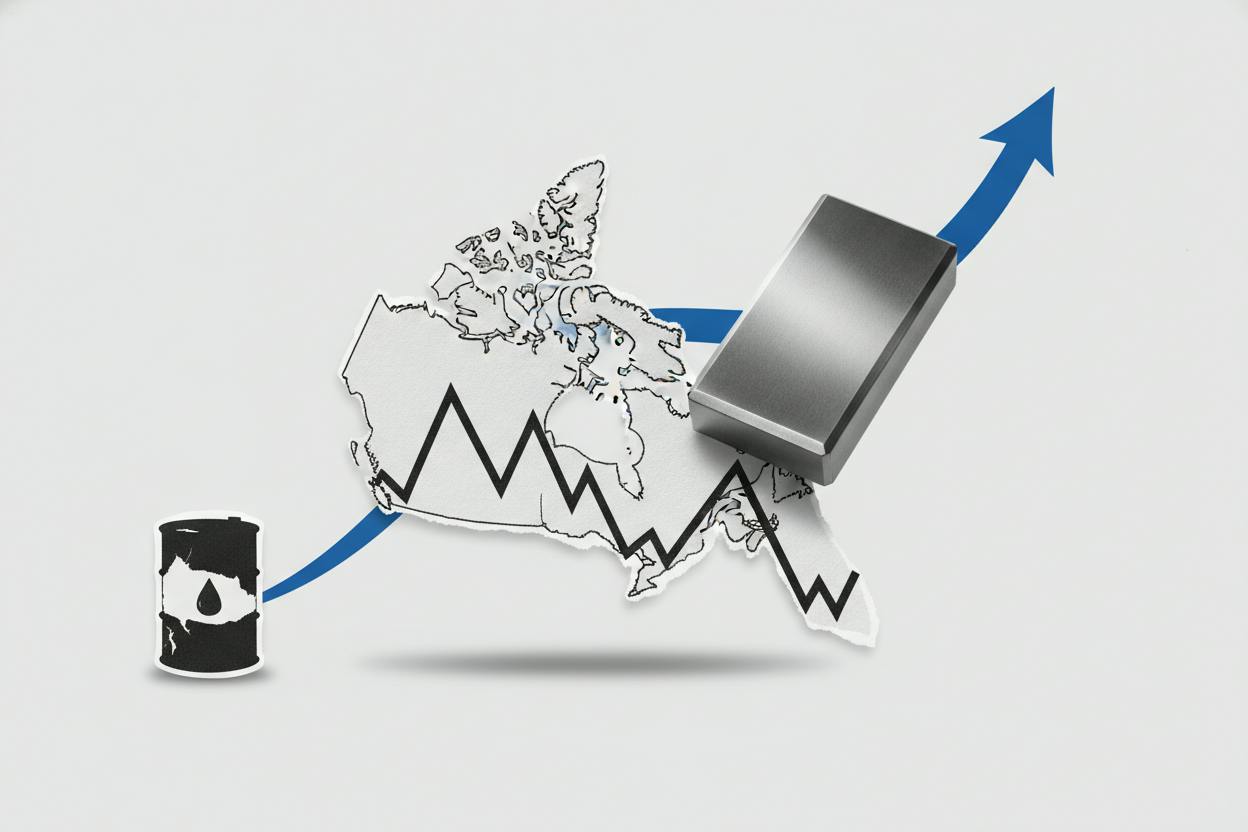
Canada's flagship stock index ended the trading week on a slightly sour note, slipping 0.2% on Friday as bond yields kept climbing and energy shares lost ground. Despite the down day, the S&P/TSX Composite still managed to eke out a 0.3% gain for the week, a sign that underlying sentiment remains cautiously optimistic.
The pullback came as long-term borrowing costs continued their upward march. When bond yields rise, the future profits that stocks are expected to deliver get discounted at a higher rate, which can make equities look less attractive even if a company's underlying business hasn't changed. That dynamic has been a persistent headwind for stock markets globally in recent weeks.
Energy and defensive stocks lead the decline
Energy shares were among the biggest drags on the index, falling 0.7% as oil prices retreated. US crude futures settled 1.6% lower at $100.30 a barrel, pressured by fresh headlines about Saudi supply and lingering worries about the Middle East. For a market like Canada's, where energy is a heavyweight sector, oil moves often set the tone for the whole index.
Defensive groups, which investors typically turn to for stability, also took a hit. Consumer staples fell 1.2%, suggesting that even traditionally safe corners of the market weren't immune to the broader yield-driven selling.
The yield story isn't just a Canadian one. In the United States, Treasury yields have been hovering near 5%, a level that has historically made stocks nervous. As stocks slip when Treasury yields approach 5%, the pressure tends to spill over into other markets, including Canada's.
What's driving the bond market?
Bond yields have been climbing for a mix of reasons: stronger-than-expected economic data, sticky inflation, and concerns about heavy government borrowing. When investors demand higher yields to hold long-term bonds, it raises the cost of capital for companies and can cool economic activity.
For the Bank of Canada, the yield move is closely tied to expectations for its next policy decision. Markets are now pricing in a meaningful chance of a rate hike next month. A hike would mark a shift after a period of holding rates steady, and it would ripple through everything from mortgage rates to corporate borrowing costs.
The Canadian dollar has also been feeling the effects of the yield gap with the US. As the loonie slides as the US-Canada yield gap widens, a weaker currency can feed into inflation by making imports more expensive, which in turn could influence the Bank of Canada's thinking.
Oil at $100: a double-edged sword
Oil prices have been a central theme for Canadian investors all year. Crude sitting around $100 a barrel is generally good news for energy producers and the TSX, which is heavily weighted toward the sector. But it also raises concerns about inflation and consumer spending, and it can prompt central banks to keep monetary policy tight.
Friday's drop in oil prices offered some relief on the inflation front, but the broader picture remains uncertain. As stocks face a triple test from yields near 5%, oil at $100, and the AI debate, investors are juggling multiple crosscurrents.
What it means for everyday investors
For the average Canadian investor, the key takeaway is that rising bond yields are a force to watch. When yields climb, bond prices fall, and stocks—especially those in rate-sensitive sectors like utilities, real estate, and consumer staples—can come under pressure. It's a reminder that diversification matters: a mix of stocks and bonds can help cushion the blow when one asset class stumbles.
The possibility of a Bank of Canada rate hike next month is also worth monitoring. If the central bank raises its benchmark rate, borrowing costs for mortgages and business loans will rise, which could slow economic growth and weigh on corporate earnings. On the flip side, higher rates can be a boon for savers, as interest on savings accounts and short-term bonds tends to increase.
For now, the TSX's modest weekly gain suggests that investors are still willing to buy dips, but the path forward is likely to be bumpy. As Canada's TSX futures edge lower as oil slips and gold climbs, the interplay between commodities, yields, and central bank policy will continue to drive market moves.
In the days ahead, all eyes will be on oil prices and any signals from the Bank of Canada about its rate intentions. A clear direction on either front could set the tone for the TSX in the coming weeks.