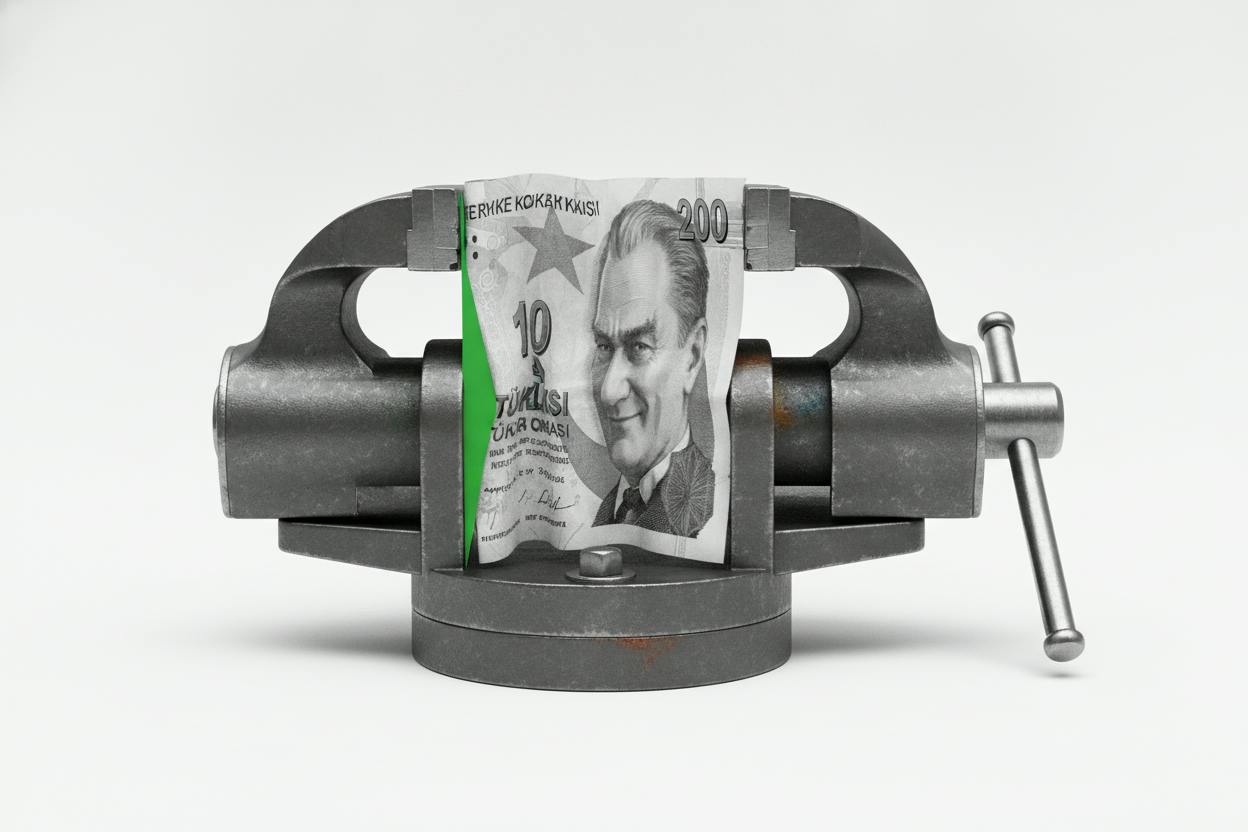
Turkey's inflation rate slipped below 30% in September, a cooler-than-expected reading that has economists increasingly betting the central bank will start cutting interest rates later this month. The country's statistics agency reported that consumer prices rose 1.84% from the previous month, undershooting forecasts, while the annual rate eased to 29.73% from 31.51% in August.
The slowdown was driven largely by food prices, which fell 0.2% on the month, a welcome relief for households that have struggled with soaring grocery bills. However, not everything got cheaper: back-to-school costs jumped 14.2% as the new academic year began, and housing and transport prices kept climbing, underscoring that inflation is still far from under control.
Central bank under pressure
Turkey's central bank has held its key policy rate at 37% for five consecutive meetings, and investors have viewed that pause as a prelude to the first cut of an easing cycle. With inflation now lower, the debate has shifted from whether the bank will move to how much it will cut. Haluk Burumcekci, an economist at Burumcekci Research and Consultancy, said a 1 percentage point reduction on October 22 is one of the more likely options, unless the inflation outlook, foreign-currency reserves, or global conditions shift.
The central bank has been in a tight spot for years. After a period of unorthodox policy under President Recep Tayyip Erdogan, who long pressed for low rates despite soaring prices, the bank pivoted to aggressive tightening in 2023. That helped bring inflation down from a peak above 75% earlier this year, but the cost has been high: the lira has weakened, and the economy has slowed as borrowing costs stayed elevated.
Now, with inflation below 30%, the bank faces a delicate balancing act. Cutting rates too soon could reignite price pressures and undermine the credibility it has rebuilt. Waiting too long could choke off growth and keep the lira under pressure. The October meeting will be a key test of how the bank weighs those risks.
What it means for investors
For global investors, the appeal of Turkish assets has been the wide gap between inflation and interest rates. At 37%, the policy rate offers a real return of more than 7 percentage points above the current inflation rate, a cushion that attracts so-called carry trades—investors borrowing in low-yield currencies like the dollar or yen to earn higher returns in lira-denominated assets.
But that trade is only as strong as the lira. If the central bank starts cutting rates, the real yield cushion shrinks, and the currency becomes more vulnerable. A weaker lira makes imports more expensive, which can feed back into inflation, undoing some of the progress. That's why foreign-currency reserves matter: they give policymakers a buffer to defend the lira if they want to ease without triggering a sharper slide.
Markets will be watching whether the October move, if it comes, looks like a cautious trim or the beginning of a faster easing cycle. A small, well-communicated cut could be seen as a sign of confidence, while a larger or surprise move could spook investors and force the lira and local bond yields to do the tightening instead.
For everyday Turkish investors, the implications are direct. Lower rates could mean cheaper loans and mortgages, but also weaker returns on lira savings accounts that have been a popular hedge against inflation. The lira's value against the dollar and euro will be a key indicator to watch, as it affects the price of imported goods and the purchasing power of households.
Globally, Turkey's situation is part of a broader trend of central banks grappling with when to ease. In the United States, a softer jobs report has cooled expectations for further rate hikes, while in Europe, inflation has ticked up, complicating the European Central Bank's path. Turkey's decision will be closely watched by emerging-market investors who see it as a test case for how far policymakers can push rate cuts without destabilizing their currency.
For now, the consensus is that a modest cut is likely, but the central bank has surprised before. The October 22 meeting will be a defining moment for Turkey's economic policy and for the lira's trajectory in the months ahead.