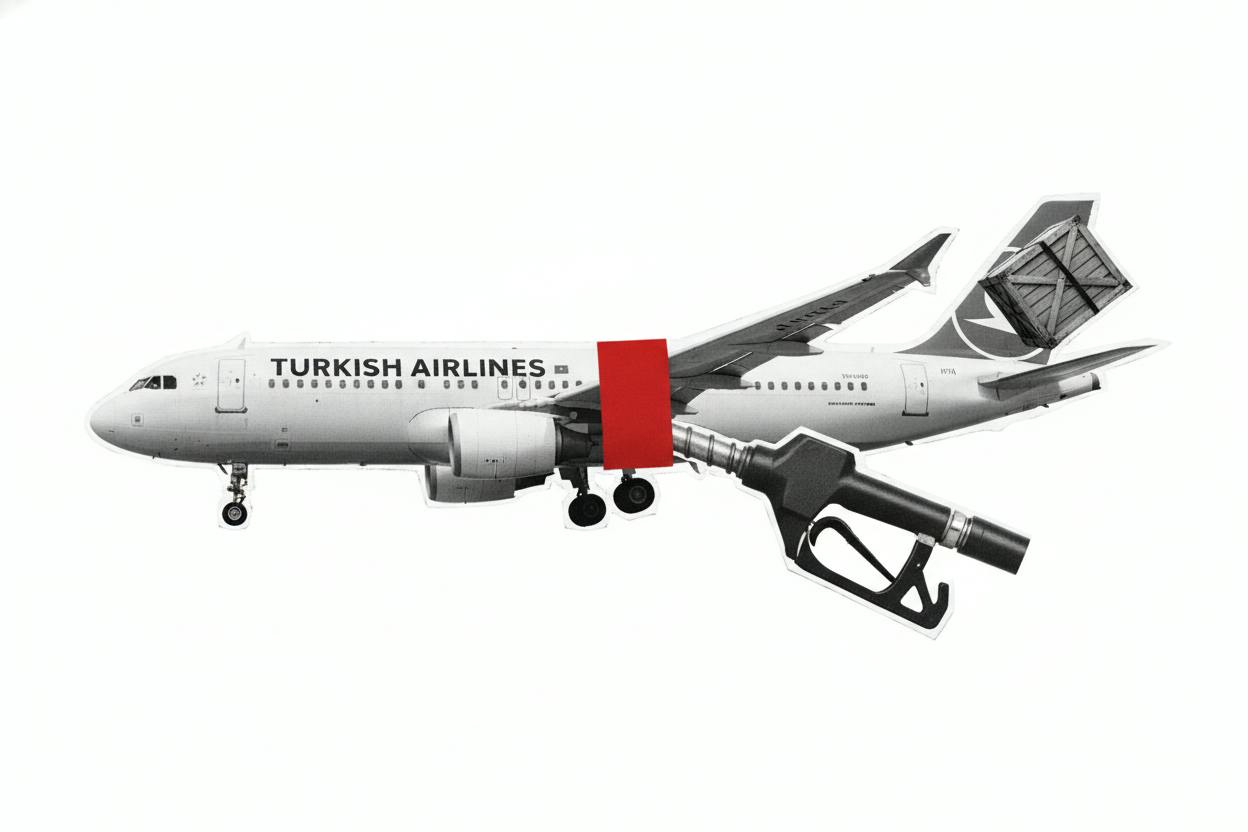
Turkish Airlines, Turkey's flag carrier, has put a freeze on new hiring after a sharp rise in jet fuel prices wiped about $1 billion off its third-quarter earnings. The move highlights how volatile energy costs have become for airlines, which have little control over the price they pay to fill their tanks.
Chairman Murat Seker said the airline had not planned for jet fuel to reach $1,600 per tonne, a level that turned fuel into the single biggest swing factor in its profits. The company's "base case" now assumes prices will fall back to $1,000 per tonne, and by its own math, every $100-per-tonne drop would add roughly $750 million to $800 million to profitability.
Why fuel is such a big deal for airlines
Jet fuel is one of the largest costs for any airline, often second only to labor. Unlike wages or aircraft leases, which are set by contracts and can be adjusted over time, fuel prices move daily based on global oil markets. That means a sudden spike can hit earnings almost immediately, while the airline's ability to respond—by raising ticket prices, cutting routes, or renegotiating supplier deals—takes much longer.
For Turkish Airlines, the sensitivity is especially high because it operates a large fleet of wide-body aircraft on long-haul routes, which burn more fuel per flight. The company's exposure to fuel costs is also amplified by its geographic position, connecting Europe, Asia, and Africa, where competition keeps fares in check.
The airline's decision to slow hiring is a classic response to cost pressure. By freezing new hires, management can trim one of its more flexible expenses without grounding planes or cutting routes. It's a move that many carriers have used in past downturns, and it signals that the company expects fuel prices to stay elevated for a while.
Cargo provides a bright spot
While fuel weighed on results, cargo revenue climbed 46% to $1.2 billion, helped by strong demand for air freight. That's a reminder that airlines are not just in the business of moving people—they also move goods, and the e-commerce boom has made air cargo a more important profit center.
Turkish Airlines has a dedicated cargo arm, Turkish Cargo, which operates its own fleet of freighters. The company has been expanding its cargo network, and the surge in demand for shipping goods by air—driven by everything from online shopping to supply chain disruptions—has provided a cushion against the fuel hit.
The contrast between the fuel drag and the cargo boost illustrates the balancing act airlines face. Fuel is a cost they can't control, while cargo is a revenue stream they can grow. Investors will be watching to see whether the cargo momentum can offset further fuel price rises.
What it means for investors
For everyday investors, the key takeaway is that airlines are highly sensitive to fuel prices, and that sensitivity can show up quickly in quarterly results. When oil prices spike, airline stocks often fall, even if the company's underlying operations are sound. Conversely, when fuel prices drop, airlines can see a rapid boost to profits.
Turkish Airlines' hiring freeze is a sign that management is being cautious about the near-term outlook. But the company's own math suggests that if fuel prices fall back to $1,000 per tonne, profitability could improve significantly. That's a big "if," and it depends on global oil markets, which are influenced by factors ranging from OPEC decisions to geopolitical tensions.
The broader context also matters. Fuel costs are a major driver of inflation, and rising energy prices have been a headache for central banks. In Europe, for example, energy costs have pushed inflation to 4%, complicating the European Central Bank's next move. That kind of environment can keep fuel prices high and put pressure on airlines across the region.
For investors, the lesson is to pay attention to fuel prices when evaluating airline stocks. A company like Turkish Airlines can be a solid long-term investment, but its earnings will always be at the mercy of the oil market. The hiring freeze is a prudent step, but it won't protect the company from another spike in fuel costs.
Looking ahead, investors will be watching fuel price trends, cargo demand, and the airline's ability to pass on higher costs to passengers. The company's next earnings report will show whether the hiring freeze and other cost controls are enough to offset the fuel drag.
In the meantime, the airline's experience is a useful reminder that some costs are simply beyond a company's control. For airlines, fuel is the biggest wildcard, and it can turn a good quarter into a bad one in a matter of weeks.