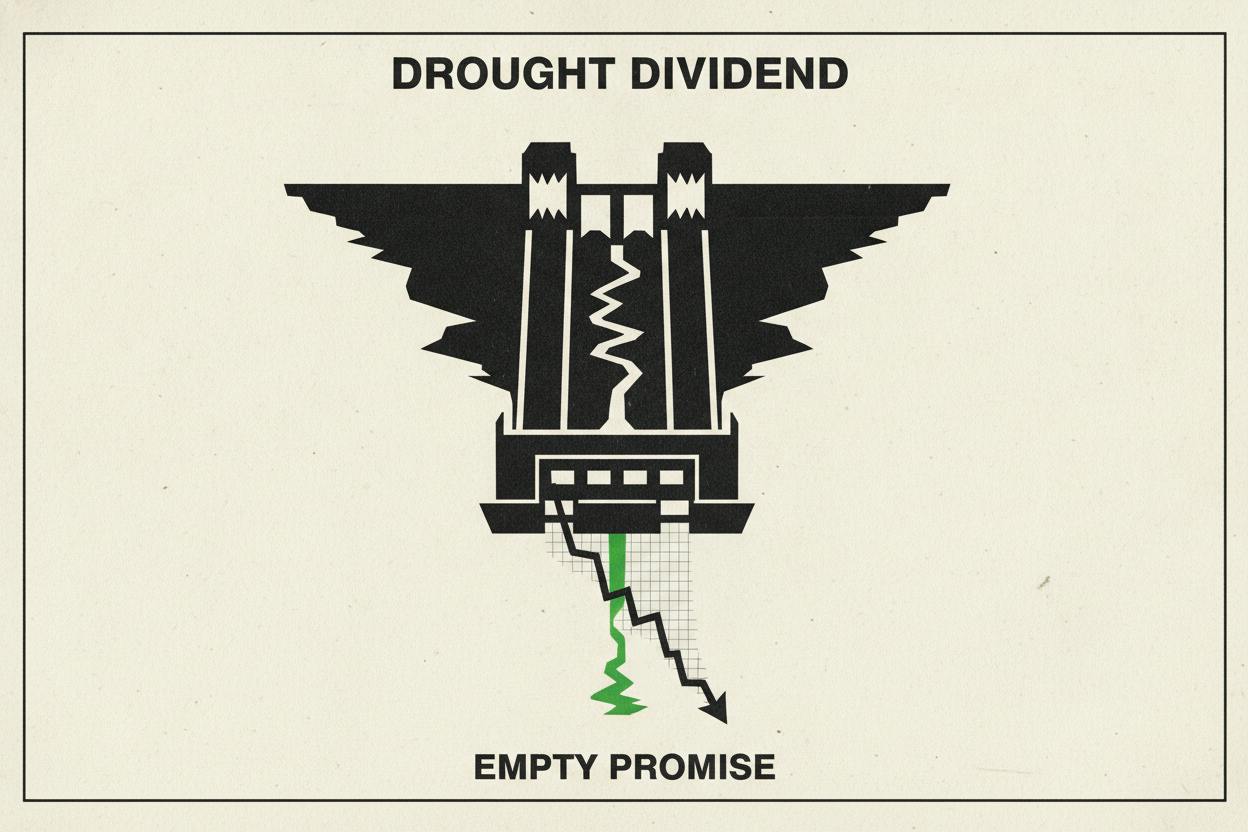
Austria's largest electricity producer, Verbund, reported on Thursday that exceptionally low river flows have dragged its core profit down by almost 30% in the first nine months of the year. The company also trimmed its full-year earnings outlook to the bottom of its previously stated range, underscoring how dependent its business is on the weather.
Verbund, which generates about 85% of its electricity from hydropower, saw water supply fall to the lowest level since records began around a century ago. That shortage crimped output at a time when electricity prices were also softening, creating a double hit to the company's finances.
What the numbers show
For the first nine months of the year, earnings before interest, taxes, depreciation, and amortization (EBITDA) fell to €1.50 billion, down from €2.11 billion in the same period last year. Net profit dropped even more sharply, by about 45%.
Management now expects full-year EBITDA of roughly €2.12 billion, near the bottom of the €2.1 billion to €2.4 billion range it set in July. That revision is a clear signal that the company does not expect a significant recovery in water levels before the end of the year.
Why hydropower is vulnerable to dry spells
Hydropower is often the cheapest electricity a utility can produce once a dam and turbines are built. But that low operating cost comes with a catch: the fuel—rain and snowmelt—is not something the company can control. When water is scarce, the highest-margin generation is the first to disappear.
Moreover, if Verbund has already committed to selling power to customers, a shortfall in its own generation can force it to buy replacement electricity on the wholesale market. That turns a weather problem into a procurement-cost issue, potentially squeezing margins even further.
This is a reminder that "renewable" does not always mean "stable." While wind and solar are often criticized for being intermittent, hydropower is usually seen as more reliable. But as Verbund's experience shows, even hydro can be at the mercy of the climate.
What it means for investors
For investors, Verbund's revised guidance serves as a stress test for hydrology risk. Analysts and lenders frequently use EBITDA to judge a company's leverage and interest coverage, so a swing in earnings can affect valuations and balance-sheet headroom.
Utilities are often viewed as defensive investments, offering steady returns and dividends. But Verbund's results highlight that even a utility can see earnings fluctuate significantly when its core fuel source is unpredictable. This is a key consideration for anyone holding utility stocks, especially those with heavy exposure to hydro.
The company's situation also contrasts with other energy firms that have fared better. For instance, Veolia's profit climbed 5.1% as its water technology business offset an energy price drag, showing how diversification can cushion against commodity swings.
Investors will be watching whether Verbund can recover in the coming quarters, and whether it can manage its power purchase commitments without taking a bigger hit. The company's ability to navigate this dry spell will be a test of its operational resilience.
For now, the message is clear: in the world of renewable energy, the weather is not just a backdrop—it's a key driver of financial performance.