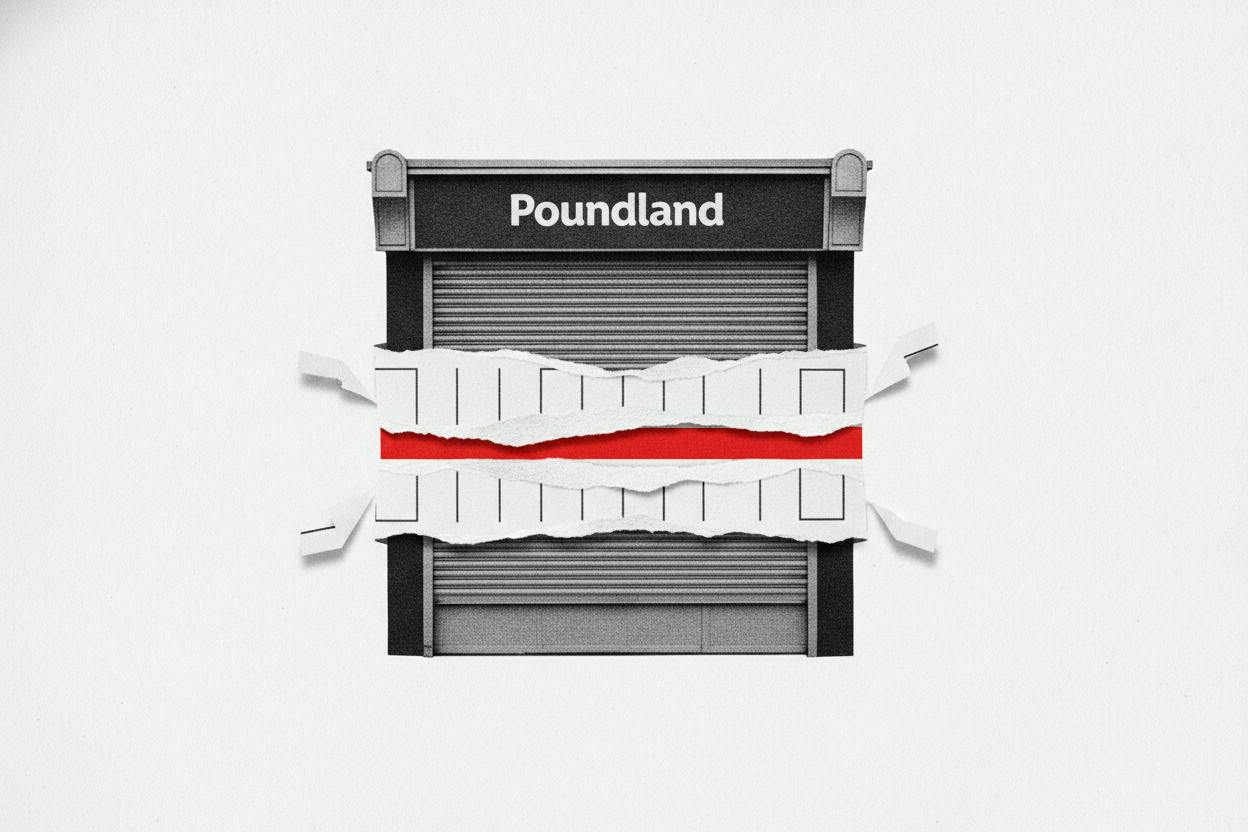
Poundland's owner, restructuring firm Gordon Brothers, is in a race against time to find a buyer for the discount chain after filing a notice of intention to appoint administrators. The filing, made last Thursday, starts a 10-working-day countdown during which the company has court-backed breathing space from creditors while it tries to secure a rescue deal. The move puts around 12,000 jobs across more than 600 stores in the UK and Ireland in question.
Gordon Brothers said it is in "active discussions" with interested parties. The firm acquired Poundland last year from Pepo Group, a Warsaw-listed retailer, for a nominal £1 — a sign that the business was already in rough financial shape when it changed hands.
What does this mean?
This filing is not the same as shutting the doors, but it signals that the business needs a deal fast. The 10-working-day window is a brief, court-backed breathing space that can stop creditors from taking action while the company looks for a buyer. In UK retail blow-ups, this window often leads to a fast "rescue" sale.
That can keep the brand trading, but it usually works by letting a buyer take the parts that can make money — the better stores, stock, and distribution — while leaving heavy baggage, like loss-making locations and some unpaid bills, inside the administration process. That structure is why employees, landlords, and smaller suppliers often face uncertainty even if a buyer appears.
Why should I care?
For everyday investors, this is a reminder that a notice of intention isn't the end of the road, but it does mean the business needs a deal fast. If a buyer steps in, they're not required to take everything: they typically choose which stores and roles to keep, and which contracts to walk away from through administration.
So the real question over the next 10 working days isn't just whether Poundland gets sold, but how much of it gets sold. If the footprint shrinks, the pain tends to land on marginal stores, local jobs, and the smaller suppliers that rely on steady orders. The outcome will also be a key test for Gordon Brothers, which has been trying to turn the business around since taking it on for a token sum.
For investors, the broader lesson is about the fragility of discount retail. While the sector can thrive in a cost-of-living squeeze, it also operates on razor-thin margins, leaving little room for error when costs rise or footfall dips. The next 10 working days will show whether Poundland can find a buyer willing to bet on its future, or whether it becomes another cautionary tale on the UK high street.