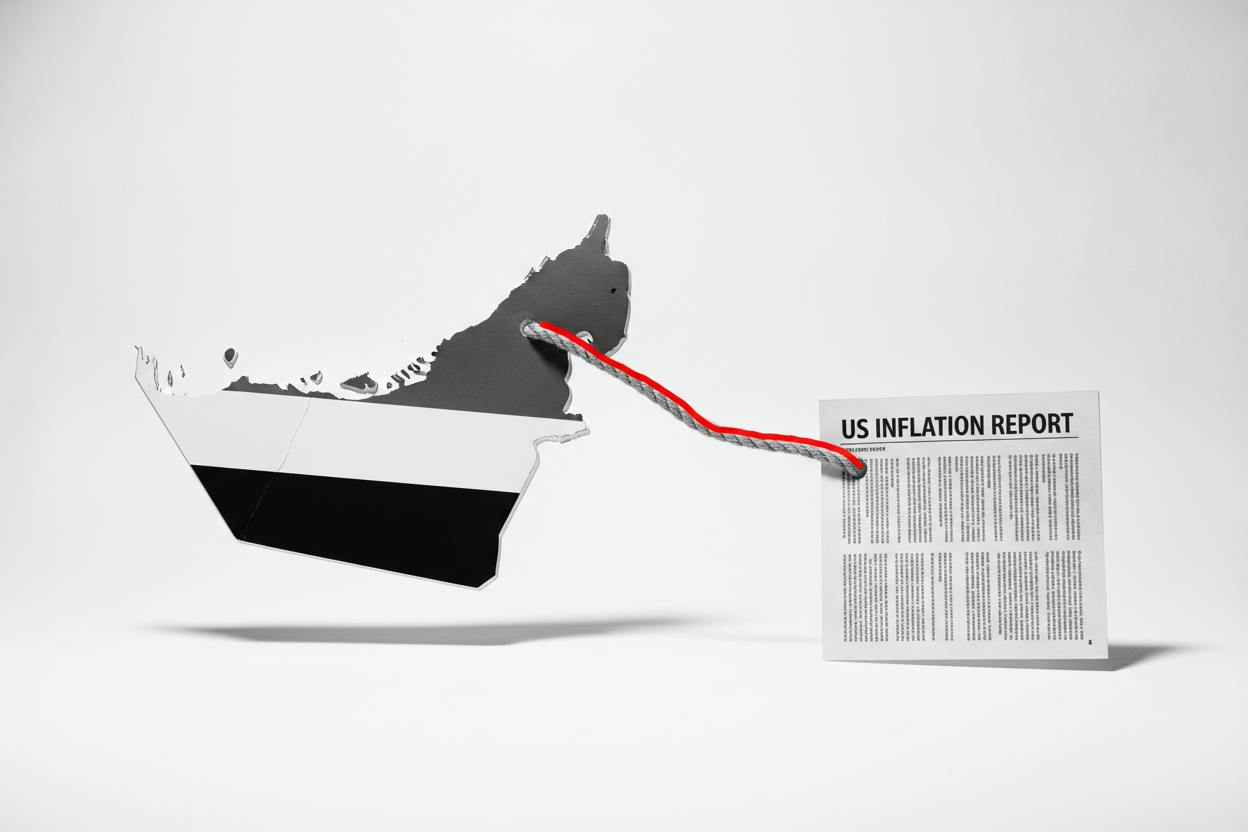
Stock markets in the United Arab Emirates slipped on Thursday as investors held back ahead of the release of the US personal consumption expenditures (PCE) price index, a key inflation measure that guides Federal Reserve interest-rate decisions.
Abu Dhabi's FTSE ADX General Index fell 0.612%, while Dubai's DFM General Index slid 0.458%. The declines were modest but reflected a broader mood of caution across Gulf bourses, which often track global risk sentiment and US monetary policy expectations.
Why PCE matters
The PCE price index, published by the US Bureau of Economic Analysis, is the Fed's preferred inflation gauge because it captures changes in consumer spending patterns more broadly than the consumer price index (CPI). It includes a wider range of goods and services and adjusts for substitution when prices change.
Economists expect the August PCE report to show headline inflation rising 0.3% month-on-month and 3.7% year-on-year. Core PCE, which strips out volatile food and energy prices, is forecast to rise 0.3% month-on-month and 3.3% year-on-year. These figures are important because they will help determine whether the Fed raises, holds, or cuts its benchmark interest rate at upcoming meetings.
A softer-than-expected reading could reinforce the view that inflation is cooling, potentially reducing the need for further rate hikes. Conversely, a hotter number would likely strengthen the case for more tightening.
What this means for UAE investors
For investors in the UAE, US interest rates matter for several reasons. First, the dirham is pegged to the US dollar, so the Fed's policy directly influences local borrowing costs and liquidity. When US rates rise, Gulf central banks often follow suit to maintain the currency peg, which can increase the cost of loans and dampen economic activity.
Second, higher US rates tend to pull global capital toward dollar-denominated assets, which can reduce foreign investment in emerging and frontier markets, including the Gulf. On the other hand, a pause or pivot by the Fed could ease that pressure and support regional equities.
The UAE markets have also been supported by strong corporate earnings and economic diversification efforts, but they remain sensitive to global factors. As seen in Singapore's market reaction to similar data, investors across Asia and the Middle East are watching the same US inflation prints for direction.
Broader context
The PCE release comes at a time when global markets are grappling with mixed signals on inflation and growth. While some economies have seen price pressures ease, others are still dealing with elevated costs. The Fed has repeatedly emphasised that its decisions will be data-dependent, making each inflation report a potential market mover.
In the Gulf, oil prices also play a significant role in shaping investor sentiment, given the region's energy exports. However, on this day, the focus was squarely on the US data.
Investors are also keeping an eye on other central banks. For instance, the Bank of Japan has signalled faster rate hikes, which could affect global capital flows. And in emerging markets, foreign investors have been pulling money out of Indian stocks, a sign that risk appetite is fragile.
What to watch next
After the PCE data, investors will look to the Fed's next policy meeting for clues on the path of rates. A clear signal that the tightening cycle is ending could provide a boost to risk assets, including UAE equities. Conversely, a hawkish surprise could extend the current cautious tone.
For everyday investors, the key takeaway is that US inflation data can ripple through global markets, affecting everything from stock prices to borrowing costs. Keeping an eye on these releases can help you understand why your portfolio moves, even if you invest only in local markets.
As always, it's wise to maintain a diversified portfolio and avoid making impulsive decisions based on a single data point. The markets will continue to react to new information, but a long-term perspective tends to weather short-term volatility better.