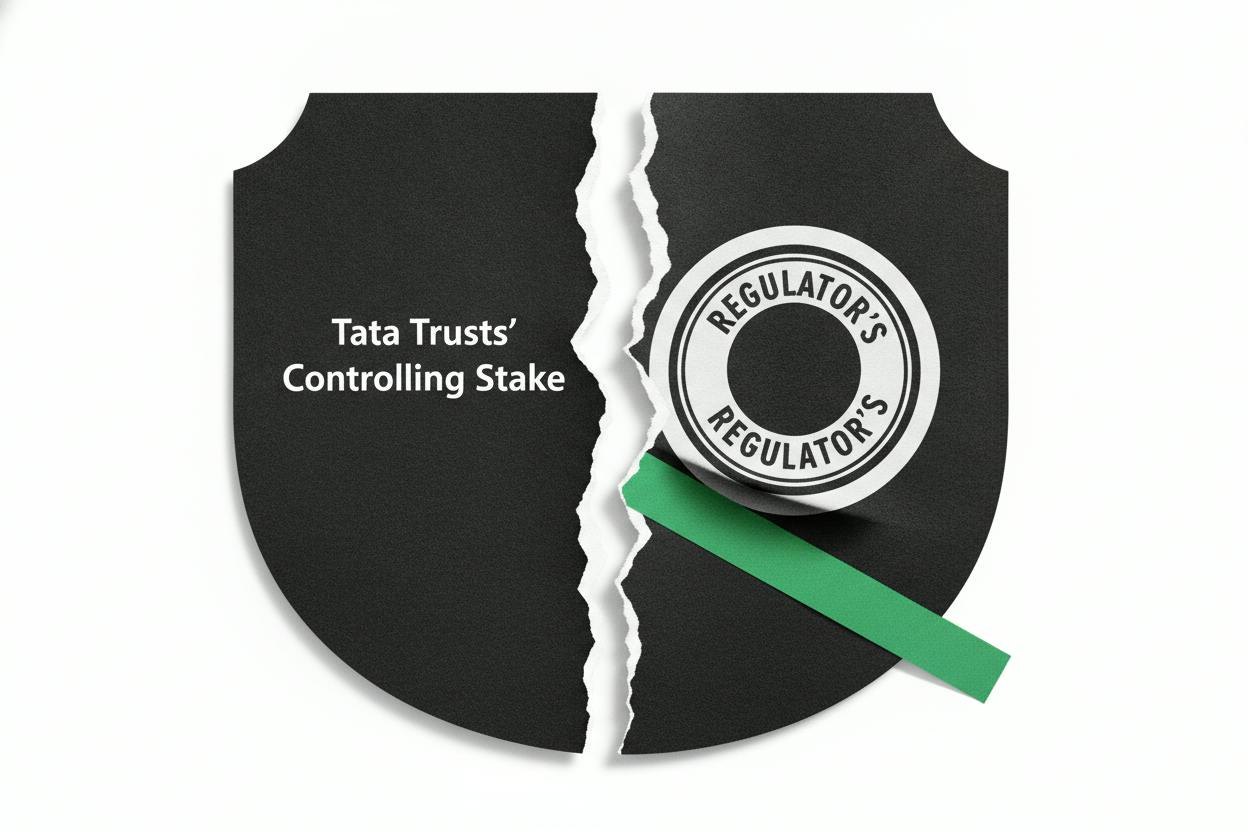
An internal power struggle at Tata Trusts, the philanthropic entities that control the Tata Group, has spilled into the public arena. A senior trustee has formally asked Maharashtra's charity regulator to investigate alleged lapses at the charities, according to a Reuters report. The move escalates a simmering dispute over how involved the trusts should be in the business decisions of Tata Sons, the holding company for one of India's largest conglomerates.
What's behind the dispute?
Tata Trusts collectively own about 66% of Tata Sons, which in turn oversees a sprawling empire spanning steel, autos, software, and consumer goods. Because of that controlling stake, any friction inside the charities can quickly become a governance headache for the entire group. The trusts are traditionally seen as custodians of the Tata legacy, but recent disagreements have centered on the direction of the conglomerate and the role the charities should play in its commercial strategy.
The rift has become increasingly public. Reuters reported that Tata Sons' board recently reappointed its chairman and expressed support for a public listing of the company, a move that has drawn opposition from the trusts. The trusts have previously pushed back against listing plans, arguing that a public float could dilute their influence and shift the group's focus away from its philanthropic mission.
This is not the first time the trusts and the Tata Sons board have clashed over the listing question. Earlier reports indicated that a merger plan was being considered to keep Tata Sons private, and a separate restructuring plan had dimmed hopes for a listing. The current escalation suggests the disagreement is far from resolved.
Why the charity regulator is involved
In India, charitable trusts are regulated by state authorities, and Maharashtra's charity commissioner oversees many of the Tata Trusts. A trustee's request for an investigation into alleged lapses is a significant step, as it invites formal scrutiny of the charities' governance. While the specific allegations have not been detailed publicly, such complaints often relate to mismanagement, conflicts of interest, or deviations from the trusts' stated objectives.
For the Tata Group, this adds another layer of complexity. The group is already navigating a challenging environment for Indian equities, with foreign investors pulling $3.75 billion from Indian stocks in September. A public spat among the group's ultimate owners could weigh on investor sentiment, even if the operational businesses remain unaffected.
What a listing would mean
A potential Tata Sons listing has been a topic of speculation for years. If it happens, it would be one of the largest IPOs in India's history, giving public investors a chance to own a piece of the conglomerate. But the trusts have historically resisted the idea, fearing that listing would force greater transparency and accountability, and potentially reduce their control.
The board's recent backing of a listing plan suggests that some within the group see benefits, such as raising capital and unlocking value. However, the trusts' opposition could delay or derail the process. The involvement of the charity regulator adds a new variable, as any findings could influence the trusts' ability to block or support the listing.
What it means for investors
For everyday investors, this dispute is a reminder that corporate governance matters. The Tata Group is widely regarded as one of India's most trusted business houses, but internal conflicts at the top can create uncertainty. If the trusts' infighting leads to regulatory action or a prolonged legal battle, it could affect the group's ability to make strategic decisions, including the timing of a listing.
Investors with exposure to Tata Group companies—through direct stock holdings or mutual funds—should watch how this plays out. A resolution that respects the trusts' philanthropic mission while allowing the business to grow could be positive. Conversely, a messy public fight could distract management and dampen sentiment.
It's also worth noting that the broader Indian market has been volatile, with the NIFTY 50 sliding 1.6% in a recent session amid geopolitical tensions. Any additional uncertainty from the Tata dispute could add to the headwinds.
Looking ahead
The immediate focus will be on how Maharashtra's charity regulator responds to the trustee's request. If an investigation is launched, it could take months to conclude, prolonging the uncertainty. Meanwhile, the Tata Sons board is likely to continue with its plans, but the trusts' opposition could force a compromise.
For now, the situation remains fluid. The key takeaway for investors is that governance disputes at the top of a major conglomerate are not just corporate soap opera—they can have real financial implications. Keeping an eye on regulatory filings and news from the charities will be important for anyone with a stake in the Tata Group's future.