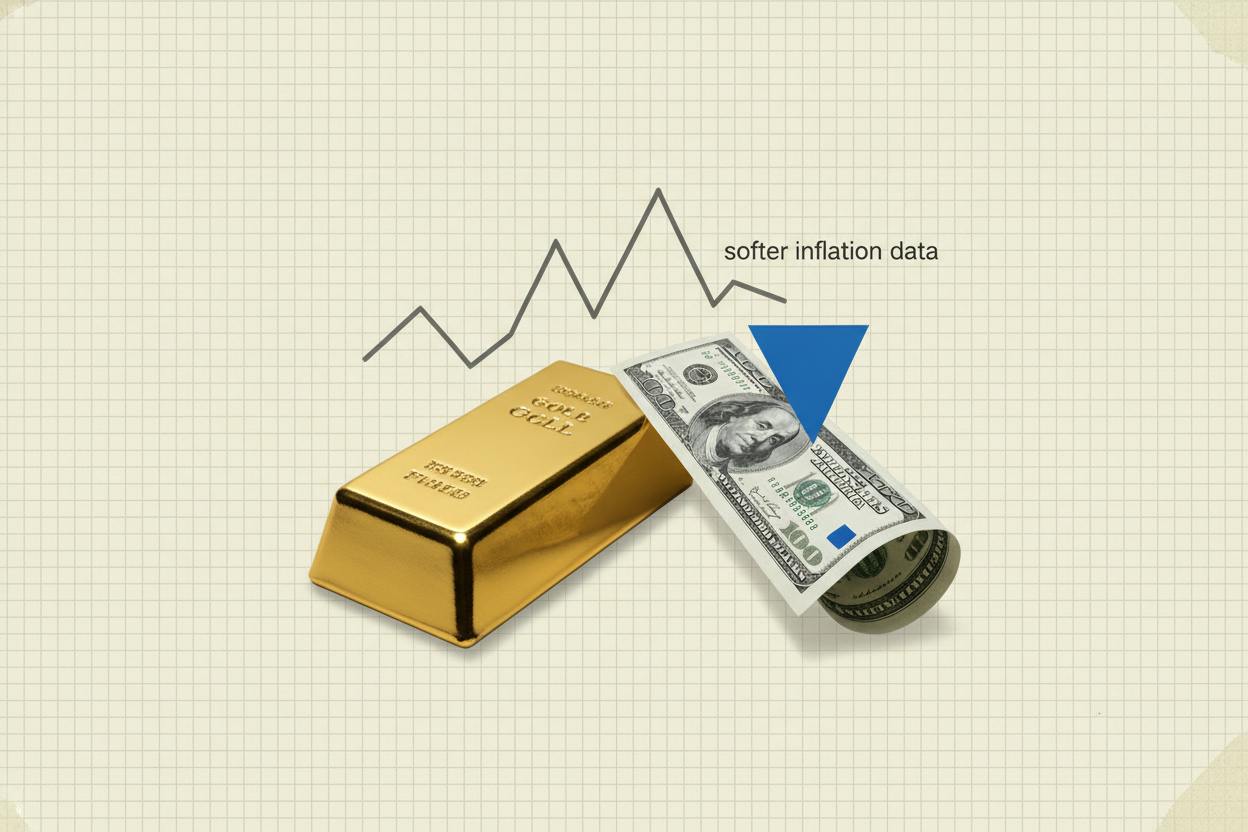
Gold prices ticked higher on Friday after a key US inflation gauge came in slightly cooler than expected, prompting traders to trim their bets on an October interest-rate hike by the Federal Reserve. The move also weighed on the dollar, which typically supports gold by making it cheaper for holders of other currencies.
The Personal Consumption Expenditures (PCE) Price Index, the Fed's preferred inflation measure, showed its "core" reading—which excludes volatile food and energy prices—rose a touch less than forecast. That was enough to shift market expectations: according to CME Group's FedWatch tool, the implied probability of a rate hike at the Fed's October meeting fell to about 37%, down from roughly 45% earlier.
Why the Inflation Data Matters
Inflation data is closely watched by investors because it directly influences the Fed's policy decisions. When inflation runs hot, the central bank tends to raise interest rates to cool the economy. Higher rates make holding non-yielding assets like gold less attractive, since they increase the opportunity cost of holding bullion instead of interest-bearing investments.
Conversely, when inflation cools, the case for rate hikes weakens. That's what happened this time: the softer core PCE reading suggested price pressures may be easing, leading traders to reduce their expectations for another hike. As a result, the dollar softened, and gold—which is priced in dollars—became more affordable for international buyers, helping lift its price.
This dynamic is not unique to the US. Similar inflation reports have moved markets globally. For instance, Australian stocks jumped on softer inflation that cooled rate-hike bets there, and Singapore shares slipped as investors awaited the same US data that drove gold's move today.
Gold's September Slip
Despite Friday's uptick, gold is still heading for a losing month. September has historically been a mixed period for bullion, and this year is no exception. The metal has faced headwinds from a generally stronger dollar and elevated bond yields, both of which tend to pressure gold prices.
Investors have been watching the Fed's every move, and the shift in rate expectations is a key driver. If the Fed holds rates steady in October, gold could find some support. But if inflation surprises to the upside, the odds of a hike could climb again, potentially dragging gold lower.
What It Means for Investors
For everyday investors, the takeaway is that gold remains sensitive to interest-rate expectations and inflation data. A softer inflation print can be a short-term positive for gold, but it doesn't change the broader picture: the Fed is still in a tightening cycle, and the path of rates will likely determine gold's direction in the coming months.
Gold is often seen as a hedge against inflation and economic uncertainty, but it doesn't pay interest or dividends. When rates are high, that lack of yield becomes a bigger drawback. So, while today's data was favorable for gold, investors should be cautious about reading too much into a single day's move.
Looking ahead, market participants will be watching upcoming economic releases and Fed speeches for clues about the October meeting. Any sign that inflation is reaccelerating could quickly reverse today's gains.
For those with gold in their portfolios, the key is to stay diversified and not overreact to short-term fluctuations. Gold can play a role in a balanced portfolio, but it's not a one-way bet.