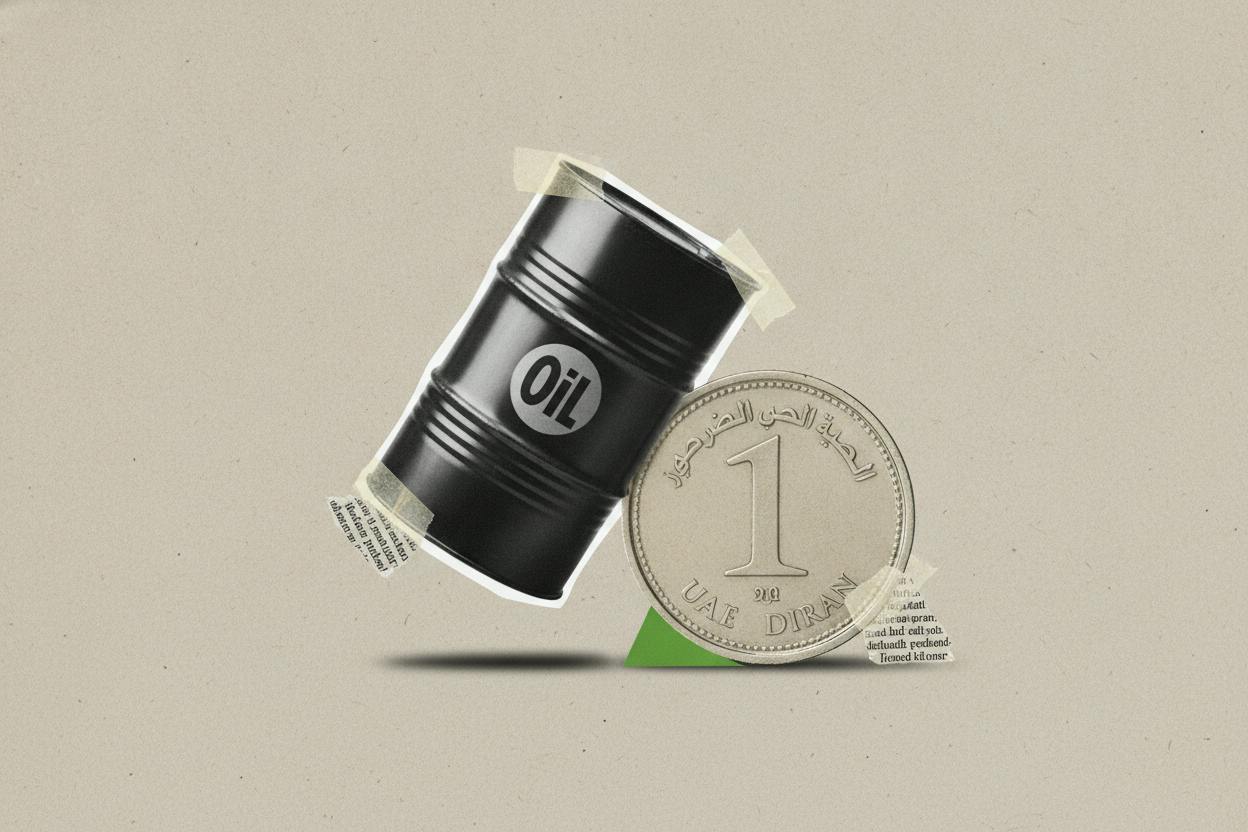
UAE stocks started the week on a positive note Monday, even as oil prices pulled back from recent highs. Abu Dhabi's FTSE ADX General Index rose 0.55%, while Dubai's DFM General Index gained 0.31%, a reminder that equities in the region don't always move in lockstep with crude.
Brent crude slipped 1.82% to about $114.60 a barrel after reports of renewed diplomatic efforts to ease tensions between the US and Iran. According to the reports, officials from Saudi Arabia, Turkey, and Pakistan planned to meet Iranian leaders, following the arrival of Qatari mediators. Danske Bank linked these moves to hopes of de-escalation alongside the US.
Why oil's dip didn't drag stocks down
For years, investors have viewed Gulf markets as a proxy for oil prices, given the region's vast energy reserves. But Monday's session showed that relationship is not always straightforward. While lower crude can weigh on energy companies' earnings, it can also ease concerns about inflation and global growth, which can support broader equity valuations.
The situation remains fragile, though. Danske noted that President Trump said it was "decision time" on a deal with Tehran, and he hasn't ruled out renewed strikes. Attacks on Saudi Arabia continued over the weekend, underscoring the risk of further escalation.
Investors also have one eye on US macro events this week, including a Federal Reserve policy decision and the release of US PCE inflation data. These could influence global risk appetite and, by extension, emerging market assets like UAE stocks.
A market that's getting deeper
Under the surface, the UAE's market infrastructure is expanding. The UAE Capital Market Authority reported 43% year-over-year growth in licensed companies in the first nine months of 2026, with combined Abu Dhabi and Dubai market value at 3.7 trillion dirhams and 408 billion dirhams traded.
That growth helps explain why company-specific news can increasingly shape daily moves. For example, district cooling firm Empower announced plans for up to 5.5 billion dirhams of new three-year unsecured financing facilities. Such single-stock catalysts can matter more for short-term returns than the crude price move alone.
What it means for investors
A 3.7 trillion-dirham market is less reliant on one oil headline. The regulator's figures – more listed and licensed firms, 408 billion dirhams of trading, and a 3.7 trillion-dirham combined market value – suggest ADX and DFM are deepening. In plain English, when more investors can trade more stocks more easily, prices tend to reflect company fundamentals rather than just the day's macro story.
That can shrink the extra return investors demand for holding a smaller, harder-to-trade market, and it can dilute oil's grip on broad index performance from one session to the next. The upshot: even when Brent slips, single-stock catalysts, such as Empower arranging fresh funding, can matter more for short-term returns than the crude price move alone.
For everyday investors, the takeaway is that UAE equities are becoming a more mature asset class, where diversification and company-specific analysis matter. While oil headlines will still cause ripples, the market's growing breadth means that a single day's crude move is less likely to dictate the entire index's direction.
As the week unfolds, all eyes will be on the Fed's decision and the PCE inflation reading, which could set the tone for global markets. But for now, UAE investors are showing that they can look past the oil patch and focus on the broader picture.