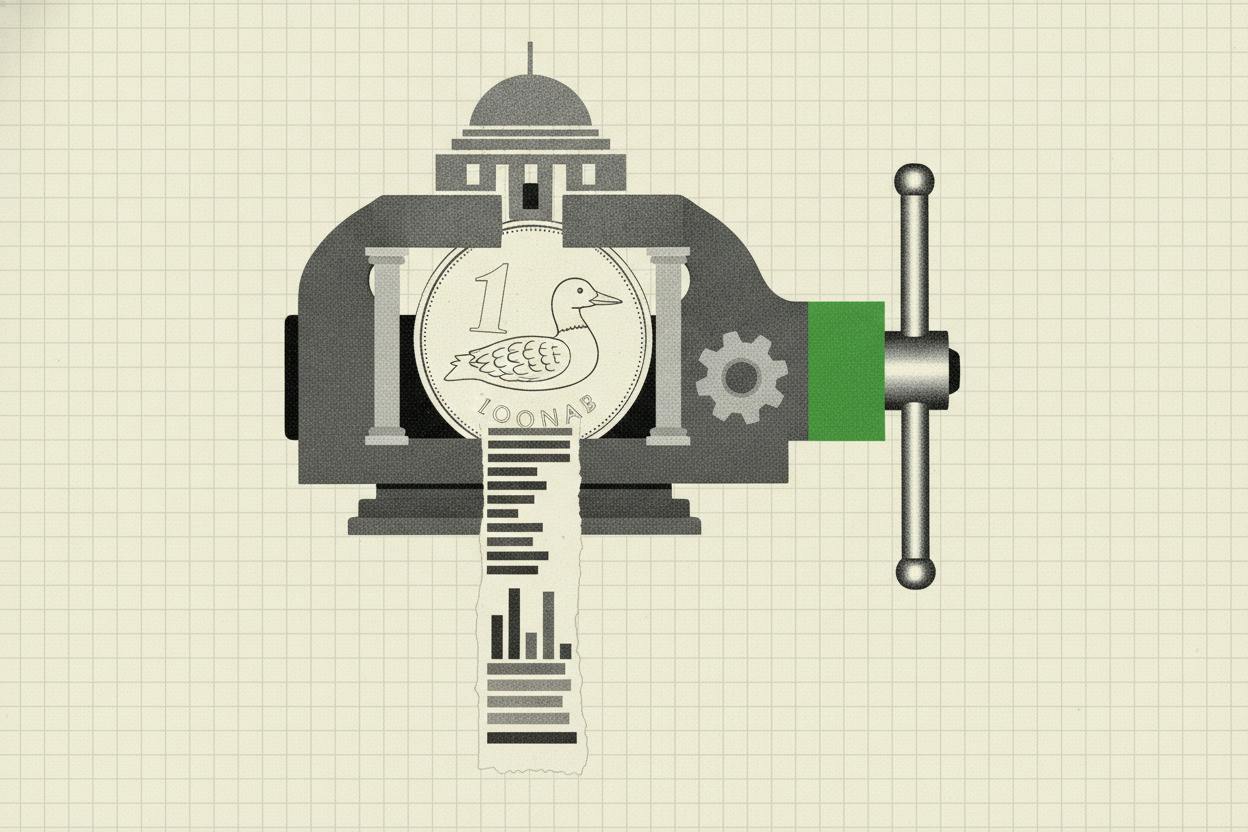
The Canadian dollar could get a short-term boost if the Bank of Canada (BoC) raises interest rates by a quarter of a percentage point on Wednesday and signals that more hikes are on the way, according to UBS. The Swiss bank's strategists say such a move could push the USD/CAD exchange rate below CA$1.40, a level that has been a key psychological marker for traders.
Currency markets have already started to react. The loonie, as the Canadian dollar is often called, has strengthened from nearly CA$1.43 per US dollar to around CA$1.40 in recent sessions, following tougher-than-expected comments from BoC Governor Tiff Macklem. That shift shows how sensitive the currency is to expectations about where interest rates are headed, not just the immediate decision.
Why the rate gap matters
For everyday investors, the most important thing to understand is that currency values are heavily influenced by interest rate differences between countries. When a central bank raises rates, it makes holding that country's currency more attractive because investors can earn a higher return on deposits and bonds denominated in it. That increased demand tends to push the currency's value up.
The gap between Canadian and US interest rates is currently a focal point. If the BoC hikes while the US Federal Reserve holds steady, the gap narrows, making Canadian assets relatively more appealing. That dynamic is what UBS believes could drive the loonie higher in the near term.
However, the market's reaction will depend not just on the size of the hike but on the BoC's forward guidance—the signals it gives about future policy. If the bank suggests this is a one-off move, the currency could give back some gains. If it hints at a series of hikes, the loonie could strengthen further.
What's behind the BoC's hawkish tilt
The BoC has been under pressure to address inflation, which has remained above its target range. Governor Macklem's recent comments have been interpreted as a shift toward a more aggressive stance, which is why traders are now pricing in a higher probability of a hike this week.
At the same time, the Canadian economy has shown resilience, with strong employment numbers and solid consumer spending. That gives the central bank room to tighten policy without immediately choking off growth. But there are also headwinds, including elevated household debt and a housing market that has cooled after previous rate increases.
Oil prices also play a role in the loonie's fortunes. Canada is a major oil exporter, so higher crude prices tend to support the currency. Recent oil strength has been a tailwind for the loonie, but it has also complicated the inflation picture, as energy costs feed into consumer prices.
What it means for investors
For Canadian investors, a stronger loonie has mixed implications. If you hold US stocks or other foreign assets, a rising Canadian dollar reduces the value of those holdings when converted back to Canadian dollars. Conversely, if you're planning a trip to the US or buying imported goods, a stronger loonie makes those purchases cheaper.
For US investors with exposure to Canadian assets, a weaker US dollar relative to the loonie means their Canadian investments are worth more in US dollar terms. But it also means Canadian exports become less competitive, which could weigh on Canadian corporate earnings.
Currency movements are notoriously difficult to predict, and UBS's forecast is just one view. The actual outcome will depend on the BoC's decision, its statement, and how markets interpret the news. As always, it's wise to focus on your long-term investment strategy rather than trying to time currency swings.
Related reading: dollar hits four-week low vs loonie and oil's five-month high pressures Canadian stocks.
Investors will also be watching the broader currency landscape, as the Fed, ECB, and BOJ all have rate decisions on the horizon. The interplay between these central banks will shape global currency trends in the coming weeks. For more on that, see dollar steadies ahead of central bank meetings.



