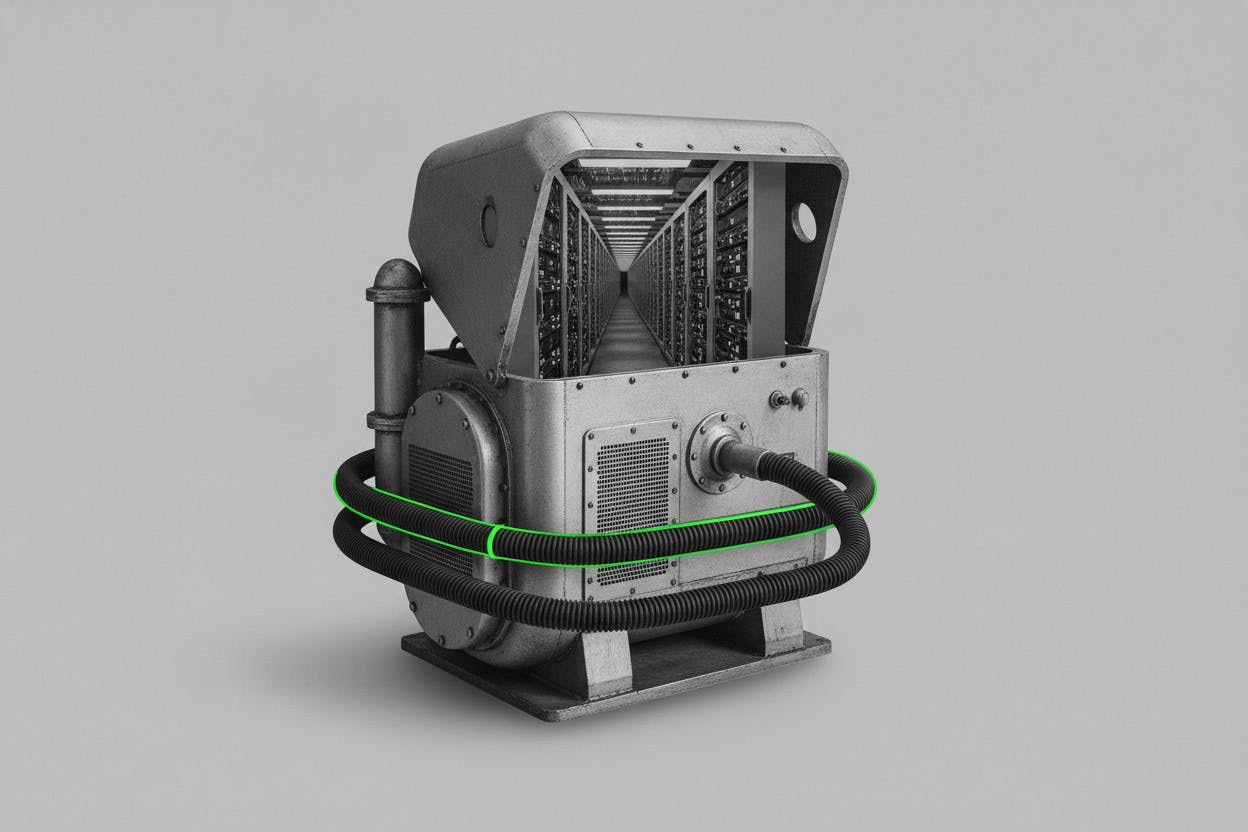
Investment bank UBS has started covering Innio, an industrial power equipment company, with a bullish outlook tied to the rapid expansion of data centers. The bank forecasts that Innio's revenue from data center customers could jump from $260 million last year to $2.7 billion by 2028—a nearly tenfold increase.
The projection comes as data center operators race to build out capacity for artificial intelligence workloads, which require massive amounts of reliable electricity. Innio makes generators, power management hardware, and related equipment that keep data centers running, especially during grid outages or peak demand.
Why Data Centers Need More Power Gear
Data centers are essentially giant warehouses of servers that need constant, stable electricity. As companies add AI computing—which draws far more power than traditional cloud computing—the demand for backup generation and power infrastructure grows. Every new data center requires not just the initial equipment but also ongoing maintenance, monitoring, and parts replacement.
UBS argues that Innio is well positioned because it sells both the hardware and the follow-on services that keep that gear running. The bank calls this a “richer equipment mix” and “higher service intensity.” In plain terms, Innio is selling more expensive setups and more long-term support contracts per data center.
This matters because service contracts tend to be more profitable and predictable than one-off equipment sales. When a data center operator signs a multi-year maintenance deal, that revenue recurs each year without the same manufacturing costs attached to a new generator sale.
What the Numbers Mean for Investors
The headline forecast—$2.7 billion in data center revenue by 2028—is striking, but UBS says the real story is underneath it. The bank estimates that Innio's service revenue per gigawatt of data center capacity could double from $30 million to $60 million. That would make a larger share of the company's revenue repeatable and less dependent on the lumpy timing of construction cycles.
Equipment deliveries can be volatile: a big quarter often depends on when a site breaks ground and when hardware ships. Service contracts, by contrast, tend to recur and carry higher gross margins, because support work scales without the same manufacturing costs. If Innio's data center ramp is really services-led, markets are often willing to pay a higher earnings multiple for the added visibility—which matters when analysts try to justify targets like UBS's $47 price target.
For everyday investors, the key takeaway is that Innio's growth story isn't just about selling more generators. It's about shifting the business model toward recurring revenue, which could make earnings more stable and potentially support a higher stock valuation over time.
Broader Data Center Investment Trend
Innio is not the only company benefiting from the data center boom. Real estate firms and infrastructure investors have also been piling in. For example, Texas real estate giants Hunt and Crow recently joined Empery Digital in a $230 million data center push, highlighting the scale of capital flowing into the sector.
However, not every industrial company is seeing the same tailwinds. In medtech, for instance, BofA recently downgraded CONMED, citing slower growth ahead, a reminder that sector-specific trends matter more than broad market moves.
Investors watching Innio will likely focus on how quickly its service revenue grows relative to equipment sales. If the company can hit UBS's service intensity targets, the stock could command a higher valuation multiple. If equipment sales dominate, earnings may remain more cyclical.
UBS's initiation is a single analyst view, not a guarantee. But it underscores a broader theme: the data center buildout is creating opportunities across the supply chain, and companies that can lock in recurring service revenue may be the biggest winners.