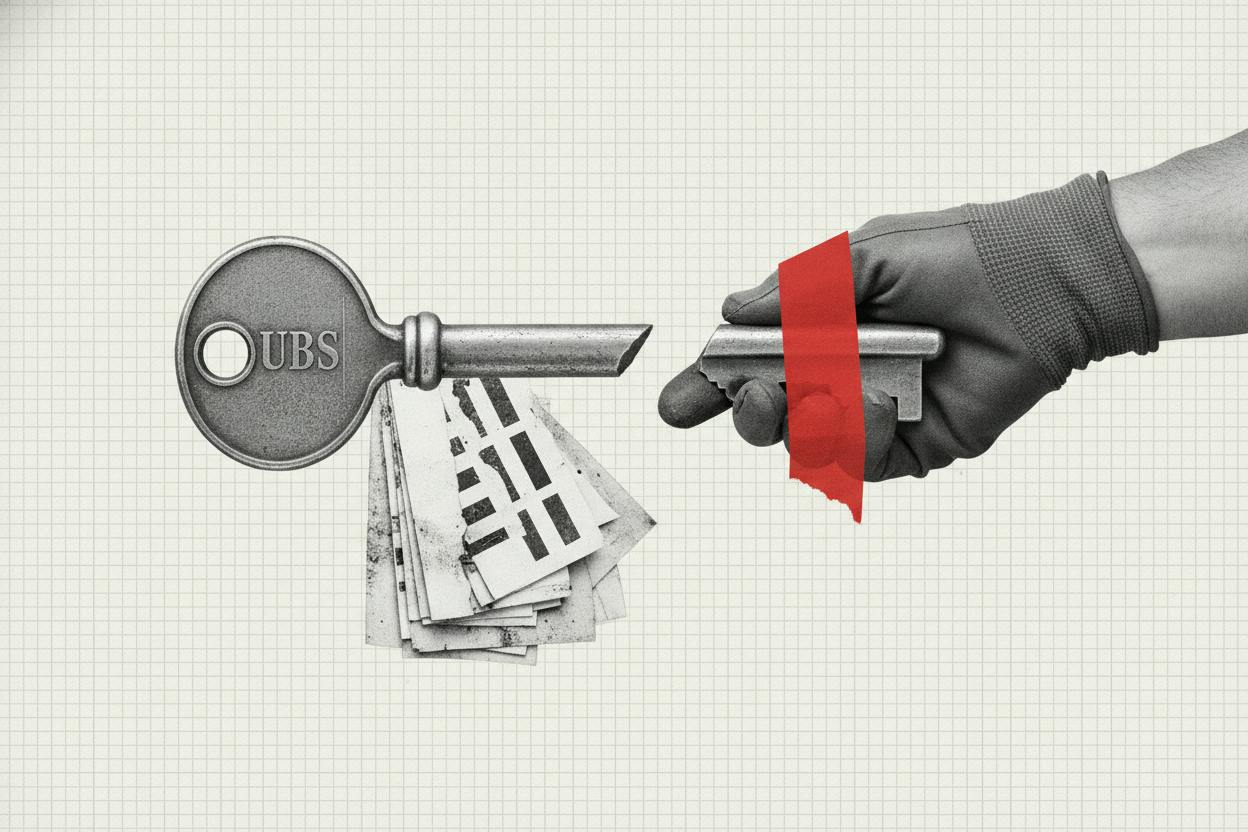
Swiss stocks closed higher on [day], with the Swiss Market Index (SMI) gaining 0.62%. The advance was led by UBS, whose shares climbed after the bank announced a significant divestment: it will transfer its Swiss and Luxembourg fund administration units to Northern Trust, a US-based custody and asset-servicing giant. The deal is expected to close in the second quarter of 2027.
What is fund administration?
Fund administration is the back-office work that keeps investment funds running smoothly. It includes accounting, calculating net asset values, maintaining records, and preparing reports for investors and regulators. Asset managers often outsource these tasks to specialist firms like Northern Trust, which can do them at scale and with the necessary technology.
For UBS, this business has been part of its broader wealth and asset management operations. But after its emergency takeover of Credit Suisse in 2023, UBS has been working to streamline its sprawling operations, cutting costs and shedding non-core businesses. Selling the fund administration units is another step in that direction.
Why does this matter?
For UBS, the deal is about focus. By offloading fund administration, the bank can concentrate on its core strengths: wealth management, investment banking, and its Swiss universal bank. It also reduces the complexity that came with integrating Credit Suisse's operations.
For Northern Trust, the acquisition expands its footprint in Europe, particularly in Switzerland and Luxembourg, which are major hubs for cross-border fund domiciliation. The deal is expected to strengthen Northern Trust's fund services business, though the financial terms were not disclosed in the brief.
The broader Swiss market's rise reflects investor optimism about UBS's strategy. The SMI's 0.62% gain was modest but notable, as European markets have been navigating a mix of economic data and corporate news. The move also comes amid a backdrop of easing long-term Treasury yields, which has helped support equity valuations globally.
What it means for investors
For everyday investors, this deal is a reminder that large banks often reshape themselves to improve efficiency. When a bank sells a non-core unit, it can free up capital and management attention, potentially benefiting shareholders over time. However, such deals also carry execution risks, and the long timeline—closing in 2027—means the benefits may take years to materialize.
Investors holding UBS shares may view this as a positive sign that management is following through on its promise to simplify the Credit Suisse integration. But it's important to remember that one deal alone doesn't change the bank's overall outlook. UBS still faces challenges, including integrating systems, managing regulatory requirements, and navigating a competitive Swiss banking landscape.
For those invested in Northern Trust, the acquisition could expand its European business, but it also adds integration risk. The company will need to retain clients and staff during the transition.
More broadly, the Swiss market's performance is often influenced by global factors, including interest rates and economic growth. As bond markets weigh strong US growth and cautious central banks, investors should keep an eye on how these dynamics affect Swiss exports and financial services.
Looking ahead
The deal's completion is still more than two years away, so there's plenty of time for regulatory approvals and potential changes. Investors will likely watch for further details on the financial terms and any impact on UBS's earnings.
In the meantime, the Swiss market's modest gain on the day underscores that corporate actions like this can move individual stocks, but the broader index is driven by a mix of factors. For those tracking Swiss equities, the UBS-Northern Trust deal is a notable development, but it's just one piece of a larger puzzle.
As always, diversification and a long-term perspective remain key for everyday investors. While a single deal can create headlines, it's rarely a reason to overhaul your portfolio.