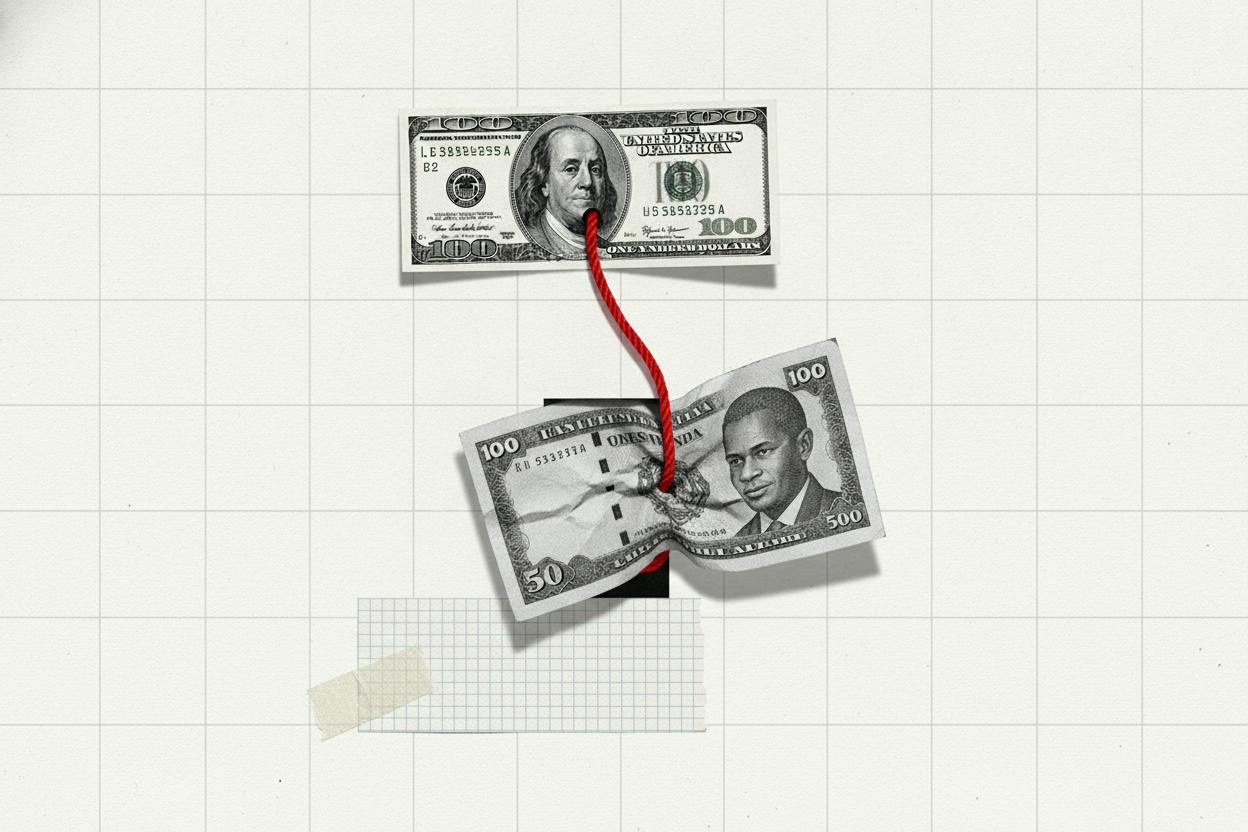
Uganda's shilling has tumbled to an all-time low against the US dollar, as a wave of demand from importers overwhelms the local currency market. The weakness is part of a broader trend across several African currencies, with traders bracing for more pain in Zambia and Ghana, while Kenya's shilling looks comparatively resilient.
According to LSEG pricing, the shilling traded at 3,965/3,975 per dollar on Thursday, weaker than last week's 3,925/3,935. The move reflects a surge in demand for dollars from fuel and merchandise importers who are lining up payments for shipments arriving ahead of the peak shipping season.
Why the dollar is in such high demand
Importers in Uganda need dollars to pay for goods purchased from abroad. When many companies are trying to buy dollars at the same time—often ahead of a busy shipping period—the demand can outstrip supply, pushing the local currency lower. This is a familiar pattern in emerging markets, where currencies often weaken when imports rise or when global investors pull money out.
The Ugandan shilling's slide is not happening in isolation. Across the region, currencies are feeling the heat from a stronger US dollar, which has been buoyed by expectations that the Federal Reserve will keep interest rates higher for longer. A stronger dollar makes it more expensive for countries like Uganda to import goods and service dollar-denominated debt.
Traders are now watching Zambia and Ghana, where they expect similar pressure. Both countries have struggled with debt and inflation in recent years, making their currencies particularly vulnerable to dollar strength. In contrast, Kenya's shilling is expected to stay steady, thanks to better foreign exchange reserves and a more balanced trade position.
Central bank steps in—but with limits
Uganda's central bank has been trying to manage the situation. Two weeks ago, it raised the cash reserve requirement for banks—a move designed to cool domestic credit and reduce the amount of money circulating in the economy. By making it more expensive for banks to lend, the central bank hopes to curb inflation and ease some of the pressure on the shilling.
However, the central bank has also signaled that it does not plan to sell dollars from its reserves to prop up the currency. That means the shilling will likely continue to find its own level in the market, which could mean more volatility in the near term.
For everyday Ugandans, a weaker shilling means imported goods—from fuel to food to electronics—become more expensive. That can feed into inflation, eroding purchasing power. For investors, the currency's slide is a reminder of the risks of holding assets denominated in emerging-market currencies, especially when the dollar is strong.
What it means for investors
For investors with exposure to Uganda, Zambia, or Ghana, the currency weakness is a key risk to watch. A falling currency can hurt returns on local-currency bonds and stocks, even if the underlying assets perform well. It can also make it more expensive for companies in those countries to repay foreign debt, which could weigh on corporate earnings.
On the other hand, a weaker shilling can make exports from Uganda more competitive, potentially benefiting sectors like agriculture and manufacturing that sell abroad. But in the short term, the import-heavy nature of the economy means the negative effects are likely to dominate.
Investors should also keep an eye on the broader dollar trend. If the US dollar continues to strengthen, pressure on emerging-market currencies is likely to persist. That could have implications for global markets, as a stronger dollar often leads to capital outflows from emerging economies.
For those looking at African markets, the divergence between Kenya and its neighbors is notable. Kenya's relative stability could make it a more attractive destination for foreign investment, while Uganda, Zambia, and Ghana may face more currency-related headwinds.
As always, currency movements are just one piece of the puzzle. Investors should consider the broader economic and political context before making any decisions. But for now, the shilling's record low is a clear sign that the dollar's strength is reshaping markets across the continent.