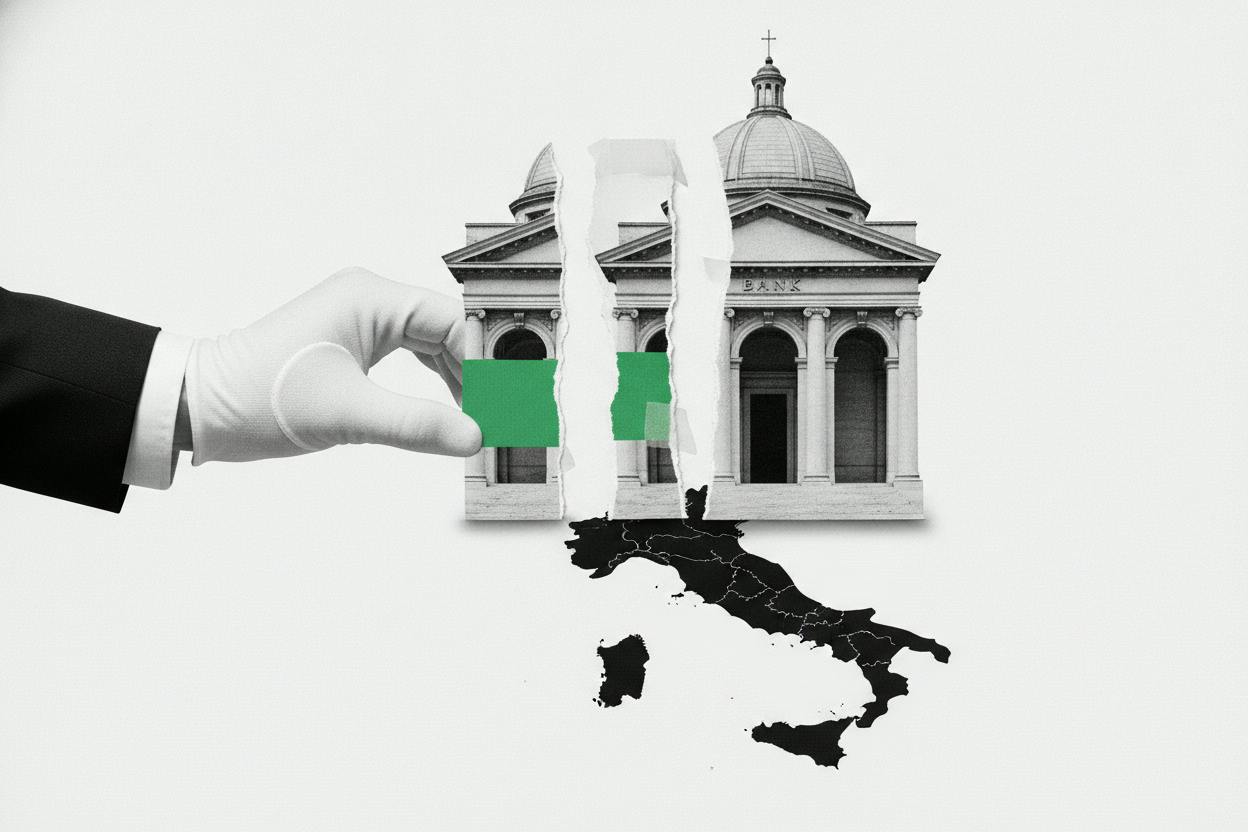
Italy's banking sector is bracing for another round of consolidation, and this time the spotlight is on Banco BPM, the country's fourth-largest lender. UniCredit, one of Italy's biggest banks, and Credit Agricole, a French banking giant, have floated a plan with Italian authorities that could see Credit Agricole take about one third of Banco BPM, effectively carving up the bank.
The proposal is still in early discussions, and no final agreement has been reached. But the very fact that such a breakup is on the table signals how quickly Italy's banking landscape is shifting—and how major players are positioning themselves for what could be a wave of mergers and acquisitions.
What's driving the breakup talk?
Banco BPM has long been seen as a potential takeover target. It's a significant player in Italy's fragmented banking market, with a strong presence in the wealthy northern regions. For years, analysts and investors have speculated about who might snap it up—or merge with it—as part of a broader consolidation trend across European banking.
UniCredit, led by CEO Andrea Orcel, has publicly described itself as an "observer" in domestic mergers, a stance that has frustrated some investors who expected the bank to be more aggressive in pursuing deals. Orcel has instead focused on cross-border opportunities and returning capital to shareholders. But the new proposal suggests UniCredit is at least willing to engage in discussions that could reshape the domestic market.
Credit Agricole already owns 29.3% of Banco BPM, making it the bank's largest shareholder. That stake gives the French lender significant influence and a natural interest in how Banco BPM's future unfolds. Taking about a third of the bank would increase its control, potentially allowing it to consolidate its Italian operations while avoiding a full takeover that might face regulatory hurdles or political opposition.
The plan has been raised in talks with Italian authorities, according to the source summary. That suggests the government is being kept in the loop, which is typical for any major banking deal in Italy, where politics and finance are closely intertwined. Italian officials have historically been wary of foreign banks gaining too much control over domestic lenders, but they have also supported consolidation as a way to strengthen the sector.
Why does this matter for investors?
For everyday investors, this story is about more than just a single bank. It's a signal that Italy's banking sector is entering a new phase of deal-making, which could have ripple effects across European financial markets.
If a breakup of Banco BPM goes ahead, it would likely trigger a re-rating of the bank's shares, as investors price in the potential value of a split. It could also lead to further consolidation, as other mid-sized Italian banks look for partners or buyers. That could create opportunities for investors who hold shares in these banks, but it also carries risks, as deals can be complex and may face regulatory or political obstacles.
For shareholders of UniCredit and Credit Agricole, the implications are more nuanced. A deal that expands Credit Agricole's Italian footprint could strengthen its earnings, but it would also require capital and management attention. UniCredit, meanwhile, might benefit from a clearer competitive landscape, but it could also face new competition from a stronger Credit Agricole-backed entity.
It's also worth noting that this is happening against a backdrop of broader European banking consolidation. Banks across the continent are seeking scale to compete with larger global rivals and to invest in digital transformation. The recent slip in European markets shows how sensitive investors are to economic and geopolitical risks, but banking deals are often driven by long-term strategic goals rather than short-term market moves.
What to watch next
The key question is whether the breakup plan gains traction. Talks with Italian authorities are still at an early stage, and any deal would require regulatory approval, which could take months. Investors should also watch for any public statements from UniCredit or Credit Agricole, as well as any signs of opposition from Banco BPM's management or other shareholders.
Another factor to consider is the broader health of the Italian economy. Banks are sensitive to interest rates, loan defaults, and economic growth. If Italy's economy weakens, that could complicate any deal. Conversely, a strong economy could make a breakup more attractive, as it would be easier to value and integrate the different parts of Banco BPM.
For now, the news is a reminder that banking consolidation is not just a theoretical concept—it's happening in real time, and it can affect the value of your investments. Whether you own shares in these banks directly or hold them through a fund, it's worth keeping an eye on how these discussions evolve.
As always, it's important to remember that this is not a recommendation to buy or sell any stock. The outcome of these talks is uncertain, and there are many factors that could change the picture. But understanding the dynamics at play can help you make more informed decisions about your portfolio.
In the meantime, investors might also be watching other developments in the financial sector, such as the easing of redemption requests at Ares Private Credit Fund or the JPMorgan's exploration of private credit for rejected card applicants. These stories highlight the ongoing evolution of credit markets, which could intersect with banking consolidation in unexpected ways.
Ultimately, the Banco BPM situation is a story about power, strategy, and the future of European banking. It's a reminder that even in a world of digital disruption and global competition, the old-fashioned business of buying and selling banks is still very much alive.