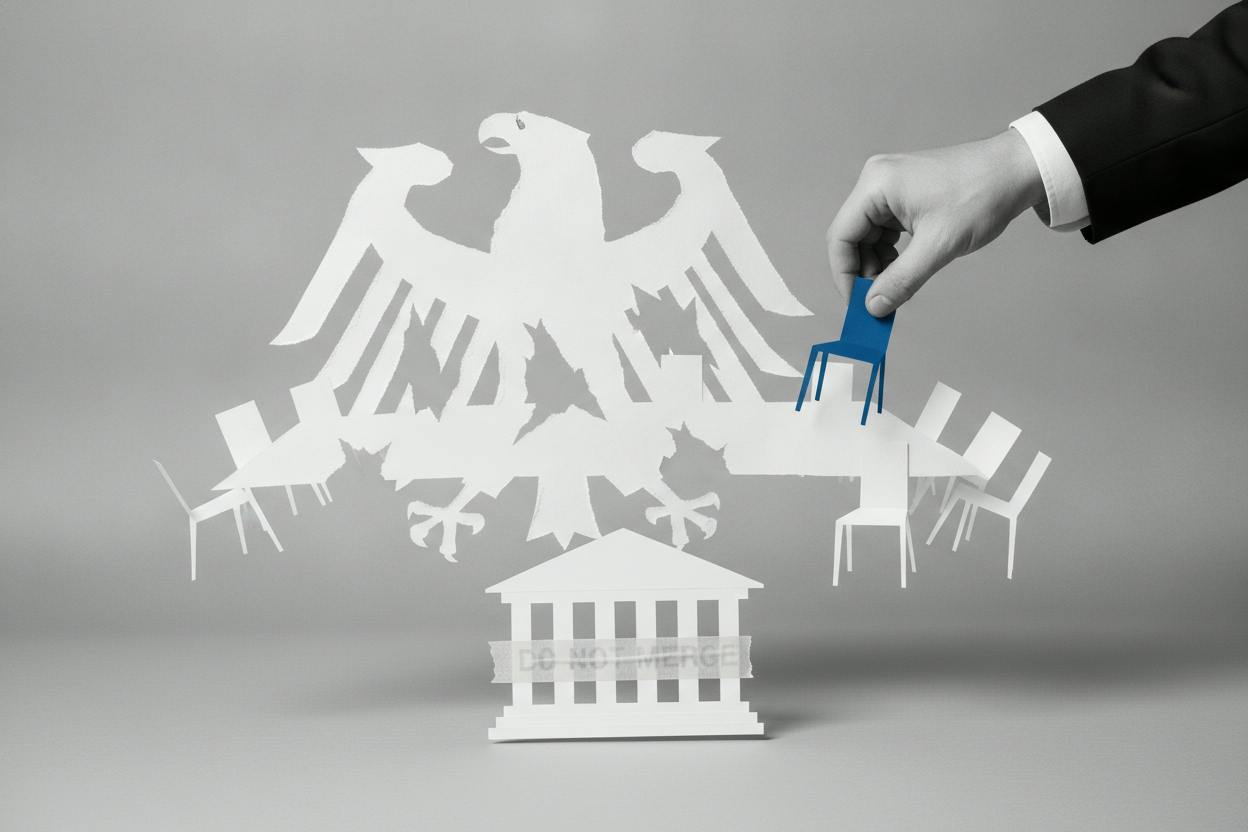
UniCredit has moved to the next stage of its campaign to take control of Commerzbank, asking the German lender to convene a shareholder meeting and support its CEO, Andrea Orcel, as chairman. The request comes after UniCredit cleared its final regulatory hurdle, setting the stage for a potentially sweeping overhaul of Commerzbank's leadership.
The Italian banking group, which has built a significant stake in Commerzbank through a €39 billion offer and derivative positions, is now pushing for governance changes. According to Commerzbank, UniCredit wants to replace nine of the ten shareholder representatives on its supervisory board and may also seek changes to parts of the seven-person management board.
How Germany's two-tier board system works
Germany's corporate governance uses a two-tier structure, with a supervisory board that oversees the management board. The supervisory board hires and can reshape the management board, so winning seats there is the fastest route to influencing strategy and senior appointments. That's why UniCredit's push to control the supervisory board is so significant.
Current Commerzbank chairman Jens Weidmann said the board will review UniCredit's requests, but stressed the importance of stability and customer focus. His comments highlight the risk that rapid change could distract from day-to-day banking operations.
The final regulatory sign-off came from Poland's KNF regulator, because Commerzbank owns 69% of mBank, a Polish lender. UniCredit says it wants to keep its stake in Commerzbank just under 50% to avoid triggering a mandatory buyout offer for mBank under Polish rules. UniCredit has also said Commerzbank would remain separate from its German unit HypoVereinsbank until at least 2028, giving it time to align operations before any merger discussions.
What this means for investors
For markets, the key question is no longer just the math of the €39 billion approach, but whether UniCredit can change Commerzbank's top table without wobbling the franchise. If UniCredit wins control of the supervisory board and installs Orcel as chairman, it gains the main lever over senior appointments in the two-tier system. That can speed up integration planning and strategic shifts even while the banks remain legally separate.
But the faster the reshuffle, the more markets will price in execution risk – the chance that internal disruption hits lending, risk controls, or customer retention. So Commerzbank's shares and credit instruments are likely to trade on governance outcomes and continuity signals into and after any shareholder vote, not just on takeover headlines.
This is a major development in European banking, following UniCredit's Orcel sealing the Commerzbank takeover, which was Europe's biggest cross-border bank deal since 2008. The push for board control is a natural next step, but it also raises questions about how quickly UniCredit can integrate without disrupting Commerzbank's operations.
Investors will be watching for signals on how Commerzbank's management responds, whether the shareholder meeting is called, and how the supervisory board reshuffle plays out. Any signs of resistance or delays could affect market sentiment, while a smooth transition could boost confidence in UniCredit's ability to execute its strategy.
For everyday investors, this story underscores the importance of governance in banking. When a major shareholder seeks to change a bank's leadership, it can have ripple effects on the bank's performance, its customers, and ultimately its share price. Understanding how corporate governance works in different countries is key to assessing such situations.
As UniCredit pushes forward, the focus will be on whether it can balance its ambition for control with the need to maintain stability at Commerzbank. The outcome of this boardroom battle will likely shape the future of both banks and could set a precedent for cross-border banking deals in Europe.