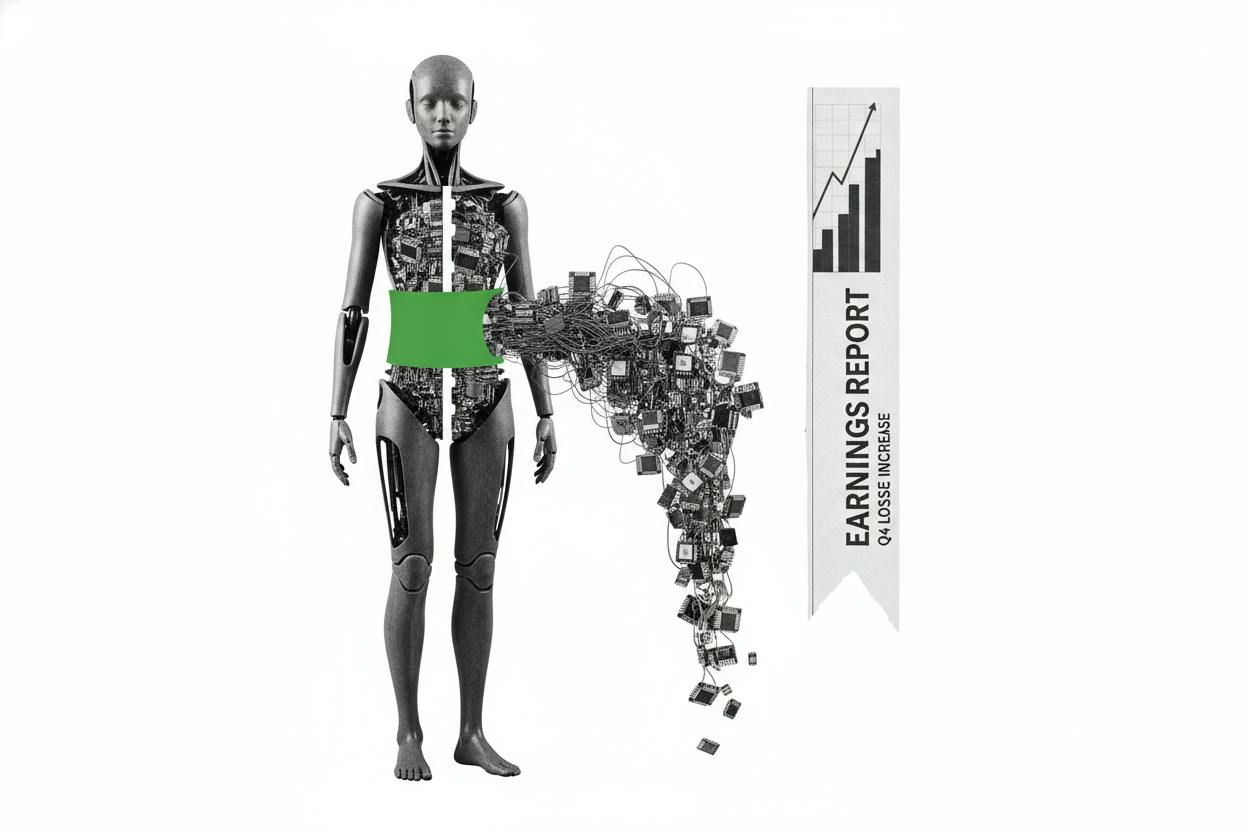
Unitree, the Chinese humanoid-robot maker that listed in August, reported its first quarterly results as a public company this week, and the numbers tell a story of rapid growth tempered by a deliberate bet on the future. Third-quarter revenue jumped 70% to 665 million yuan (about $93 million), but net profit attributable to shareholders fell 17.4% to 112.7 million yuan, well short of the 224 million yuan analysts had expected.
The gap came down to spending. Research and development costs soared 249.6% to 127.0 million yuan, now equal to 19.1% of revenue. The company said the money went toward "embodied intelligence" AI models, computing capacity, and hiring—signals that it is choosing capability over near-term margins.
Why the profit miss matters
For a newly listed company with high expectations, a single quarter's miss can have outsized effects. When R&D becomes a larger, ongoing slice of revenue, analysts often trim their near-term earnings forecasts even if sales keep growing. That can pressure the valuation multiple, because more of the payoff is pushed further into the future. In practice, that means the stock trades like a longer-duration cash-flow story—more sensitive to each earnings update.
Unitree has become a proxy for investor appetite toward the entire humanoid-robot sector, so its shares have been jumpy since the IPO. The company's position as a bellwether means its results are watched not just for what they say about Unitree itself, but for what they imply about the broader market for humanoid robots.
Stronger nine-month picture
Despite the quarterly miss, the first nine months of the year looked healthier. Revenue rose 55.7% to 1.82 billion yuan, and profit climbed 270.5% to 386.7 million yuan. That profit growth was helped by better gross margins and a large one-time share-based payment charge in the prior-year period, which made the comparison flattering.
The timing is tricky, though. Reuters noted that Chinese tech shares have been under pressure, and regulators have been taking a harder look at humanoid-robot IPOs, with questions over whether headline growth is coming from sustainable customer demand or short-lived, state-backed projects.
What it means for investors
For everyday investors, the key takeaway is that Unitree is prioritizing long-term capability over short-term profits. That's a common strategy for young tech companies, but it carries risks. If the R&D spending doesn't translate into products that customers want to buy at scale, the profit miss could become a pattern rather than a one-off.
Investors should also watch how the broader sector responds. If other humanoid-robot makers follow Unitree's lead and ramp up R&D, the entire industry could see margin pressure in the near term. Conversely, if the spending leads to breakthroughs, the payoff could be substantial.
For now, the market is likely to focus on whether Unitree can convert its R&D into revenue growth that outpaces costs. The company's next few quarters will be crucial in determining whether the stock's valuation is justified.
As with any high-growth tech stock, volatility is likely to remain high. Investors should be prepared for bigger swings around each earnings report, especially given Unitree's role as a bellwether for a closely watched corner of China's tech market.