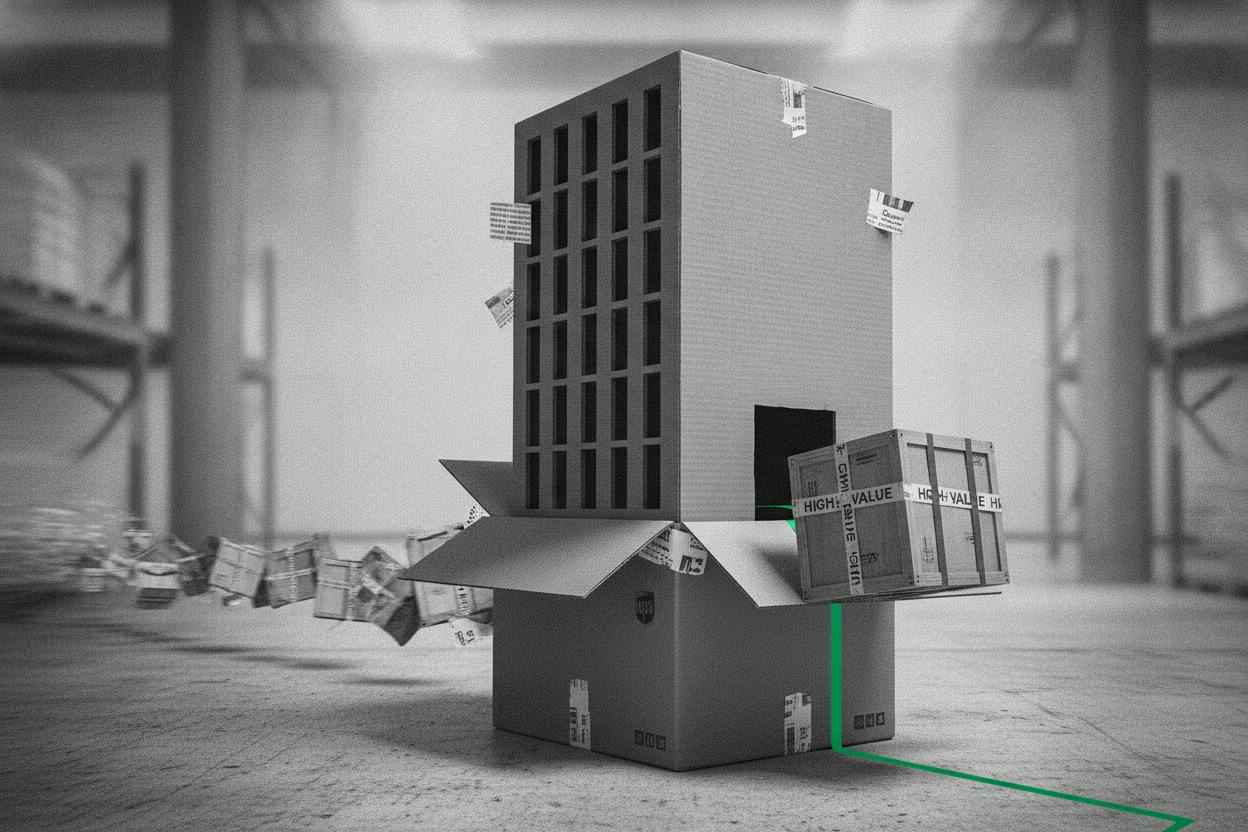
UPS is betting that the artificial intelligence boom will be more than just a tech story—it could become a major logistics opportunity for years to come. CEO Carol Tome told Reuters that the surge in AI data center construction could generate about $15 billion a year in shipping revenue for the company, as it pivots toward fewer but more profitable deliveries.
The comments come as UPS continues to reshape its business model, moving away from the high-volume, low-margin ecommerce deliveries that have squeezed profits in recent years. Instead, the company is focusing on premium services that require speed, coordination, and specialized handling—exactly the kind of work that data center construction demands.
Data centers: more than just tech upgrades
AI data centers are turning into massive construction projects, not just simple tech upgrades. According to Reuters, global spending on data centers could reach about $1 trillion in 2026 and more than double before the end of the decade. Tech giants like Alphabet, Microsoft, Meta, and Amazon are pouring billions into facilities packed with advanced chips, servers, and the power and cooling systems needed to keep them running.
That mix plays directly to UPS's strengths in premium logistics. Tome said UPS is already flying in time-critical components like advanced microprocessors, booking ocean freight for bulky equipment, warehousing inventory, and coordinating deliveries to job sites. And once a data center is up and running, it continues to need replacement parts and maintenance shipments, which is why Tome expects the demand to last for years.
This isn't just a short-term construction play. The ongoing operational needs of data centers—from spare parts to upgrades—could provide a steady stream of logistics work long after the initial build is complete. That recurring revenue is particularly attractive for a company like UPS, which has been working to improve its margin profile.
A strategic shift toward higher-margin deliveries
UPS's focus on data center logistics is part of a broader strategy to move away from low-margin ecommerce volume. The company has been cutting millions of unprofitable Amazon doorstep deliveries and concentrating its network on work that can be priced for speed, handling, and coordination. This shift is designed to improve profitability even if package counts don't grow as fast as they once did.
Data center shipping fits that strategy perfectly. These shipments tend to be fewer in number but far more complex: urgent air freight for high-value chips, planned ocean shipments for heavy equipment, plus storage and tightly scheduled site deliveries. That means higher revenue per stop and fewer costly last-mile touches compared to residential drops, where profits often get squeezed by the number of addresses and miles driven.
UPS isn't alone in seeing the opportunity. Reuters notes that FedEx has formed a dedicated data center team as well, setting up a tighter head-to-head fight for the same higher-margin freight. Both companies are vying for a slice of what could be a lucrative niche in the logistics industry.
What it means for investors
For investors, the $15 billion figure is less important as a precise revenue forecast than as a signal that UPS is prioritizing quality of revenue over sheer package counts. If the data center business grows as expected, UPS's margin story could rely more on pricing power and network efficiency than on chasing volume.
That's a meaningful shift for a company that has long been seen as a bellwether for ecommerce and consumer spending. By focusing on higher-margin work, UPS is trying to insulate itself from the cost pressures that come with residential delivery, such as fuel costs and the inefficiency of delivering to scattered addresses. The move could also help the company navigate periods of softer consumer demand, as holiday shipping costs surge and fuel surcharges climb.
The competitive dynamic with FedEx adds another layer. Both companies are chasing the same premium logistics business, which could lead to pricing pressure in the short term. But the overall opportunity is large enough that both could benefit if the AI data center boom continues as projected.
For everyday investors, the key takeaway is that UPS is repositioning itself for a future where logistics demand is driven less by online shopping and more by infrastructure buildouts like data centers. That could make UPS's earnings less volatile and more predictable, which is often what investors look for in a mature company.
Still, there are risks. The data center boom is tied to the broader AI investment cycle, which could slow if tech companies pull back on spending. And the logistics industry is highly competitive, with margins that can be squeezed by fuel prices and labor costs. But for now, UPS is making a clear bet that the AI revolution will be a long-run logistics play, and investors will be watching to see if that bet pays off.
As the company continues to execute its strategy, it will be worth keeping an eye on how much of its revenue comes from these premium services. If the data center opportunity materializes as Tome expects, it could provide a durable tailwind for UPS's bottom line—and a reason for investors to see the company as more than just a package delivery service.