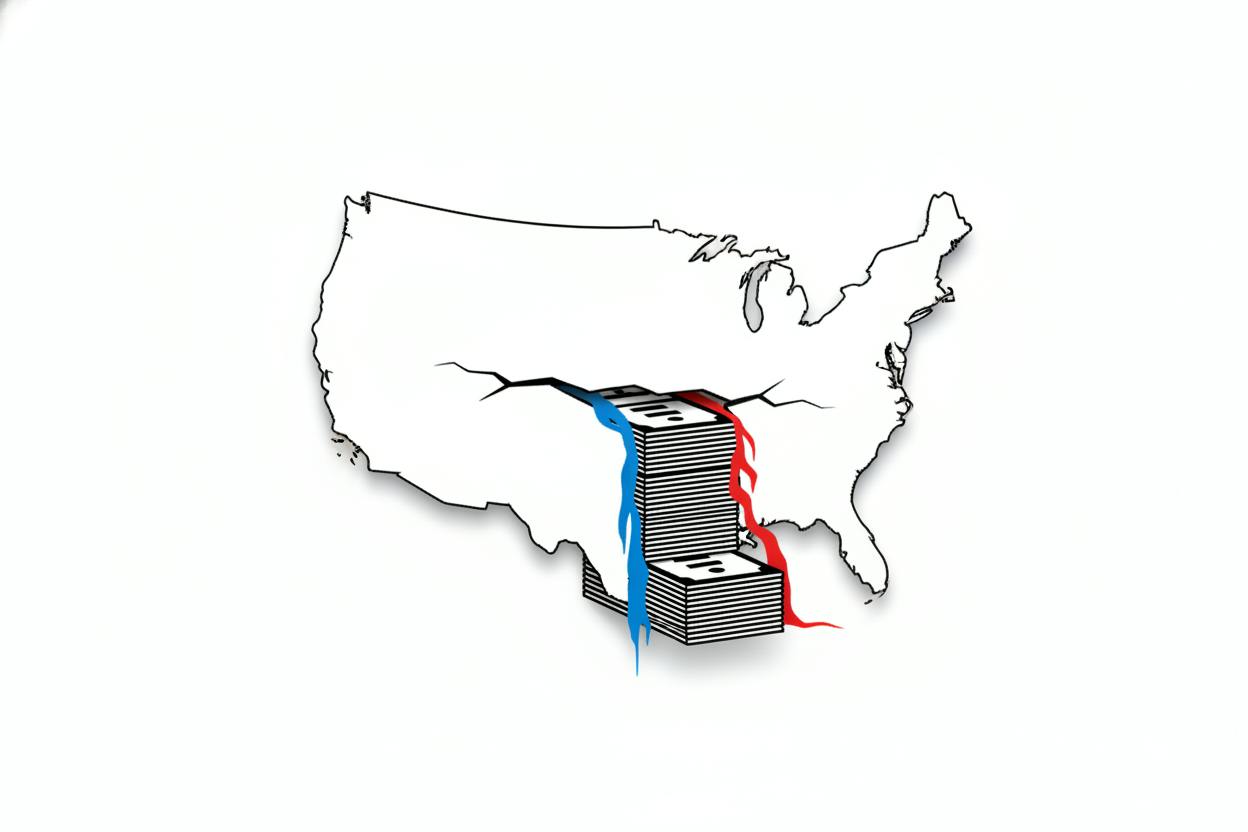
New US economic data released this week painted a picture of an economy that is still growing at a healthy clip, even as some underlying imbalances widen. New-home sales increased, weekly jobless claims fell again, and a regional manufacturing gauge improved — all signs that the US expansion remains on track. But the same batch of reports showed the US current account deficit expanding to $246.02 billion in the second quarter, a reminder that not everything is as sturdy as the headline numbers suggest.
What the latest numbers show
New-home sales rose to a 684,000 annual pace in August, up from 643,000 in July. That is a meaningful jump for a sector that has been squeezed by higher mortgage rates over the past two years. Separately, the Kansas City Fed — one of the 12 regional reserve banks that together make up the Federal Reserve system — said its manufacturing index improved in September, suggesting factory activity in that region is still expanding rather than contracting.
On the labor front, initial jobless claims edged down to 197,000. Claims are a weekly count of people filing for unemployment benefits for the first time, and they are one of the most timely indicators of whether companies are laying workers off. A reading below 200,000 is historically low and points to a job market where employers are still reluctant to cut staff. For context, claims have been hovering near these levels for much of the year, which is why many economists describe the labor market as resilient rather than weakening.
Taken together, these reports support the “soft landing” narrative — the idea that the Federal Reserve can bring inflation down to its 2% target without triggering a recession. The logic is straightforward: if consumers keep buying homes, factories keep producing, and companies keep hiring, the economy can slow just enough to cool prices without falling into a downturn.
The crack beneath the surface
The current account deficit is the less cheerful part of the story. It measures the gap between what the US earns from abroad — through exports, investment income, and transfers — and what it pays out to the rest of the world. When the deficit widens, it means the US is importing more capital than it is exporting, or that its investment income from overseas is shrinking relative to what foreign investors earn from their US holdings.
A wider current account gap is not automatically a problem. The US has run deficits for decades, and they are partly a reflection of the dollar’s role as the world’s reserve currency and of strong domestic demand. But a widening deficit can signal that the US is becoming more reliant on foreign capital to fund its spending. If foreign investors ever became less willing to hold US assets, that could put upward pressure on interest rates and weigh on the dollar.
For now, there is little sign of that happening. Treasury yields have been relatively stable, and demand for US government debt remains solid. Still, the combination of firm growth and a widening external imbalance is worth watching. It suggests the US economy is running hot enough to attract imports and capital inflows, but not so hot that policymakers need to slam on the brakes.
What it means for investors
For everyday investors, the takeaway is that the US economy still looks sturdy enough to support corporate earnings, which is generally good news for stocks. A labor market with low layoffs means consumers are likely to keep spending, and that underpins revenue for a wide range of companies — from retailers to homebuilders to banks.
The housing data is particularly relevant for anyone with exposure to homebuilders, building-supply companies, or mortgage lenders. Rising new-home sales suggest that demand is holding up even with mortgage rates elevated. If rates eventually come down, that could add further fuel to the sector. But investors should remember that housing is cyclical and sensitive to rate expectations, so a single month’s gain is not a trend.
The current account deficit matters more for bond investors and anyone watching the dollar. A persistently wide deficit can be a slow-burn negative for the currency, because it implies more dollars are flowing abroad. A weaker dollar can help US exporters but hurts Americans traveling overseas and can add to import costs. It also matters for global investors who hold US assets, as currency swings can amplify or reduce returns.
Looking ahead, investors will want to see whether the labor market’s strength persists. If claims stay low and hiring continues, the Fed may feel less pressure to cut interest rates quickly. That could keep borrowing costs higher for longer, which tends to weigh on rate-sensitive sectors like real estate and technology. On the other hand, if the current account gap keeps widening alongside firm growth, it could revive concerns about the US’s long-term fiscal path — a topic that has already been simmering in Washington.
In short, the data offers a mixed but mostly reassuring picture: growth is holding up, layoffs are scarce, and the housing market is finding its footing. The cracks are there, but for now they look like hairline fractures rather than fault lines. Investors should stay diversified and keep an eye on the next round of jobs and inflation reports, which will do more to shape the Fed’s next move than any single week’s data.