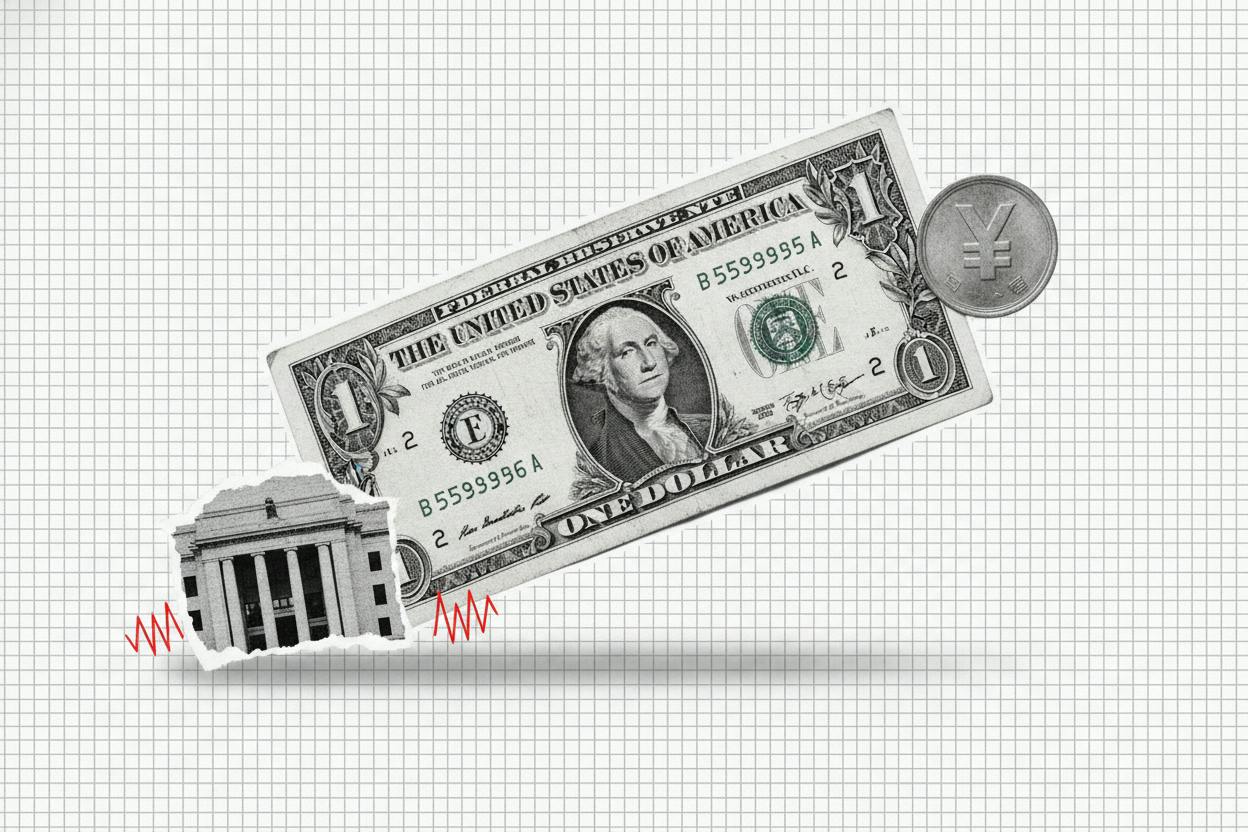
The US dollar strengthened against most major currencies early Tuesday, even as it weakened slightly against the Japanese yen. Currency traders are holding off on big bets before a batch of US economic data and three scheduled speeches from Federal Reserve officials, which together could shift expectations for the path of short-term interest rates.
The day's calendar includes the Philadelphia Fed's nonmanufacturing survey and the Redbook retail sales report, both of which offer timely reads on how the US economy is performing. Later, investors will hear from New York Fed President John Williams, Fed Governor Philip Jefferson, and Richmond Fed President Tom Barkin. Their comments will be parsed for any hint about whether the central bank is leaning toward cutting rates, holding steady, or keeping the door open to further tightening.
Why the dollar is in a holding pattern
The dollar's moves on Tuesday were modest, reflecting a classic "wait and see" stance in the foreign exchange market. When data and Fed messaging are due, traders often avoid large positions because a single surprise can quickly reset the outlook for interest rates. A stronger-than-expected reading on retail sales or services activity could push yields higher and support the dollar, while a soft number might revive expectations for rate cuts and weigh on the greenback.
The slight dip against the yen is notable because the Japanese currency has been sensitive to the gap between US and Japanese interest rates. If US yields fall, that gap narrows and the yen tends to strengthen. But with so much uncertainty about the Fed's next move, the yen's move was contained.
Currency markets are also keeping an eye on the broader global backdrop. Oil prices have been volatile, and movements in energy costs can feed into inflation expectations, which in turn influence central bank policy. For now, the dollar remains the world's primary reserve currency, and its direction often sets the tone for other assets, from emerging-market currencies to commodities priced in dollars.
What the Fed speeches could signal
Fed officials have been walking a fine line: they want to bring inflation down to their 2% target without causing unnecessary damage to the labor market. Recent data has shown inflation cooling gradually, but it remains above target. That has left investors debating whether the next move will be a rate cut or simply a prolonged pause.
Williams, Jefferson, and Barkin represent different parts of the Fed system, and their comments often reflect a range of views. Williams, as head of the New York Fed, is a permanent voter on the policy-setting committee and his remarks typically carry extra weight. Jefferson, a governor, is seen as a centrist voice. Barkin, from the Richmond Fed, has sometimes leaned hawkish. Together, their comments could either reinforce the wait-and-see mood or introduce new volatility.
It's worth remembering that the Fed's decisions are not made in a vacuum. The central bank watches a wide range of indicators, including employment, wage growth, consumer spending, and inflation. The Philadelphia Fed's nonmanufacturing survey, due Tuesday, will give a snapshot of business activity in the services sector, which makes up the bulk of the US economy. The Redbook report tracks retail sales on a weekly basis and can offer an early read on consumer demand.
What it means for investors
For everyday investors, the dollar's direction matters in several ways. A stronger dollar can make US exports more expensive abroad, which may weigh on the earnings of multinational companies. It can also put pressure on emerging-market economies that borrow in dollars, because their debt becomes more costly to service. On the other hand, a weaker dollar can boost the appeal of commodities like oil and gold, which are priced in dollars and become cheaper for foreign buyers.
Currency moves also affect the returns of international investments. If you own foreign stocks or bonds, a rising dollar can reduce your gains when those returns are converted back into dollars. Conversely, a falling dollar can enhance them. That's why many investors keep an eye on the US Dollar Index, which tracks the greenback against a basket of major currencies.
More broadly, the Fed's rate path influences everything from mortgage rates to savings account yields. If the central bank signals that rate cuts are coming, borrowing costs could eventually ease, which would be welcome news for consumers and businesses. But if officials sound more cautious, rates could stay higher for longer, keeping pressure on borrowers.
Tuesday's data and speeches are unlikely to settle the debate on their own, but they add to the mosaic that investors use to gauge where policy is headed. As always, it's wise to focus on your long-term goals rather than trying to trade every headline. Markets will continue to react to each new piece of information, but the big picture for the US economy and interest rates will unfold over months, not days.
For now, the dollar's firm tone suggests that traders are not yet convinced that rate cuts are imminent. But with three Fed voices on tap and fresh data in hand, the mood could shift quickly. Investors should stay tuned.