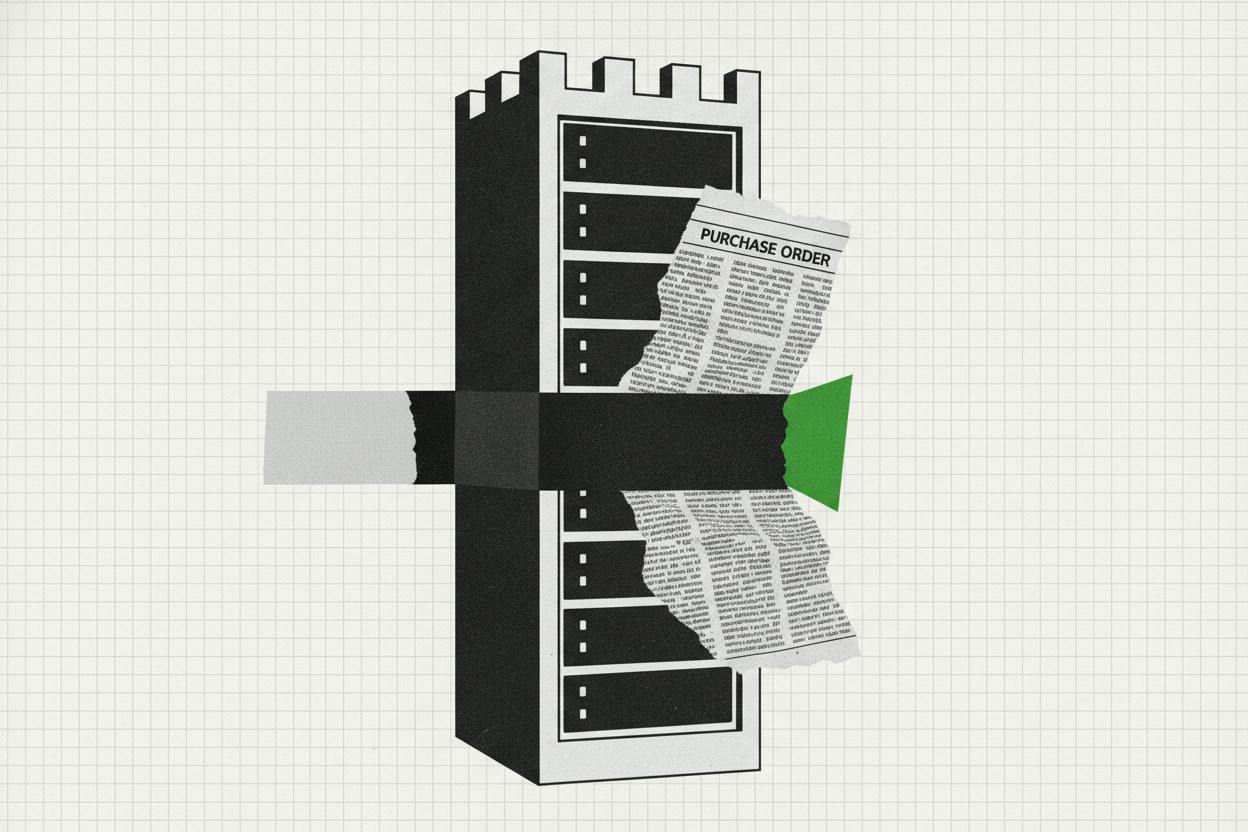
The US government is moving to take an unprecedented role in the rollout of OpenAI's next flagship artificial intelligence model, GPT 5.6, according to a report from the Financial Times. The White House, along with the Departments of Commerce and Treasury, wants to screen the initial group of users who get early access and require the company to release the model in stages rather than all at once.
OpenAI, backed by Microsoft, had reportedly planned to give roughly 24 partners early access to GPT 5.6. But officials from two White House offices and the two federal departments have pushed to narrow that list and make it subject to government sign-off. The move signals that Washington is treating frontier AI less like a typical software launch and more like a strategically sensitive capability, where distribution itself becomes a national-security control point.
Why a Staged Release Matters
Early partners don't just get to try the model first. They help stress-test it, build the first products on top of it, and set de facto norms for how the technology gets used. A staged release plus an approval requirement would turn "early access" into something closer to a permissioned tier, with screening and paperwork built into the launch.
That concentrates the earliest experimentation inside the pre-cleared group, while other would-be early adopters wait longer to test the model or ship applications. Over time, that kind of gatekeeping can shift the AI race from "who builds fastest" to "who can operate inside the rules fastest." It also adds a new compliance and timing cost for startups, cloud providers, and global firms trying to plan product roadmaps around the newest models.
The move comes amid broader concerns about AI safety and national security. Governments around the world have been grappling with how to regulate powerful AI systems that could be used for everything from cyberattacks to disinformation. The US approach here appears to focus on controlling access at the earliest stages, rather than trying to police usage after the fact.
What It Means for Investors
For everyday investors, this development adds a new layer of uncertainty to the AI investment thesis. If the US government can effectively gatekeep who gets to build on top of the most advanced AI models, it could reshape the competitive landscape. Companies that are already well-connected in Washington or that have strong compliance teams may have an advantage over smaller, more agile startups.
The news also raises questions about OpenAI's own trajectory. The company has been at the center of AI investment excitement, with its valuation soaring and an eventual IPO widely anticipated. But increased government scrutiny could complicate those plans. Tech Stocks Slide as OpenAI IPO Delay Raises AI Valuation Concerns highlights how regulatory headwinds have already weighed on the sector.
Investors should also consider the broader implications for the AI supply chain. If the US government is willing to intervene in who gets early access to a model, it may also look to control access to the computing power and data needed to train such models. That could affect companies like Nvidia, which supplies the chips used for AI training, and cloud providers like Microsoft and Amazon that host AI workloads.
The staged release approach could also slow down the pace of AI adoption in certain sectors. Companies that were hoping to integrate GPT 5.6 into their products quickly may now face delays. That could push some to explore alternative models, including open-source options that don't come with the same regulatory strings attached.
Broader Market Context
The news comes at a time when AI stocks have been under pressure. Nikkei 225 Plunges 3.7% on OpenAI IPO Delay Fears, SoftBank Tumbles 12% shows how sensitive markets have become to any signs of regulatory friction in the AI space. SoftBank, a major tech investor, has been particularly exposed to AI sentiment swings.
Meanwhile, other parts of the tech sector are also facing headwinds. RBC Cuts Figma Price Target to $22 as AI Monetization Remains Early Stage underscores that even as AI capabilities advance, turning those advances into revenue is still a work in progress. The government's move to control early access to GPT 5.6 could further complicate monetization efforts for companies that rely on being first to market with new AI-powered features.
For now, the key question for investors is whether this is a one-off intervention or the start of a broader trend. If the US government establishes a precedent of screening early users of frontier AI models, other countries may follow suit. That could fragment the global AI market, with different regions having different rules about who can access the most powerful systems.
Investors should watch for further details on how the screening process would work and whether it applies to other AI developers. The Financial Times report suggests that OpenAI is still in discussions with the government, so the final shape of the policy is not yet set. But the direction is clear: the era of unfettered AI model releases may be coming to an end.