US natural gas prices edged lower on Tuesday as milder weather forecasts cooled demand expectations, pushing Henry Hub futures near a one-week low. The front-month contract hovered around $2.962 per million British thermal units (MMBtu), while a key longer-dated spread slipped to a record-low 8 cents.
Natural gas is often described as a weather contract: when forecasts turn mild during the fall “shoulder season” — the period between peak summer cooling and winter heating demand — traders quickly mark down near-term consumption. Data provider LSEG trimmed its demand forecasts even as it still expects Lower 48 consumption, including exports, to rise over the next two weeks.
Supply and storage keep pressure on prices
At the same time, US production has remained high, and storage levels sit slightly above their five-year average. That reduces the urgency for buyers to pay up for supply now, since there is less fear of a near-term shortage. The softer tone extends beyond the front month: longer-dated 2027 contracts and the next-12-month “strip” — a measure of average prices over the coming year — have moved to their lowest levels in years. That signals less concern about a prolonged squeeze, even with liquefied natural gas (LNG) export intake, known as “feedgas,” a bit lower recently.
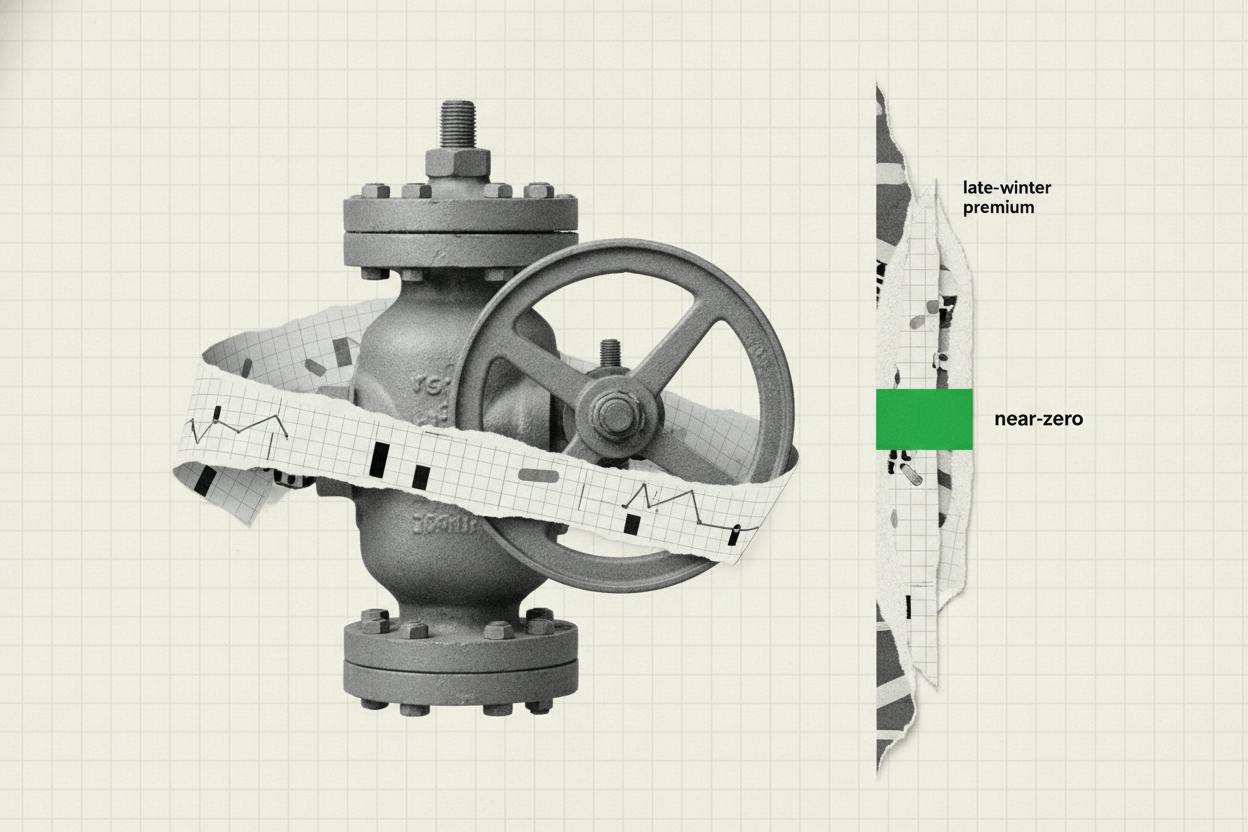
The eye-catcher is the March–April 2027 spread. March is late winter, when inventories can be tight, so it usually trades at a premium to April. A near-zero premium — just 8 cents — says the market isn’t pricing much end-of-winter risk.
Why the “widow-maker” spread matters
That March–April gap is more than a geeky curve detail. It measures what traders are willing to pay for late-winter flexibility, when storage is most drawn down and a cold snap can bite. When the premium collapses toward zero, it can look like calm, but it also leaves little buffer if forecasts suddenly flip colder and the spread has to reprice quickly.
Reuters notes analysts argue March “should never” trade below April in normal conditions, which is why the trade earned its “widow-maker” nickname. The risk, as Amaranth’s more-than-$6-billion blow-up in 2006 showed, is that leveraged spread positions can face abrupt margin calls when volatility returns, even if the front-month Henry Hub price itself doesn’t move much.
What it means for investors
For everyday investors, the move in natural gas prices is a reminder that energy markets are driven by a mix of weather, supply, and storage dynamics. When prices ease on mild forecasts, it can be a headwind for natural gas producers’ near-term revenues, but it also means lower heating bills for consumers this winter if the trend holds.
Investors with exposure to natural gas through ETFs or energy stocks should watch weather updates and storage reports closely, as these can trigger sharp moves. The record-low spread suggests the market is comfortable with supply, but that comfort can vanish quickly if forecasts turn colder.
For broader context, energy prices often influence inflation and consumer spending. Lower natural gas prices can help keep a lid on heating costs, which is a positive for household budgets. However, the recent surge in energy prices in Europe shows how regional differences can matter. Meanwhile, US futures rose as yields eased ahead of a key jobs report, suggesting markets are watching economic data for clues on demand.
As always, it’s important to remember that commodity prices are volatile and can be influenced by factors beyond weather, including geopolitical events and changes in global energy flows. Investors should focus on their long-term goals rather than reacting to daily price swings.