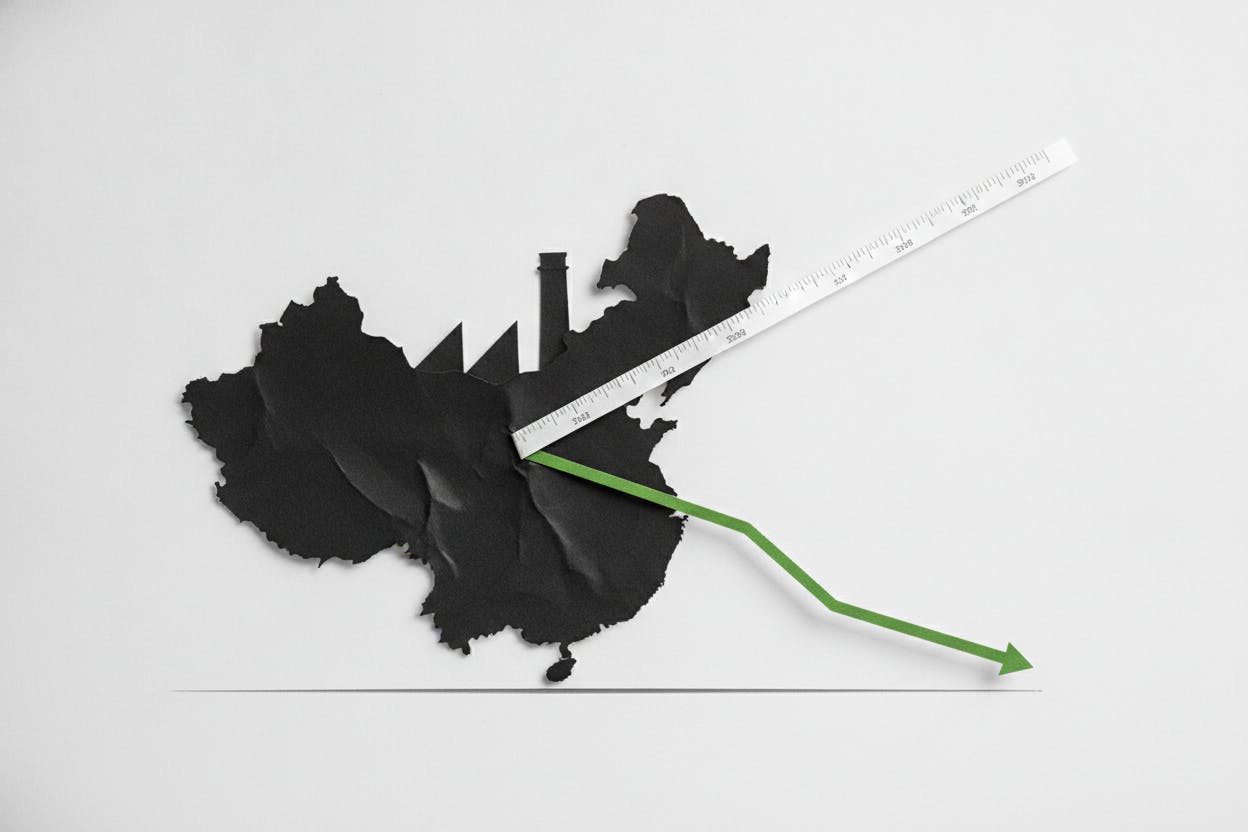
US stocks managed to hold near their session highs on Wednesday, even as fresh data showed China's factory activity contracted more than expected and oil prices slipped. The resilience in equities suggests investors are looking past the latest signs of weakness in the world's second-largest economy.
China's factory gauge slips
China's official manufacturing purchasing managers' index (PMI) fell to 49.2 in July, down 1.1 points from the previous month. That was a bigger drop than analysts had anticipated. A reading below 50 signals that activity is shrinking, so the latest figure points to a deepening contraction in the country's factory sector.
The PMI is a widely watched gauge of manufacturing health, based on surveys of purchasing managers at factories across China. It covers new orders, production, employment, and supplier delivery times. A decline like this typically reflects weaker demand, both at home and abroad.
This is not the first sign of strain. China's factory and services activity have both been under pressure recently, as the property market slump and cautious consumer spending weigh on growth. The latest data adds to concerns that the recovery from the pandemic is losing momentum.
Oil slips below $88
In commodities, Brent crude dipped below $88 a barrel, extending a recent pullback. Lower oil prices can be a double-edged sword: they ease inflationary pressures for consumers and businesses, but they also weigh on energy company revenues and can signal weaker global demand.
The drop in crude comes amid ongoing geopolitical tensions, but traders appear more focused on demand concerns. If China's economy is slowing, that could reduce the amount of oil the country imports, which would put further downward pressure on prices.
Why US stocks held firm
Despite the gloomy Chinese data, US equities stayed near their highs. According to Commerzbank Research, S&P 500 futures were firmer, indicating that investors were not spooked by the overseas news. Instead, the market seemed to draw support from other factors, such as strong corporate earnings and hopes that the Federal Reserve may soon start cutting interest rates.
This kind of divergence—where US stocks shrug off bad news from abroad—is not unusual. Investors often focus on domestic drivers, and the US economy has shown surprising resilience. However, it also means that if global weakness spreads, it could eventually hit US corporate profits.
What it means for investors
For everyday investors, the key takeaway is that markets are sending mixed signals. On one hand, a slowing China could hurt companies that rely heavily on Chinese demand, such as luxury goods makers, chip manufacturers, and commodity producers. On the other hand, lower oil prices and the prospect of rate cuts could support US stocks.
It's also worth noting that China's slowdown is not a new story. Investors have been watching it for months, and many companies have already adjusted their expectations. For example, some European auto parts makers have warned about China sales, while others have managed to beat forecasts despite the slump. The market's reaction to the PMI data suggests that, for now, investors are choosing to look on the bright side.
That said, the resilience could be fragile. If future data points to a sharper global slowdown, or if oil prices keep falling due to weak demand, sentiment could quickly shift. Investors should keep an eye on upcoming economic releases and corporate earnings for clues about the health of the global economy.
Looking ahead
The coming weeks will bring more data on China's economy, including trade figures and retail sales. Investors will also watch for any policy response from Beijing, as officials have pledged to support growth. Meanwhile, the oil market will be closely monitored for signs of whether the recent decline is a blip or the start of a bigger trend.
For now, the message from the markets is that US equities can withstand some bad news from abroad. But that doesn't mean investors should ignore the risks. A diversified portfolio that includes exposure to different regions and sectors can help cushion against unexpected shocks.
As always, it's important to focus on your own financial goals and time horizon, rather than reacting to every headline. The data points to a mixed global picture, but that's not a reason to make hasty decisions.