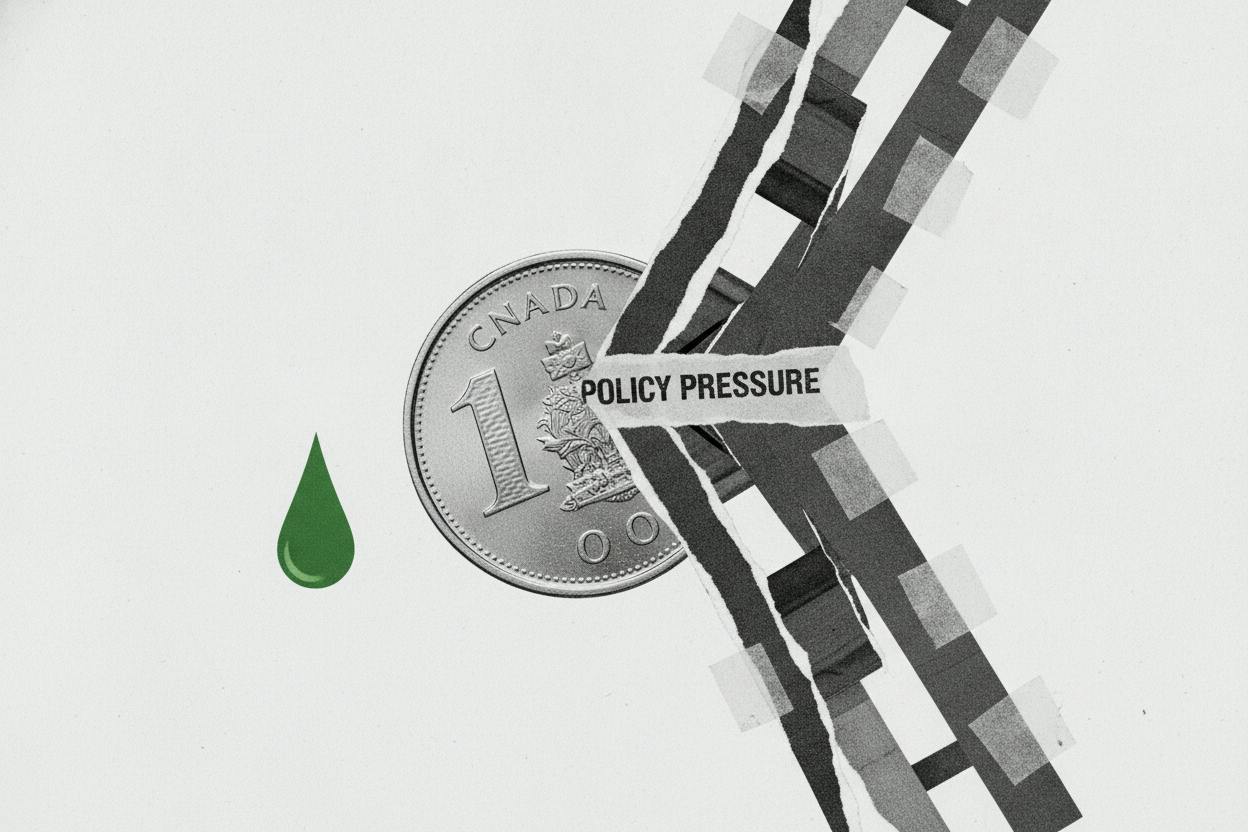
The Canadian dollar slipped on Tuesday even as Brent crude oil climbed to $100 a barrel, a move that would normally give the currency a boost. Instead, a fresh escalation in the US-Canada trade dispute took center stage, pushing the loonie lower and sending Canada's 10-year government bond yield to its highest level since May 2024.
What happened
The US moved to block imports of several Canadian goods, including alcoholic beverages, motorcycles, and dairy products. The ban came into effect on Tuesday, the same day Canada's retaliatory tariffs on US goods kicked in. The back-and-forth has dampened short-term sentiment toward the Canadian dollar, according to RBC Capital Markets, a Canadian investment bank.
Normally, a rise in oil prices is a tailwind for the loonie. Canada is one of the world's largest energy exporters, and higher crude prices tend to boost demand for Canadian dollars as foreign buyers purchase oil in the currency. But this time, trade policy overshadowed that fundamental support.
Why oil at $100 isn't helping
Brent crude's return to $100 a barrel has been driven by geopolitical tensions in the Middle East, including recent attacks on Saudi energy sites. That has lifted energy prices globally, and Canadian oil producers stand to benefit from higher revenues. Yet the currency market is looking past that, focusing instead on the risk that trade friction could hurt Canada's broader economy.
The US is Canada's largest trading partner, and any disruption to that relationship can have outsized effects. The new import bans target specific sectors—alcohol, motorcycles, and dairy—but they signal a wider deterioration in trade relations. Investors worry that further escalation could weigh on Canadian exports and economic growth, which would be a negative for the loonie.
At the same time, Canada's 10-year bond yield rose to its highest level since May 2024. Higher yields typically attract foreign investment and can support a currency, but in this case, the yield move appears tied to inflation expectations and global bond market dynamics rather than a vote of confidence in the Canadian economy.
What it means for investors
For everyday investors, the loonie's weakness has a few practical implications. If you hold US dollar assets or plan to travel to the US, a weaker Canadian dollar means your money buys less. Conversely, Canadian exporters—outside the targeted sectors—might benefit from a cheaper currency, as their goods become more competitive abroad.
The trade spat also adds a layer of uncertainty for Canadian stocks, particularly in consumer and agricultural sectors that rely on cross-border trade. Canadian consumer stocks and ETFs have already slipped on the tariff news, and further escalation could extend those losses.
Meanwhile, the rise in bond yields is a reminder that interest rates remain a key driver for both currencies and fixed-income investments. Higher yields can be a double-edged sword: they offer better returns for bondholders but can also signal inflation concerns or tighter monetary policy ahead.
Looking ahead
Investors will be watching for any signs of de-escalation in the trade dispute, as well as upcoming economic data from both countries. The US dollar's broader strength, ahead of US inflation data and a quiet Federal Reserve, is also a factor. A stronger US dollar tends to put pressure on the loonie regardless of oil prices.
Oil's move to $100 is a story in itself, with European stocks slipping as the higher energy costs feed into inflation concerns. For Canada, the energy sector's gains may provide some cushion, but the trade dispute is likely to remain the dominant force for the currency in the near term.
As always, it's important to remember that currency moves are just one piece of the investing puzzle. A diversified portfolio that includes both domestic and international assets can help manage the risks that come from trade tensions and shifting oil prices.