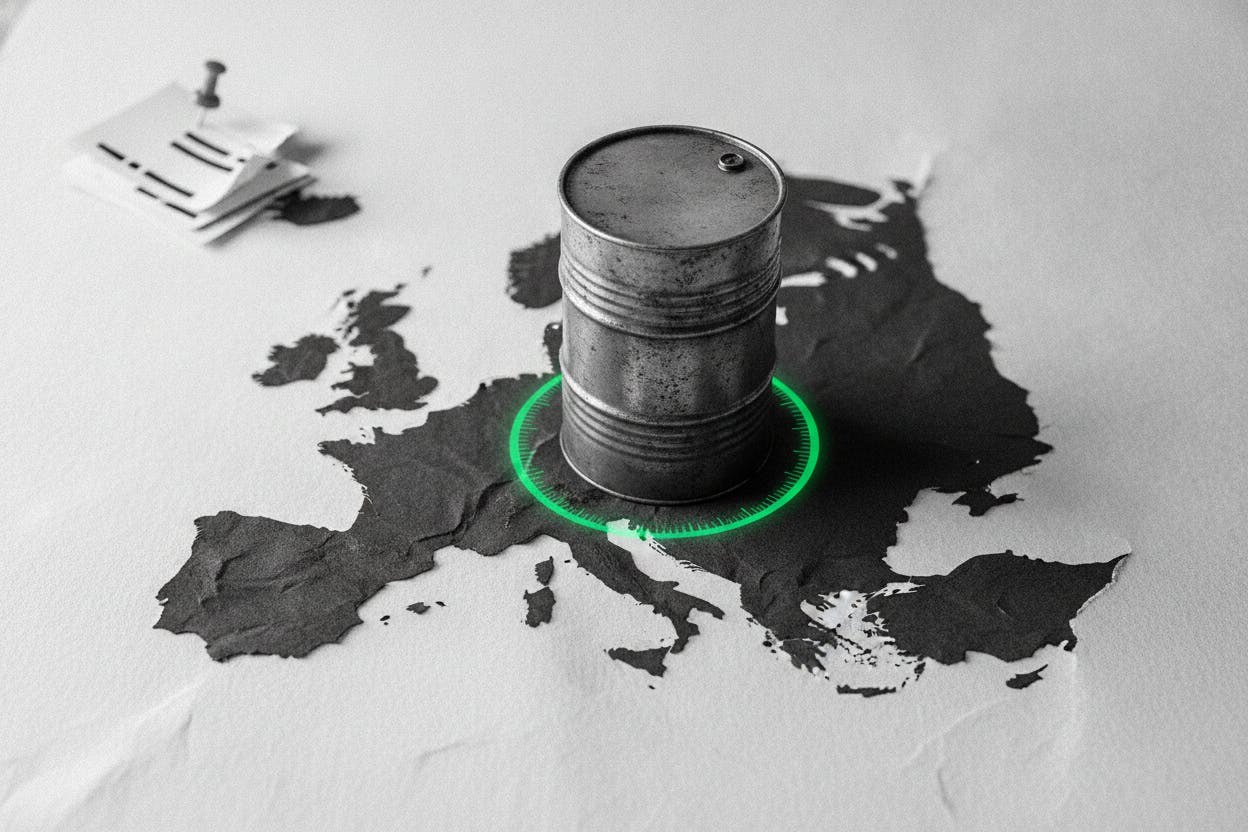
European stocks fell on Wednesday as Brent crude oil climbed back above $100 a barrel for the first time since July 24, reigniting concerns about energy costs and their impact on inflation. The move left investors cautious ahead of two key events on Thursday: the latest US inflation reading and a widely expected interest rate hike from the European Central Bank (ECB).
Why oil matters so much for Europe
Oil prices carry particular weight in Europe because the region imports most of its energy. Unlike the United States, which has significant domestic production, European economies rely heavily on foreign crude and natural gas. When the price of Brent—the international benchmark—rises, it quickly feeds into the cost of fuel, heating, and shipping. Those costs ripple through the economy, pushing up the price of goods and services.
For everyday investors, this means higher oil prices can translate into more expensive groceries, higher utility bills, and thinner profit margins for companies that depend on transportation or energy-intensive production. It also complicates the job of central banks, which are trying to bring inflation down without choking off economic growth.
What's driving the latest spike
The brief notes that a Middle East flare-up is behind the latest jump in crude. While the specific events are not detailed, geopolitical tensions in the region have historically been a major driver of oil price swings. Any disruption to supply—whether real or feared—can push prices higher quickly, as traders price in the risk of shortages.
This is not the first time oil has approached the $100 mark recently. Earlier in the summer, Brent neared that level amid similar concerns, and the market has been sensitive to any news from the region. The fact that prices have now crossed back above $100 suggests that investors are taking the risks seriously.
Central banks in focus
Thursday brings two events that could set the tone for markets in the coming weeks. First, the US will release its latest inflation data. If inflation comes in hotter than expected, it could prompt the Federal Reserve to keep interest rates higher for longer, which tends to weigh on stock valuations. If it comes in cooler, it could fuel hopes that the Fed is done hiking.
Second, the ECB is widely expected to raise its key interest rate. The brief says the hike is "expected," meaning markets have already priced it in. The bigger question will be what the ECB signals about future moves. If the bank hints that this is the last hike for a while, stocks could rally. If it leaves the door open for more, the sell-off could continue.
What it means for investors
For everyday investors, the combination of high oil prices and central bank tightening creates a tricky environment. Higher energy costs can squeeze corporate profits, while higher interest rates make bonds more attractive relative to stocks and increase borrowing costs for companies.
Investors should also keep an eye on how the oil price affects inflation expectations. If $100 oil becomes the new normal, it could keep inflation sticky, forcing central banks to keep rates elevated for longer. That would be a headwind for growth stocks, which are more sensitive to interest rate changes.
On the other hand, some sectors tend to benefit from higher oil prices. Energy companies, for example, often see their profits rise when crude climbs. But the broader market impact is usually negative, as we saw on Wednesday.
Looking ahead
The immediate focus will be on Thursday's data and the ECB decision. But investors will also be watching whether oil prices can hold above $100 or if they retreat as quickly as they rose. The situation in the Middle East remains fluid, and any escalation could push prices even higher.
For now, the message for investors is to stay diversified and be prepared for volatility. High oil prices and central bank uncertainty are a potent mix, and markets are likely to remain choppy until there is more clarity on both fronts.
This article is for informational purposes only and does not constitute investment advice.