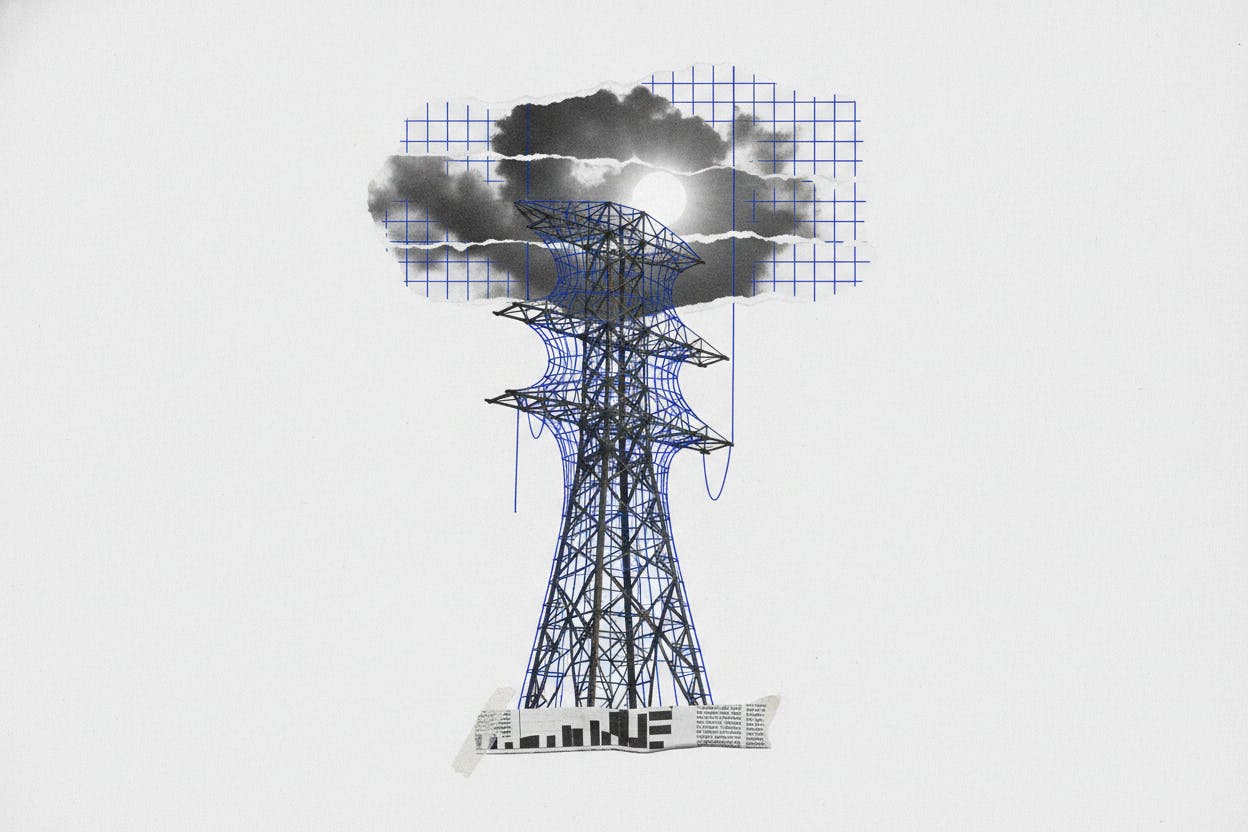
Two major U.S. utilities are turning to Google's artificial intelligence to better predict the weather, a shift that highlights how even the most traditional corners of the energy industry are embracing AI to protect their bottom lines.
NextEra Energy and South Carolina's Santee Cooper are replacing older weather and grid-planning software with Google-based systems. The decision comes after Santee Cooper said that a single forecast miss can cost the utility $100,000 an hour when it has to buy power on the spot market.
Why weather forecasting matters so much to utilities
Utilities have a unique challenge: they must match electricity supply with demand in real time, every second of every day. There is no warehouse to store excess power, so they have to generate or buy exactly what customers use at any given moment.
Weather is the biggest wild card in that equation. If a storm arrives earlier than expected, temperatures swing harder than forecast, or cloud cover reduces solar output, demand can spike or renewable generation can drop suddenly. When that happens, a utility may find itself short of power and forced to buy last-minute electricity on the spot market, where prices can be extremely volatile.
For a utility like Santee Cooper, which serves about 2 million people in South Carolina, those misses add up quickly. A $100,000-an-hour cost is not just a rounding error; it can eat into profits and ultimately affect the rates customers pay.
Traditional weather forecasting tools often rely on historical data and simpler models. Google's AI systems, by contrast, can process vast amounts of real-time data from satellites, sensors, and weather stations, and use machine learning to spot patterns that older software might miss. The result is more accurate predictions of temperature, wind, and solar radiation, which helps utilities plan their generation and purchases more efficiently.
What this means for the broader energy and AI landscape
The move by NextEra and Santee Cooper is part of a wider trend of energy companies adopting AI to improve operations. From predicting equipment failures to optimizing grid management, AI is becoming a key tool for utilities trying to navigate the transition to cleaner energy sources, which are often more weather-dependent than traditional fossil fuels.
Google has been pushing its AI tools into various industries, and this deal shows that its technology is finding a home in the energy sector. The company has also been expanding its AI infrastructure, with recent reports of ramped-up shipments of its TPU chips and a major deal with Marvell for custom AI chips. These moves suggest Google is betting big on AI demand across industries, not just in tech.
For utilities, the financial stakes are clear. The spot market is where electricity is bought and sold at the last minute, and prices can spike dramatically during extreme weather events. By improving forecast accuracy, utilities can reduce their reliance on that market and lock in cheaper power ahead of time.
What it means for investors
For everyday investors, this news is a reminder that AI is not just about chatbots or data centers. It is increasingly being used in critical infrastructure like the power grid, where even small improvements in efficiency can have big financial impacts.
NextEra Energy is one of the largest renewable energy companies in the world, and its decision to adopt Google AI could signal that it sees weather forecasting as a competitive advantage. If the technology helps reduce costs, that could support the company's profitability over time.
For Santee Cooper, a state-owned utility, the move is more about operational efficiency and keeping costs down for its customers. But the fact that it is willing to invest in AI suggests that the technology is proving its worth in real-world applications.
Investors should also watch how this trend affects the broader energy sector. As more utilities adopt AI, companies that provide the underlying technology, such as Google's parent Alphabet, could see new revenue streams. At the same time, utilities that fail to modernize their forecasting tools may find themselves at a disadvantage, especially as extreme weather events become more frequent.
It's also worth noting that this is not the first time Google has partnered with utilities. The company has been working on AI for energy management for years, and its expansion of AI tools into other industries shows a pattern of taking its technology beyond its core search business.
For now, the key takeaway is that AI is becoming a practical tool for managing the complexities of the modern power grid. As weather patterns become less predictable, utilities that can forecast accurately will be better positioned to keep costs down and avoid the expensive mistakes that can hit their bottom lines.