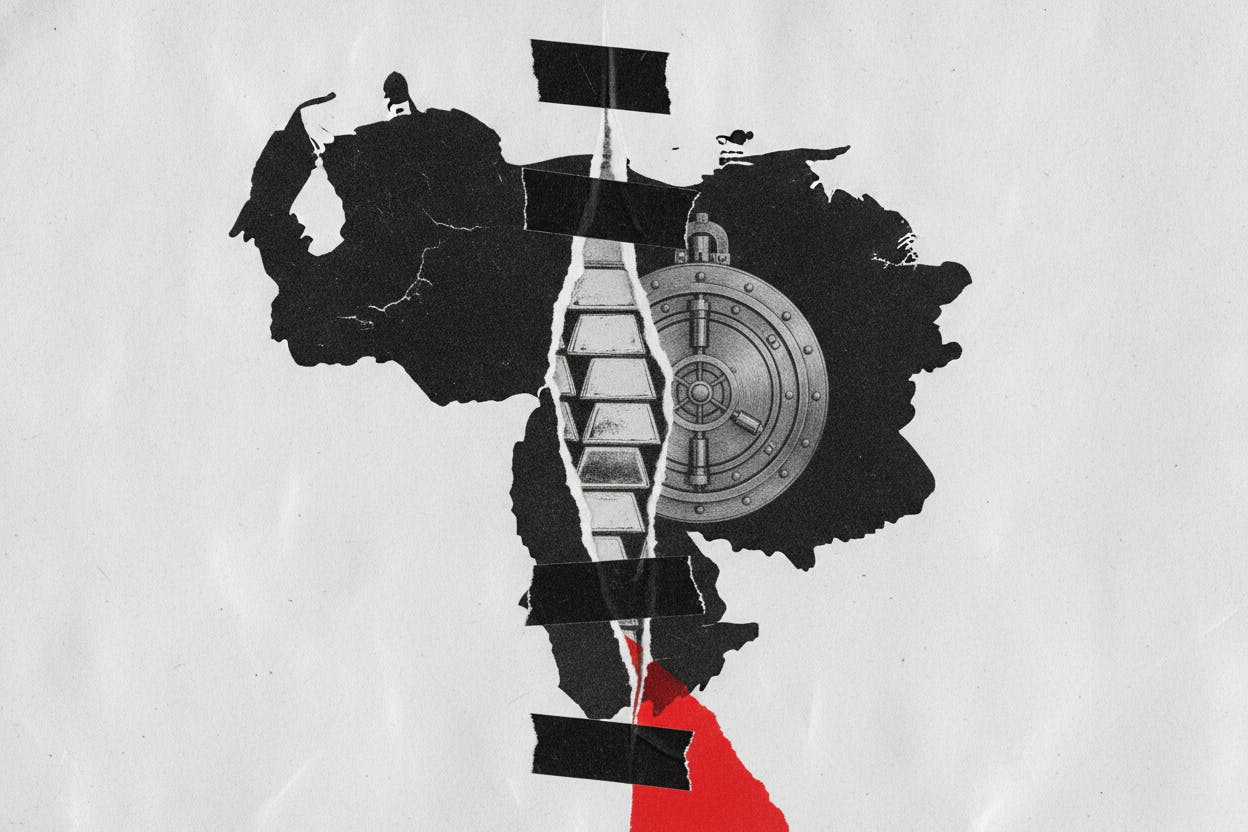
Venezuela's government is adding a new item to its post-earthquake rebuilding list: reclaiming roughly $4 billion in gold reserves stored at the Bank of England. The announcement comes as the country grapples with the aftermath of twin earthquakes in June and a fresh spike in inflation that reached nearly 20% in July alone.
Jorge Rodriguez, head of Venezuela's National Assembly, said the government is prioritizing housing repairs, hospitals, power restoration, and debris removal. But he also said officials will "concentrate efforts" on recovering overseas assets in the UK, including about 31 metric tons of gold.
Why the gold is stuck in London
The bullion has been held at the Bank of England for years, but it has not been released due to a legal and political dispute over which faction of Venezuela's government has the legitimate authority to access it. The country has been in a prolonged political crisis, with rival leaders claiming the presidency, and the UK courts have been asked to decide who controls the assets.
This is not the first time Venezuela has tried to get the gold back. Previous attempts have been tied up in litigation, and the outcome remains uncertain. The renewed push signals that the government sees the gold as a critical financial lifeline as it faces enormous rebuilding costs and runaway inflation.
What the numbers mean
July's inflation reading of nearly 20% for the month is staggering. For context, most central banks target annual inflation of around 2%. A monthly rate of 20% means prices are doubling roughly every four months, eroding the value of wages and savings at an alarming pace. This kind of hyperinflationary pressure makes it nearly impossible for ordinary citizens to plan for the future, and it complicates any government effort to fund reconstruction.
The earthquakes in June added a new layer of urgency. Rebuilding homes, hospitals, and power infrastructure requires massive amounts of money, and Venezuela's economy is already in a deep crisis. The government's hope is that recovering the gold could provide a much-needed injection of funds, either by selling it or using it as collateral for loans.
What it means for investors
For everyday investors, this story is a reminder of how geopolitical and legal risks can affect asset values. Gold is often seen as a safe haven, but this situation shows that owning gold is not always straightforward. When assets are held in foreign central banks, they can become entangled in political disputes, and access can be blocked for years.
The broader context is also important. Inflation is a global concern, and central banks around the world are watching price pressures closely. In the US, July inflation ticked up but the underlying trend stayed cool, while in Europe, German inflation accelerated to 2.8%. These figures influence interest rate decisions, which in turn affect bond yields and stock prices. For example, Canadian yields eased as US inflation cooled rate-hike bets, showing how sensitive markets are to inflation data.
Venezuela's situation is extreme, but it highlights the same fundamental forces that affect all economies: inflation erodes purchasing power, and governments often struggle to fund essential services when their finances are strained. For investors, this is a case study in why diversification and an understanding of political risk matter.
What to watch next
The key question is whether the UK courts will rule in Venezuela's favor. If the gold is released, it could provide a temporary boost to the government's finances, but it is unlikely to solve the underlying economic problems. Hyperinflation is driven by excessive money printing and a lack of confidence in the currency, and a one-time asset recovery does not fix that.
Investors should also keep an eye on how other countries with similar disputes handle their overseas assets. The outcome of this case could set a precedent for how central banks deal with contested governments.
For now, the gold remains in London, and Venezuela's rebuilding plans remain uncertain. The situation is a stark reminder that even the most tangible assets can be out of reach when politics gets in the way.