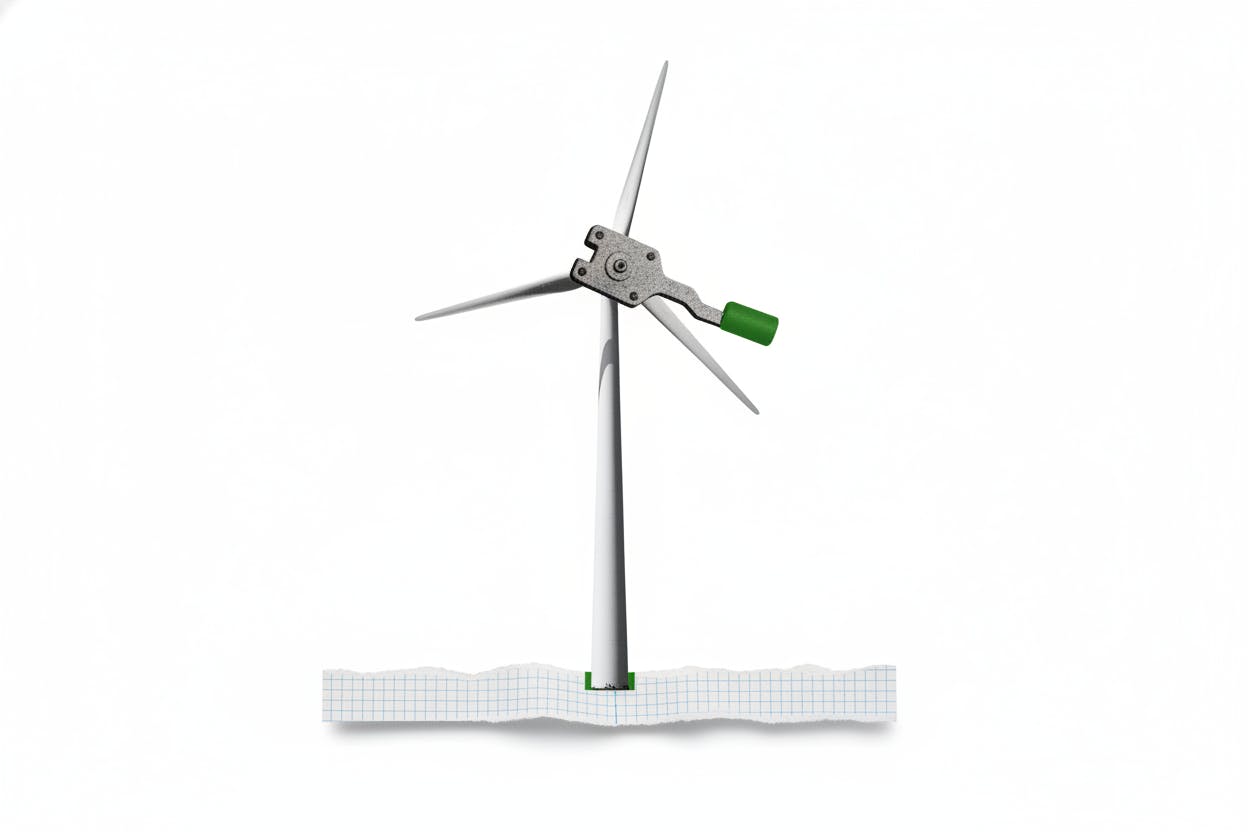
Wind-turbine maker Vestas has raised its profitability target for 2026, and analysts are quickly adjusting their expectations upward. The Danish company, one of the world's largest wind turbine manufacturers, now expects its earnings before interest and taxes (EBIT) margin—a key measure of operating profitability—to land between 7% and 9% in 2026, up from a previous range of 6% to 8%.
The revised guidance came alongside Vestas's second-quarter results, where the company pointed to improved performance across both its onshore and offshore wind divisions. For investors, the move is a signal that the company sees a clearer path to higher profitability as it works through a period of industry-wide cost pressures and supply chain challenges.
Analysts follow with higher earnings estimates
Following the announcement, AlphaValue/Baader Europe, a European equity research firm, raised its earnings per share (EPS) forecasts for Vestas for 2026 and 2027. The firm increased its 2026 EPS estimate by 24.8% and its 2027 estimate by 15.3%. The analysts also said they now expect Vestas's offshore wind business to become profitable in 2027, a milestone that would mark a significant turnaround for a segment that has historically weighed on the company's results.
The outsized percentage increases in EPS forecasts relative to the modest margin guidance change highlight a key dynamic in manufacturing businesses: once fixed costs are covered, even small improvements in margins can translate into disproportionately larger gains in net income. This operating leverage is particularly relevant for a capital-intensive industry like wind turbine manufacturing, where production facilities and R&D spending represent large fixed costs.
Why the margin target matters
EBIT margin is a closely watched metric for industrial companies because it shows how efficiently a company converts revenue into operating profit, before interest and taxes. For Vestas, moving from a 6-8% range to a 7-9% range may sound modest, but for a company with annual revenue in the tens of billions of euros, each percentage point represents a substantial amount of profit.
The upgrade also reflects improving fundamentals in the wind industry. After several years of rising raw material costs, logistics disruptions, and project delays, turbine makers have been pushing through price increases and focusing on cost discipline. Vestas's guidance suggests that these efforts are beginning to bear fruit, and that the company expects the trend to continue into 2026.
Investors have been watching Vestas closely as a bellwether for the renewable energy sector. The company's fortunes are tied to the pace of global wind installations, government policies supporting clean energy, and competition from rivals such as Siemens Gamesa and GE Vernova. A stronger margin outlook from Vestas could also be read as a positive signal for the broader wind supply chain.
What it means for investors
For everyday investors, the key takeaway is that Vestas is signaling improved profitability ahead, and analysts are becoming more optimistic about its earnings potential. However, it's important to remember that guidance is just a forecast—actual results can vary based on project execution, commodity prices, and demand.
Investors should also note that the analyst upgrades are based on the assumption that Vestas can deliver on its operational improvements, particularly in offshore wind. Offshore projects are complex, often delayed, and carry higher execution risk than onshore installations. If the offshore business does turn profitable in 2027 as expected, it could provide a significant boost to the company's overall earnings.
For those holding Vestas shares, the raised guidance and analyst upgrades are encouraging signs, but they don't guarantee future performance. As with any stock, it's wise to consider how Vestas fits into a diversified portfolio and to keep an eye on upcoming quarterly results to see if the company is on track to meet its targets.
In the broader context, Vestas's improved outlook comes at a time when the renewable energy sector is navigating a mix of supportive government policies and persistent cost inflation. The company's ability to raise its margin target suggests that it is managing these challenges better than some peers, which could make it a relative winner in the space.
For investors interested in the renewable energy theme, Vestas's progress is worth monitoring. The company's results often serve as a barometer for the health of the wind industry, and its margin trajectory will be a key indicator of whether the sector's profitability is truly improving.