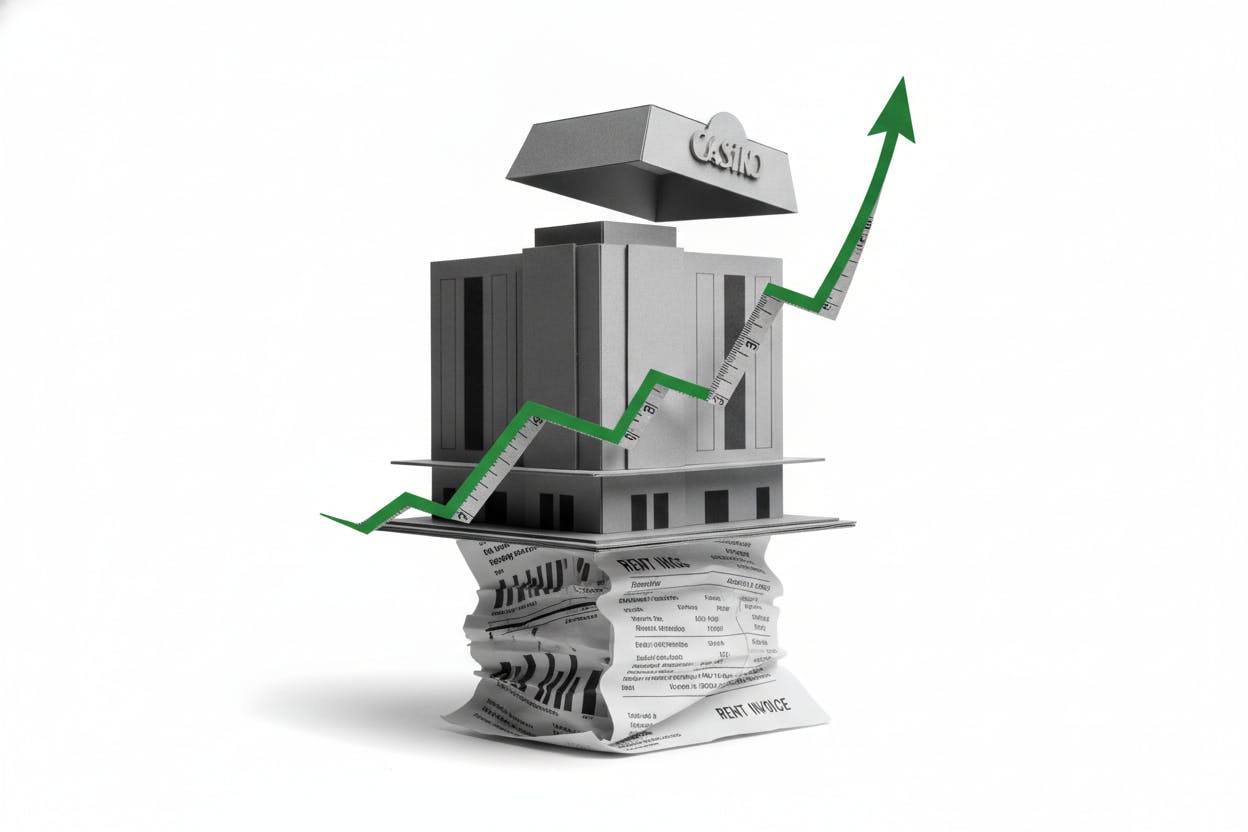
RBC Capital Markets has begun covering VICI Properties, the real estate investment trust (REIT) that owns casino properties, with a sector perform rating and a $29 price target. The bank's analysts see appeal in VICI's rent structure, which is tied to the Consumer Price Index (CPI) with no cap on increases. But they also flagged several risks that could weigh on the stock, including thin lease coverage at some properties and the possibility that VICI's two largest tenants could go private.
What VICI Properties Does
VICI Properties is a net-lease REIT, meaning it owns properties and rents them out under long-term leases where the tenant pays most operating costs like taxes, insurance, and maintenance. The company's portfolio is heavily concentrated in casino and gaming properties, including venues operated by Caesars Entertainment and other major gaming companies. Net-lease REITs are popular with income-focused investors because they typically offer predictable rent payments and steady dividends.
What sets VICI apart from many other REITs is its lease structure. The company's leases are linked to the CPI, and the rent increases are uncapped. That means when inflation runs hot, VICI's rent can climb faster than what most landlords can charge. In an environment where inflation has been elevated, that feature has made VICI's income stream look especially attractive.
The Tenant Risk Factor
RBC's analysts highlighted a key concern: lease coverage at Caesars Regional properties is thin. Lease coverage measures how comfortably a tenant's property-level cash flow covers its rent payments. Low coverage means the tenant has less room to absorb a downturn in business before it struggles to pay rent. If casino demand cools, that could turn VICI's inflation-linked rent growth into a credit risk.
Another worry is that VICI's two largest tenants could go private. If that happens, investors would lose the regular public financial disclosures that come with publicly traded companies. Less transparency about tenant health could make investors demand a higher risk premium, which would limit how much VICI's stock valuation can expand even if the rent growth is working well.
VICI has also been diversifying beyond traditional casino properties. The company has been doing more non-gaming "experiential" deals and more debt-like investments. While this can spread risk across different income sources, it also makes VICI's business model less straightforward than buying casinos with simple rent checks. Some investors prefer the clarity of a pure-play gaming landlord.
What It Means for Investors
For investors considering VICI, the uncapped CPI escalators are a double-edged sword. They protect the landlord's income against inflation, but they also raise the tenant's fixed costs every year. If the economy slows and casino revenue dips, tenants with thin lease coverage could face pressure. The market tends to price net-lease REITs partly on how safe the tenant cash flows look over decades, so any sign of tenant strain can hit the stock.
The potential privatization of major tenants adds another layer of uncertainty. Less disclosure means investors have to rely on more indirect signals to assess tenant creditworthiness. That can lead to a higher discount rate being applied to VICI's future cash flows, which limits how much the stock's valuation can expand even when inflation-linked rent growth is working.
RBC's $29 price target suggests the stock is fairly valued at current levels, but the bank's sector perform rating indicates it sees limited upside until the tenant coverage picture improves. Investors should watch for updates on Caesars Regional's lease coverage and any news about tenant privatization. The broader market context also matters: if inflation stays elevated, VICI's CPI-linked rents become more valuable, but if the economy weakens, tenant credit risk becomes the dominant concern.
For a broader view of how inflation and interest rates are affecting different sectors, see our coverage of gold rebounding above $4,000 as US inflation data matches forecasts. And for another example of how tenant credit risk can affect REITs, check out Jarden's upgrade of Spark New Zealand.