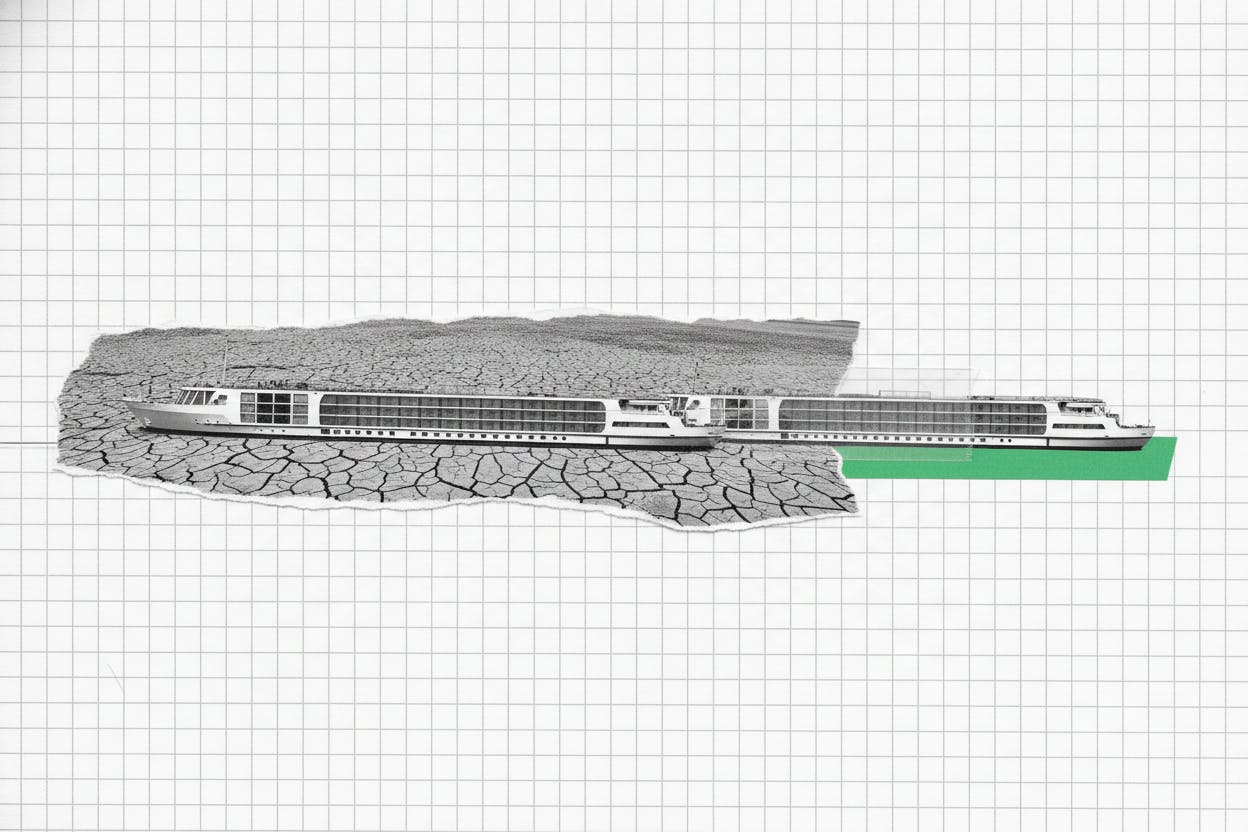
Low water levels on Europe's rivers are disrupting Viking's river cruise operations, but the company has managed to avoid widespread cancellations by shifting passengers between its fleet of more than 90 ships. That's the takeaway from a recent UBS note, which also flagged that the operational juggling will come with a financial cost.
How Viking is coping with low water
River cruises depend on navigable waterways, and when water levels drop—often during dry summer months—ships can struggle to pass under bridges or through shallow stretches. Many operators respond by altering itineraries, swapping ships, or, in the worst cases, canceling sailings. Viking, according to UBS, has largely sidestepped cancellations by moving guests between its vessels, a flexibility that comes from operating a large and diverse fleet.
This approach keeps customers on the water, but it isn't seamless. Itinerary changes can mean different ports, shorter sailing times, or bus transfers to reach alternate embarkation points. For passengers, the experience may differ from what they booked, even if the cruise itself goes ahead.
The financial impact: yields down, vouchers ahead
UBS expects Viking's third-quarter yields—a key metric that measures revenue per available passenger cruise day—to take a hit as a result of these disruptions. Yields are closely watched by cruise investors because they reflect pricing power and demand. A dip suggests that Viking is absorbing some costs or offering compensation to keep customers satisfied.
The note also points to a longer-term effect: voucher credits issued to affected guests are likely to show up as small discounts on bookings in 2027 and 2028. That means the financial sting of this summer's low water could linger for a couple of years, even as operations return to normal.
What it means for investors
For everyday investors, the key takeaway is that Viking's operational resilience has a price. Avoiding cancellations protects customer loyalty and brand reputation, but it also pressures near-term profitability. The expected yield decline in Q3 is a direct consequence, and the voucher redemptions will weigh on future revenue, albeit modestly.
This situation is not unique to Viking. River cruise operators across Europe face similar challenges when water levels fluctuate, and their responses can vary. Companies with larger fleets and more flexible logistics are often better positioned to adapt, but no operator is immune to the weather.
Investors should watch how Viking manages this period and whether it can maintain its premium pricing despite the disruptions. The fact that UBS expects only small discounts from vouchers suggests the company is containing the damage, but it's a reminder that external factors—like climate and river conditions—can affect even well-run travel companies.
For those interested in the broader water-related investment landscape, the challenges facing river cruises echo issues seen in other sectors, such as water infrastructure demand and water treatment companies, where water availability and quality are central to business performance.
Looking ahead
As the peak river cruise season winds down, investors will be watching Viking's next earnings report for concrete numbers on Q3 yields and any updates on booking trends. The company's ability to navigate low water without major cancellations is a positive sign, but the financial fallout will be measured in the coming quarters.
For now, the story is one of operational agility meeting financial reality. Viking's ship swaps are a smart tactical move, but they don't come free. The small discounts in 2027 and 2028 are a reminder that today's disruptions can ripple into future results.