Vodafone, one of Europe's largest telecom operators, raised its profit and cash-flow guidance for the year to end-March 2027, after reporting faster service revenue growth in the first half. The improvement was driven by business customers and its African operations, but the company's biggest market, Germany, continued to lag.
The company said first-half adjusted core earnings rose 6.4% on an organic basis to €6.5 billion, helped by stronger service revenue and better "operating leverage" — meaning costs grew more slowly than revenue. Management now expects adjusted core earnings of €13.2–€13.4 billion for the full year, roughly in line with what analysts were already modeling. It also lifted its adjusted free cash flow target to €2.8–€3.0 billion.
Why the cash-flow target matters
For telecom companies, free cash flow is a key metric. They have heavy, recurring network spending, so predictable cash generation can reduce the need to borrow. A higher target suggests Vodafone has more capacity to fund network upgrades and pay down debt without leaning on outside financing. That can be reassuring for both equity investors and bondholders.
However, the profit upgrade is less of a surprise. The new earnings range largely matches consensus forecasts, so it doesn't automatically force a rethink on valuation. The real swing factor is Germany.
Germany remains the weak spot
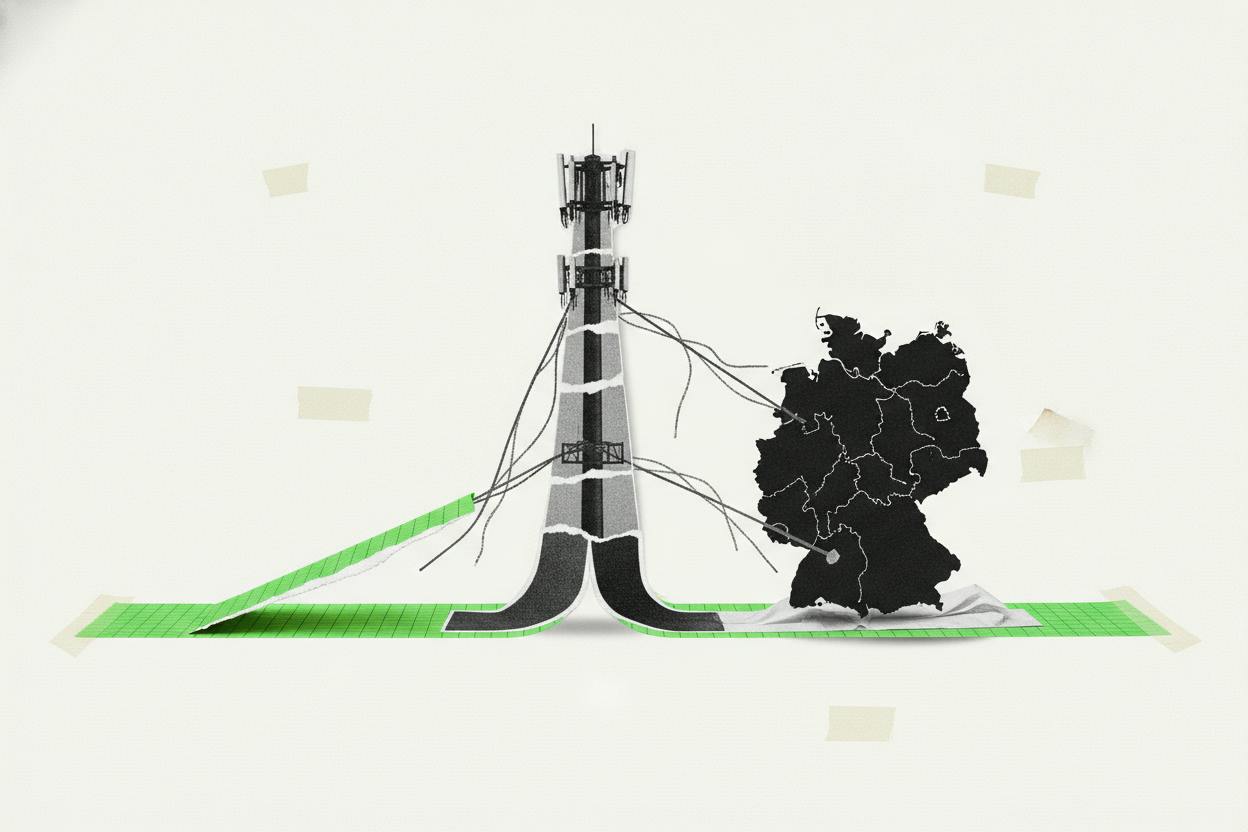
Vodafone's Germany business saw service revenue growth slow to 0.4% in the second quarter, down from 1.2% in the first quarter, as competitive pressure in mobile persisted. Germany is Vodafone's largest market, so its struggles weigh heavily on the overall picture.
In contrast, Africa is booming. Service revenue there grew 13.4%, with Vodacom benefiting from both connectivity and mobile financial services. The UK, another key market, grew 0.9%, helped by strong fixed-line and mobile wholesale trends.
This creates a two-speed story: fast growth in emerging markets, but sluggishness in the core European market. For investors, the question is whether Germany can stabilize. If the company can show its biggest market is turning around, the guidance may look durable. If Germany stays soft, investors may treat the upgrade as coming mainly from faster-growing regions, keeping Vodafone's share price and bond risk premium stuck in a range.
What it means for investors
For everyday investors, the key takeaway is that Vodafone's improved cash-flow outlook is a positive sign, but it's not a game-changer. The earnings guidance was already in line with expectations, so the market's focus will be on Germany's performance in the coming quarters.
Telecom stocks are often seen as income plays, with dividends and stable cash flows. A higher free cash flow target could support the dividend, but it's not guaranteed. Investors should watch for any signs of improvement in Germany's competitive dynamics, as well as continued strength in Africa and the UK.
Vodafone's situation is not unique. Many European telecoms face similar challenges: intense competition, high capital spending, and slow growth in mature markets. The company's ability to offset those headwinds with growth in Africa and business services will be crucial.
For now, the market will likely keep a close eye on Germany. As one analyst put it, "Germany is the swing factor." If Vodafone can show its biggest market is stabilizing, the guidance may look more credible. If not, the upgrade may be seen as a one-off boost from faster-growing regions.