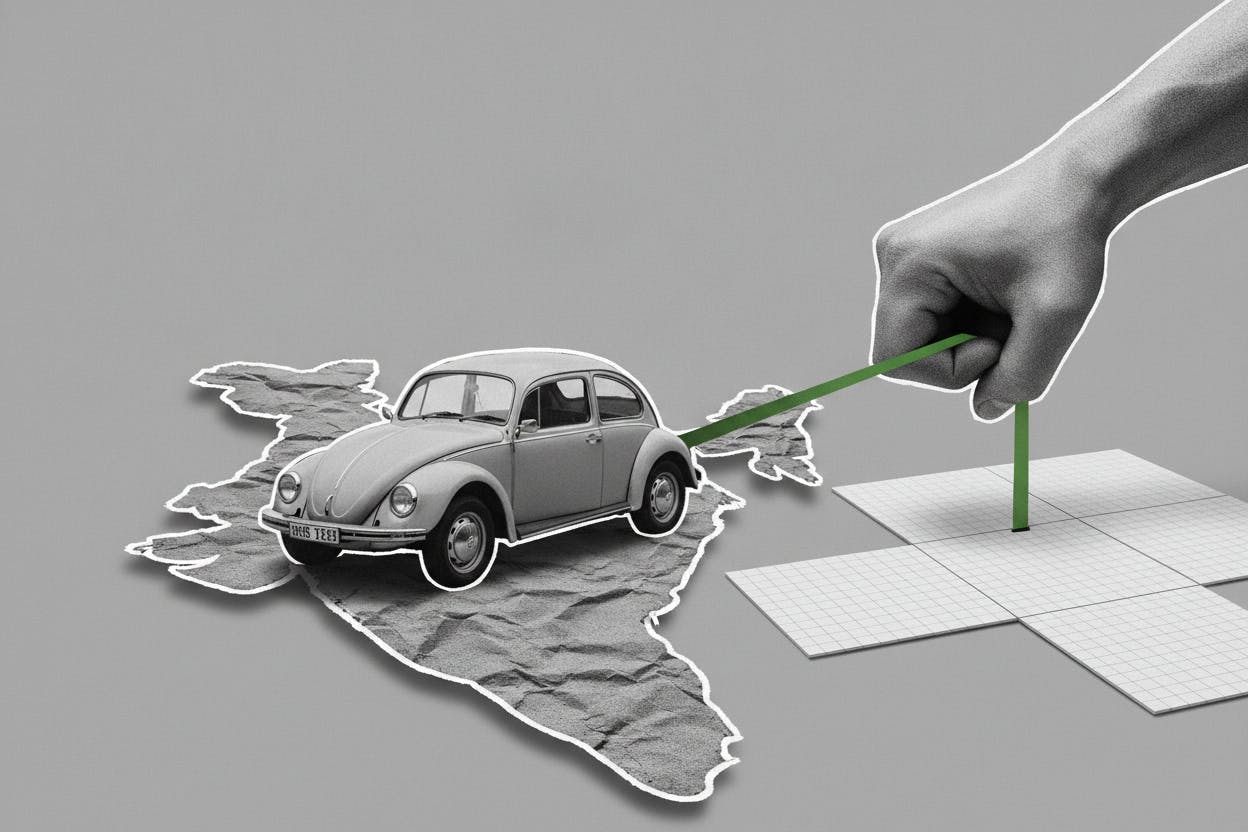
Volkswagen is exploring a new strategy to finally crack one of the world's largest car markets. The German automaker is in discussions with India's JSW Group about forming a joint-control partnership, according to a Reuters report. The goal: expand Volkswagen's product portfolio, increase local sourcing, and boost manufacturing in a country where it has struggled to gain meaningful traction.
India is a critical growth frontier for global automakers, especially as demand in Europe slows. But Volkswagen's presence there remains small—only about 2% of the market—despite more than two decades of effort. Its local operations are run by Škoda Auto, the Czech subsidiary that has been the brand's spearhead in the region.
Why India matters
India is now the world's third-largest car market by sales, behind China and the United States. With a growing middle class and rising incomes, it offers a long-term opportunity for automakers looking to offset stagnation in mature markets. The country has also become a hub for manufacturing, with many global companies setting up plants to serve both domestic and export demand.
For Volkswagen, the stakes are high. The company has invested heavily in India over the years, but its market share has remained stubbornly low. The local arm, Škoda Auto India, has focused on a few models, but competition from domestic giants like Maruti Suzuki and Tata Motors, as well as other global players, has kept Volkswagen on the sidelines.
The proposed partnership with JSW Group—a diversified Indian conglomerate with interests in steel, energy, and infrastructure—could provide the local knowledge and capital needed to scale up. A joint-control structure would give both parties equal say, a model that has become more common as foreign automakers seek local partners to navigate India's complex regulatory and market landscape.
What a JSW partnership could bring
JSW Group is not a traditional automotive player, but it has been expanding its footprint. The group has recently shown interest in the electric vehicle (EV) space, and a partnership with Volkswagen could accelerate its entry into the sector. For Volkswagen, JSW's deep understanding of Indian business and its extensive supply chain networks could help reduce costs and improve local sourcing—a key factor in a price-sensitive market.
The talks are still at an early stage, and no deal has been finalized. But the direction is clear: Volkswagen wants to move beyond its current niche position. The company has previously stated its ambition to increase its share in India, and a partnership like this could be the catalyst.
India's auto market is also undergoing a shift. As we reported, alternative-fuel cars outsold petrol models for the first time in August, signaling a growing appetite for hybrids and EVs. This trend could play into Volkswagen's hands, given its global push toward electric mobility.
What it means for investors
For everyday investors, this news is a reminder that global automakers are rethinking their strategies in emerging markets. Volkswagen's struggles in India are not unique—many foreign carmakers have found the market challenging due to intense price competition, high taxes, and regulatory hurdles.
If the partnership goes through, it could open up new revenue streams for Volkswagen and give it a stronger foothold in a high-growth market. However, investors should be cautious: partnerships of this nature often take time to bear fruit, and there is no guarantee of success. The company's stock may react to headlines, but the real impact will only be visible in the long term.
For JSW Group, which is not publicly listed in the auto space, the deal would mark a significant diversification. It could also signal to other conglomerates that the auto sector is ripe for entry, especially with the EV transition underway.
Investors should also keep an eye on the broader Indian market, which has been volatile recently. As we noted, India's IT stocks led a slide on rate-hike fears and Gulf tensions, and the auto sector is not immune to such pressures. But long-term fundamentals remain strong, and any successful partnership could be a positive signal for the sector.
Challenges ahead
Volkswagen's path in India has been bumpy. The company has faced criticism for not offering models tailored to local tastes, and its pricing has often been higher than competitors. A partnership with JSW could help address these issues, but it will require significant investment and a willingness to adapt.
Moreover, the global auto industry is undergoing a massive transformation, with a shift toward electric vehicles and software-defined cars. Volkswagen is investing heavily in these areas, but it is also dealing with slowing demand in Europe and increased competition from Chinese EV makers. As we reported, German industrial output dropped 1.1% as car plants retool for EVs, highlighting the challenges of the transition.
For now, the talks with JSW are a sign that Volkswagen is serious about India. Whether it will be enough to move the needle remains to be seen. But for investors, it's a story worth watching, as it could reshape the competitive landscape in one of the world's most promising auto markets.