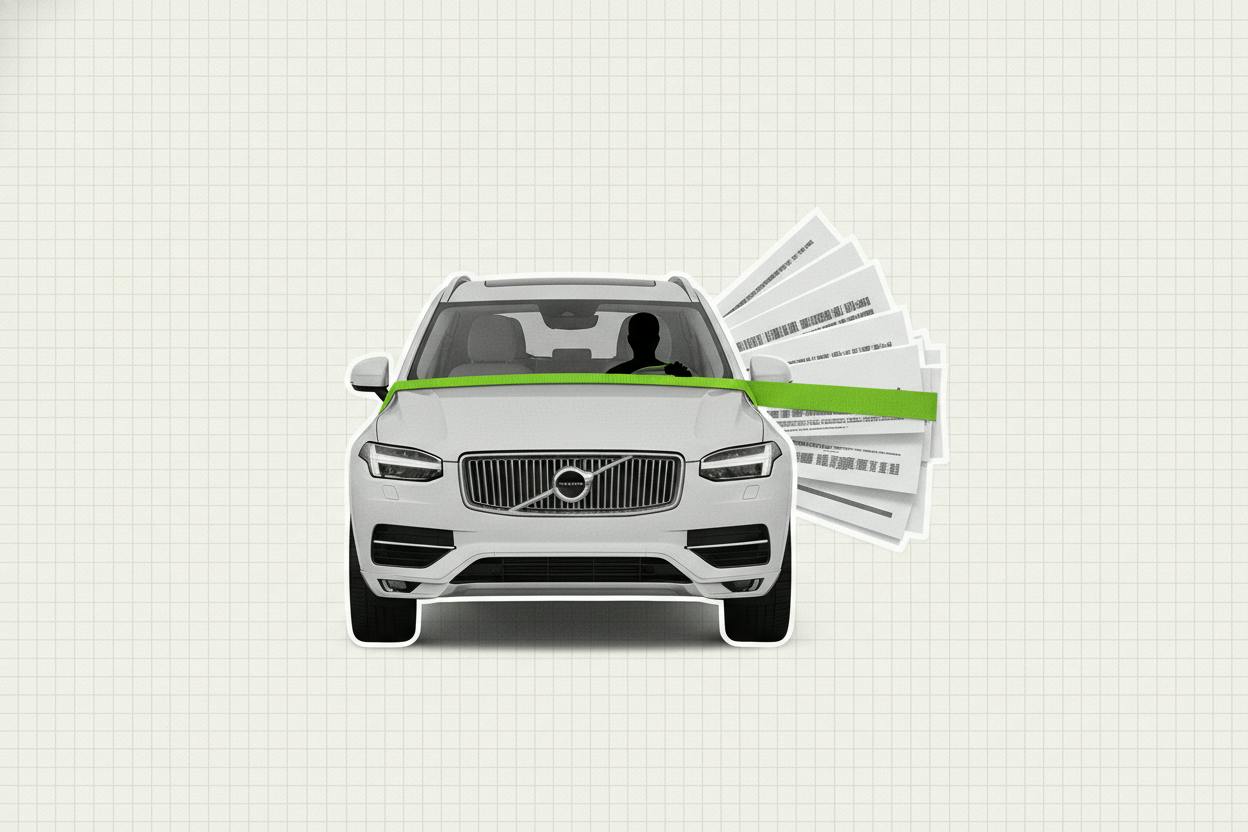
Volvo Cars and Nvidia are expanding their partnership to accelerate the development of advanced driver-assistance systems, with a roadmap that starts with supervised driving and aims for hands-free operation on both highways and city streets before 2030. The announcement signals how traditional automakers are increasingly turning to AI-specialist chipmakers to stay competitive in the race toward automated driving.
What the partnership involves
Volvo, the Swedish automaker known for its safety-focused reputation, will combine its engineering expertise with Nvidia's computing platform and software stack. Central to the collaboration is Nvidia's Hyperion system, a bundled package that includes sensors and onboard computers designed to handle the heavy data processing required for real-time driving decisions.
The first phase will focus on supervised driving, where the car can assist with steering, braking, and acceleration but still requires the driver to remain attentive and ready to take over. This is a common stepping stone in the industry, as it allows automakers to gather real-world data and refine algorithms before moving to more autonomous features.
The longer-term goal is to offer hands-free driving in both urban and highway settings before 2030. That means the vehicle would handle most driving tasks without the driver needing to keep hands on the wheel, though the driver may still be expected to monitor the road and intervene if needed.
Why this matters for the industry
Automakers are under pressure to add automation features that appeal to consumers, but they also face regulatory scrutiny and legal liability concerns. Hands-free systems, in particular, have drawn attention from safety regulators, especially after high-profile incidents involving other companies' driver-assistance technologies.
By pairing Volvo's safety engineering with Nvidia's AI capabilities, the two companies are positioning the effort as a safety story rather than a pure technology race. Volvo has long marketed itself on protecting occupants, and the company is likely to emphasize that any hands-free features will be introduced cautiously and with robust safeguards.
Nvidia, meanwhile, has become a key supplier for the automotive industry, providing the chips and software that power everything from infotainment systems to advanced driver-assistance. The company's automotive business is still a small part of its overall revenue, but it represents a growing opportunity as carmakers increasingly treat vehicles as computers on wheels.
What it means for investors
For investors, the expanded partnership is a reminder that the AI boom is not limited to data centers and cloud computing. Nvidia's technology is finding its way into more physical products, including cars, which could provide a new growth avenue beyond its dominant position in AI chips for servers.
Volvo, which is majority-owned by China's Geely, is betting that advanced safety features will differentiate its vehicles in a crowded market. The company has been investing heavily in electrification and software, and this partnership reinforces that strategy.
However, investors should keep in mind that hands-free driving is still years away from becoming a mainstream reality. Regulatory approvals, technical challenges, and consumer acceptance all remain hurdles. The timeline of before 2030 gives both companies room to iterate and adapt.
For everyday investors, the key takeaway is that the race to automate driving is accelerating, and partnerships like this one are likely to become more common. Companies that can combine strong safety credentials with cutting-edge AI may be better positioned to win consumer trust in an area where trust is essential.
As with any emerging technology, there are risks. The cost of developing and validating these systems is high, and returns may take years to materialize. But for those with a long-term horizon, the progress in driver-assistance technology is worth watching.
In the meantime, Nvidia continues to expand its AI footprint across multiple industries, from AI safety testing to financial data processing. The company's automotive push is just one part of a broader strategy to embed its technology into every corner of the economy.
For Volvo, the partnership is a chance to reinforce its brand promise of safety while preparing for a future where cars are increasingly autonomous. Whether the company can deliver on its ambitious timeline remains to be seen, but the direction is clear.