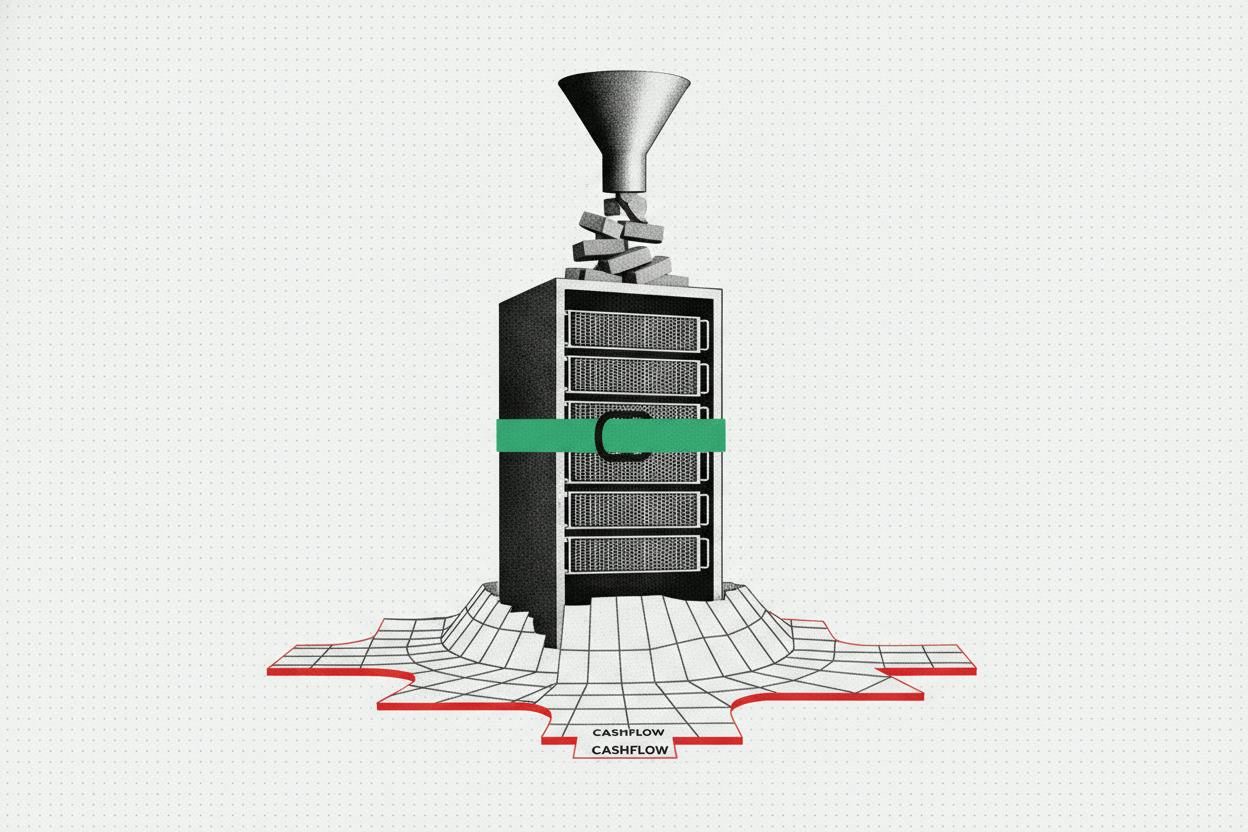
For the past year, Wall Street has largely given Big Tech a blank check when it comes to artificial intelligence. Companies announced ever-larger data centers, chip orders, and infrastructure plans, and investors mostly cheered, treating the spending as a necessary bet on the future. But this earnings season, the mood has shifted. Markets are starting to judge AI plans the way they would any other business: by whether the spending generates enough cash to pay for itself.
The clearest sign came this week as three of the biggest names in tech reported results. Microsoft and Oracle were rewarded for what investors saw as disciplined capital spending, while Alphabet was knocked after its spending ran ahead of the cash its core business brings in. The contrast marks a turning point in how the market views the AI buildout.
Alphabet's cash-flow gap
Alphabet, the parent company of Google, reported that its capital expenditures in the September quarter totaled 121.4% of its operating cash flow. In plain terms, the money the company spent on AI infrastructure and other capital projects was more than the cash its operations generated during the quarter. That means the shortfall had to be covered by cash on hand or by borrowing.
That is not necessarily a crisis. Many growing companies spend more than they generate in cash for long stretches. But for a company like Alphabet, which has long been a cash machine, it raises questions. Covering the gap with existing cash reduces financial flexibility. Covering it with debt can increase interest costs and add balance-sheet risk. Either way, it leaves less room for the shareholder-friendly moves Big Tech is known for, such as buybacks and dividends.
The concern landed at the same time as another worrying data point: Google Search revenue growth slowed to 12% in the quarter, below the 14.7% analysts had expected. Search is the engine that generates most of Alphabet's cash, and if that engine is cooling, the money needed to fund the AI buildout becomes less certain.
Microsoft and Oracle: the disciplined spenders
Microsoft, by contrast, reported $18.6 billion of free cash flow in its fiscal first quarter and said demand for its cloud services remains strong. Free cash flow is the cash a company generates after paying for the capital spending needed to maintain and grow its business. A healthy figure suggests the company can fund its AI investments from its own operations, without needing to borrow or dip into reserves.
Oracle also won favor with investors by signaling that its spending on AI infrastructure would be more measured than some had feared. The company has been a major buyer of Nvidia chips and has been building out cloud data centers to compete with Amazon and Microsoft. But this quarter, its message was one of restraint, and the market responded positively.
The difference in treatment is stark. Alphabet's stock fell after its report, while Microsoft and Oracle shares held up or rose. Investors are effectively drawing a line between companies that can self-fund their AI ambitions and those that may need outside money.
What it means for investors
For everyday investors, the shift in sentiment matters because it changes how to think about Big Tech stocks. In the past year, the story was simple: AI is the future, and spending on it is good. Now, the market is asking harder questions. How much cash does the company generate? How much is it spending? And can it cover the difference without hurting shareholders?
When capex rises above operating cash flow, investors stop treating the stock as a straightforward growth bet and start asking how the gap gets financed. That is why a small disappointment in the cash generator—like slower Search growth—can hit the stock harder than it might have a year ago.
The market may also keep a wider valuation gap between AI builders that can fund the buildout internally and those that may need to borrow or issue stock. Companies like Microsoft, with strong free cash flow, are likely to be rewarded. Those like Alphabet, where spending is outpacing cash generation, may face more scrutiny.
This is not a reason to panic, but it is a reason to pay attention. The AI boom is not over, but the era of unquestioned spending may be. Investors are now treating AI like any other business investment: it has to pay off eventually, and the cash flow has to support it.
For more on how AI spending is reshaping markets, see our look at Microsoft's bond sale to fund AI expansion and the split in Big Tech earnings. Also, check out how AI private credit is hiding a pricing problem for investors.