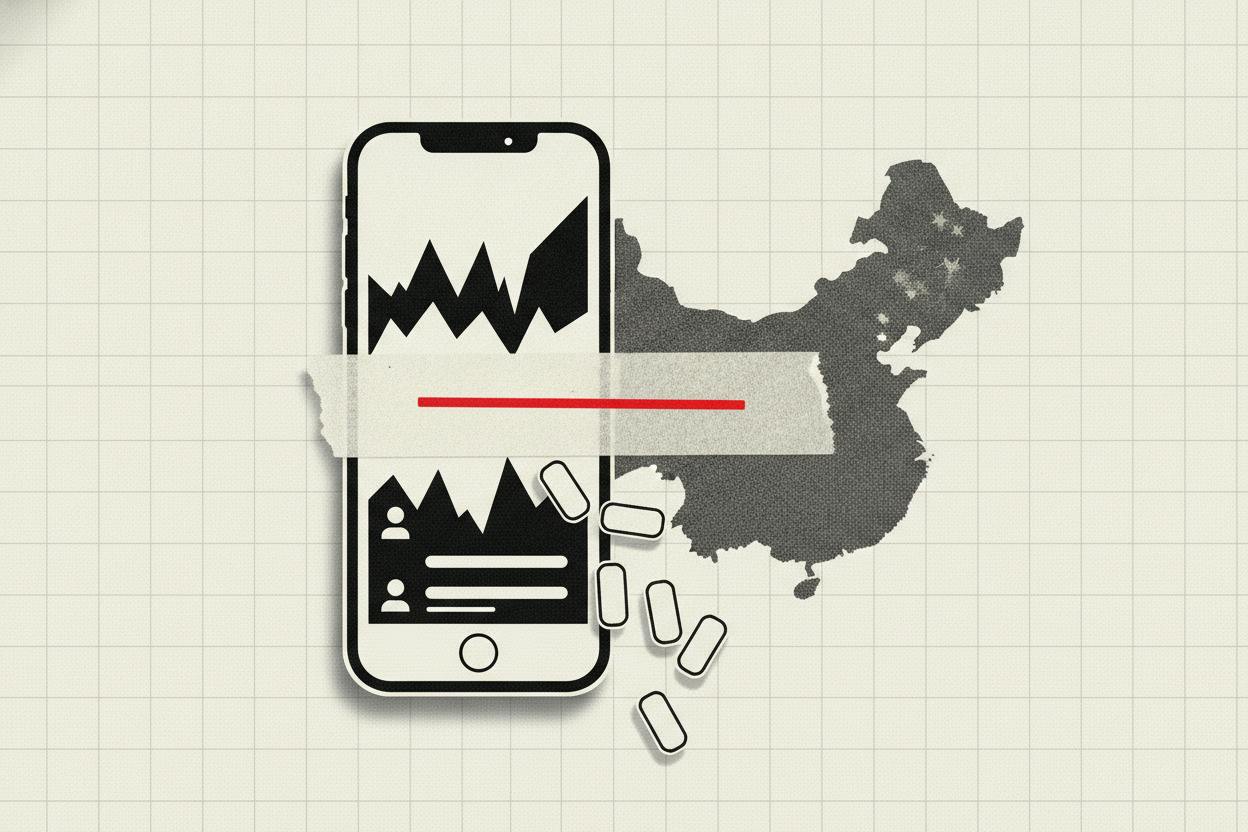
Webull, the popular retail trading app, saw its stock tumble roughly 20% in premarket trading on Wednesday after a bipartisan House committee report raised national-security concerns about the company's ties to China. The report, first covered by CNBC, warned that Webull's China-linked ownership, technology, workforce, and data flows could expose US investor data to unwanted access.
The committee's argument is straightforward: if parts of Webull's operations sit under Chinese jurisdiction, US customer information—and even the systems that move money—could be vulnerable to legal demands from Chinese authorities. That would turn a brokerage into a geopolitical risk, something regulators and customers alike tend to treat with caution.
What the report alleges
According to the report, Webull's operations include significant elements based in China, including technology development and some workforce functions. The panel argued that because these components fall under Chinese law, US customer data could be compelled by Chinese courts or government agencies, potentially compromising the privacy and security of American investors.
The committee's concerns are not new—similar worries have been raised about other financial apps with cross-border ties—but the formal report adds weight to what had been speculation. For a brokerage, which is built on trust and regulatory compliance, such allegations can be damaging even if they are later proven unfounded.
Webull's response
Webull disputed the report in a statement to MT Newswires, calling it inaccurate and saying the committee drew “unsupported conclusions” without seeking clarification for more than 20 months. The company emphasized that US customer data and operations are based in the United States, with domestic controls governing who can access sensitive information.
“We take our obligations to protect customer data seriously,” the statement said, adding that the company has robust security measures in place. However, the initial market reaction suggests that investors are not fully reassured. The 20% premarket drop reflects a compliance overhang, not just an ugly headline.
Why this matters for investors
For everyday investors, the key takeaway is that brokerages are not just apps—they are financial infrastructure. When lawmakers frame a broker as a national-security risk, regulators may start treating it that way. That could mean more audits, tighter controls over data access, and potential requirements to keep certain systems and records inside the US. All of that raises costs and slows down product innovation.
Even before any formal action, the bigger near-term hit can be commercial. Brokerages sell trust, and public questions about data flows can make customer acquisition harder and increase churn. If customers worry that their personal information might be at risk, they may move their accounts to competitors. That kind of reputational damage can compress a company's valuation multiple long before it shows up in revenue.
Investors often apply a higher “tail risk” discount to companies facing geopolitical scrutiny. That means they demand a lower price to compensate for the possibility of a worst-case scenario, such as sanctions, forced divestitures, or restrictions on operations. This can weigh on the stock even if the underlying business remains profitable.
Broader context
The report comes at a time when US-China tensions are already elevated, with lawmakers from both parties increasingly focused on data security and financial risks. This is part of a broader trend of scrutiny on Chinese-linked companies operating in the US, from tech stocks sliding on weak sentiment to concerns about China's currency stability.
For Webull, the immediate challenge is to reassure both regulators and customers. The company has said it will cooperate with the committee, but the damage may already be done in the eyes of some investors. The stock's sharp decline shows how quickly trust can become a market issue.
What to watch next
Investors will be watching for any regulatory actions that might follow the report. If US agencies like the SEC or FINRA launch formal investigations, that could lead to fines or operational changes. On the other hand, if Webull can convincingly demonstrate that its data protections are robust, the stock could recover.
For now, the situation is a reminder that in the world of finance, perception can be as important as reality. A single report can shake confidence, and for a brokerage, confidence is everything.